This guide is educational, not personalized financial, legal or security advice. A checklist reduces avoidable mistakes; it cannot make a transaction risk-free.
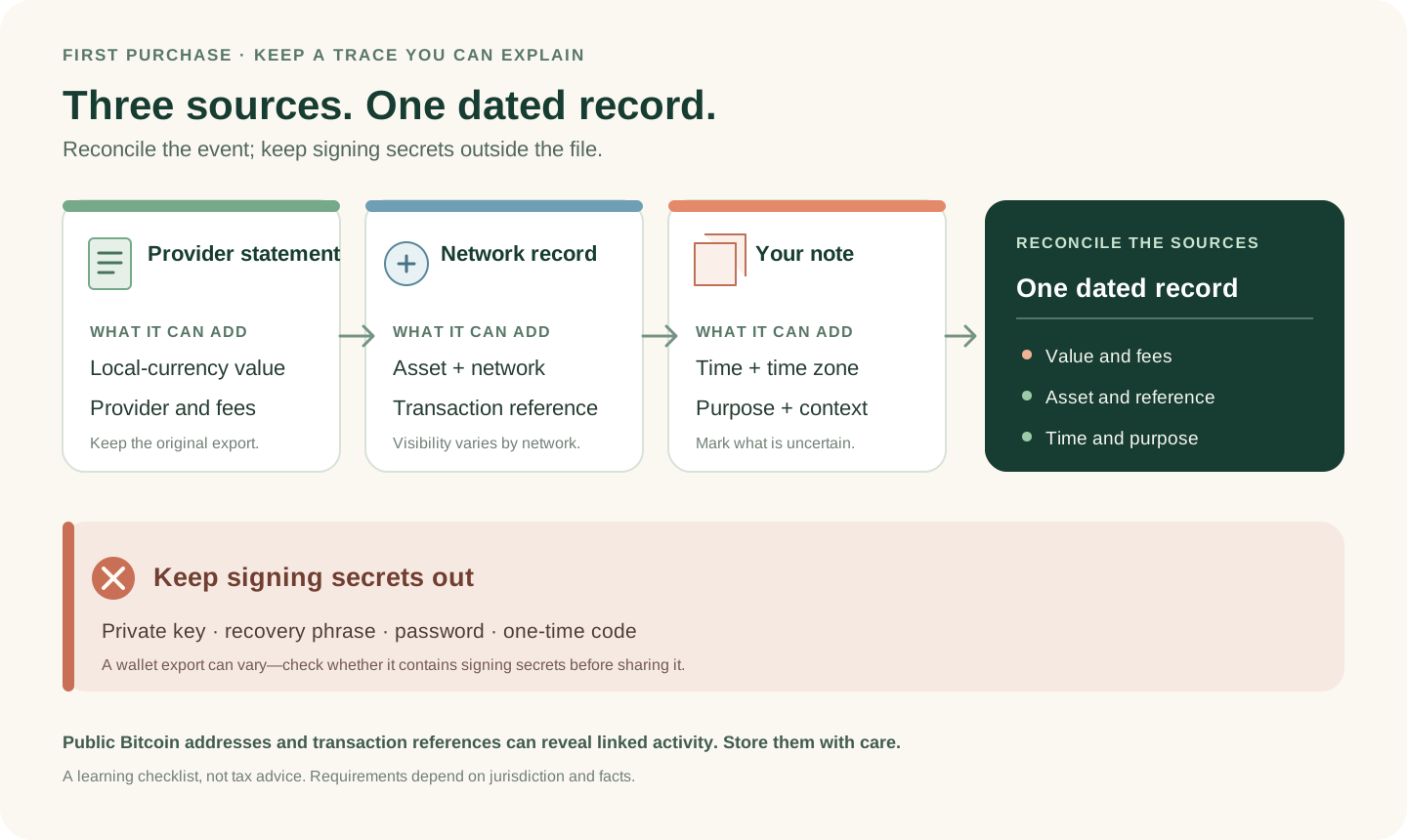
Keep records that explain the same event together, but keep signing secrets out of the accounting file. Public Bitcoin addresses and transaction references can reveal linked activity, so store them with care. This is a record-hygiene checklist, not tax advice.
- Keep the provider statement or export for the local-currency value, provider, and fees.
- Record the asset and network or contract, plus the transaction reference; on Bitcoin, those public records can expose linked activity.
- Note the timestamp and time zone, value method, and purpose. A transfer between your own wallets is not automatically a sale.
- Reconcile the sources, mark uncertain classifications, and keep any file containing signing secrets outside the financial record.
You withdraw an asset from a provider to a wallet you control. Which provider and network records would you link in a private note—and which access secret must stay out of the accounting file?
Build a transaction trail you can explain later
For each relevant activity, record the date and time, local timezone, exact asset or contract identifier, quantity, local-currency value, fees, provider, transaction reference and purpose. “Purchase,” “sale,” “transfer between your own wallets,” “payment” and “reward” may be treated differently by a reporting system. On a public blockchain such as Bitcoin, an explorer may show network records, but it usually cannot supply your bank value, provider fee or reason for the transfer. Bitcoin addresses and transactions can reveal linked activity, so store identifiers with care and do not publish links that associate them with your identity.
Keep the original statement or export alongside your own note. Record the currency and the method used to calculate the value at the time; do not rely on a later dashboard total to reconstruct an earlier decision.
Keep public records separate from secrets
A transaction reference and provider statement can support a financial record, but public addresses and transaction IDs may reveal activity. Keep only what you need and store it with care. A private key, recovery phrase, password, one-time code, or any wallet file or export that contains signing secrets does not belong in that record. Exports vary, so understand what a file contains before sharing or storing it. Keep signing credentials under a separate recovery plan. The purpose of a clean audit trail is to make activity understandable without creating another place where funds can be stolen.
Example: moving between your own wallets
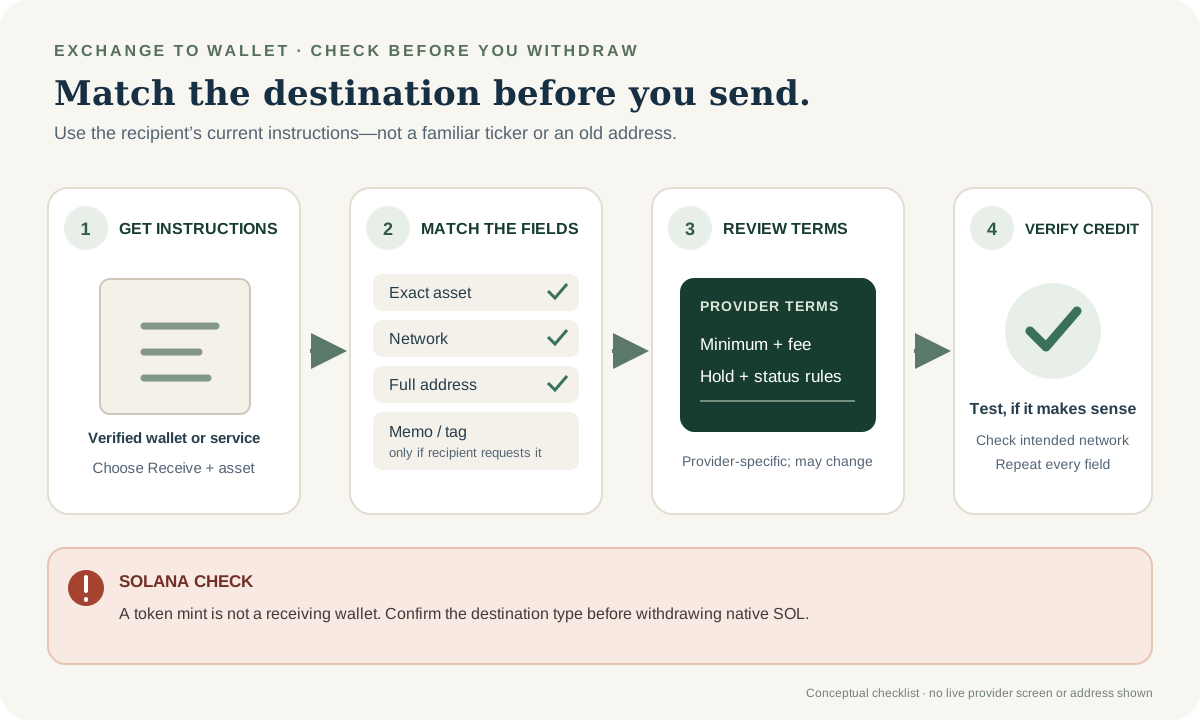
Suppose an asset leaves an exchange and arrives at a wallet you control. Without a note linking the withdrawal and receipt, a portfolio tool may label the movement as a sale or income. A private record can connect the two transaction references and identify the event as a transfer, subject to the rules that apply where you live. Do not treat the example as a tax conclusion.
A durable template
Use columns for timestamp, asset, network or contract, units, fiat value, fees, provider, source statement, destination, purpose and transaction reference. Reconcile the file against bank entries and provider exports. Add a note when an event is uncertain instead of silently inventing a classification. Tax treatment depends on jurisdiction and facts; consult current official guidance or a qualified adviser for a filing decision.
For a custody reminder, read who can move your crypto?. This article describes record hygiene, not a purchase recommendation or a tax calculation.
Check your understanding.
What should stay out of an accounting spreadsheet?
A correct answer records local learning progress, not a qualification or proof of financial readiness.
Put this lesson in context
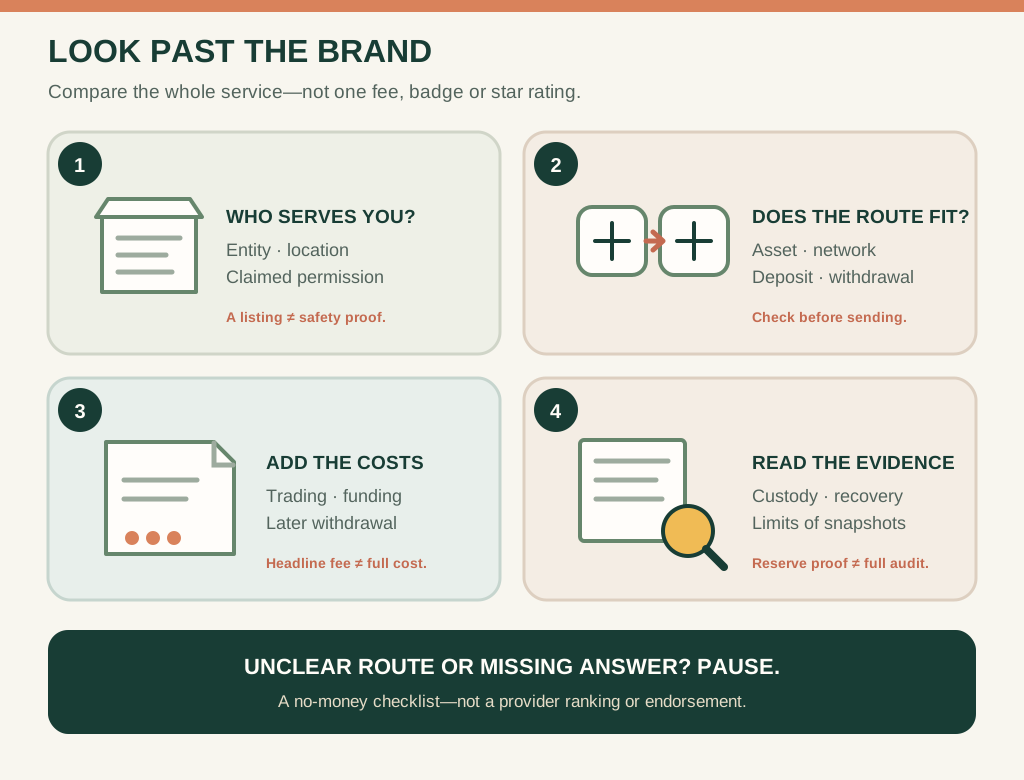
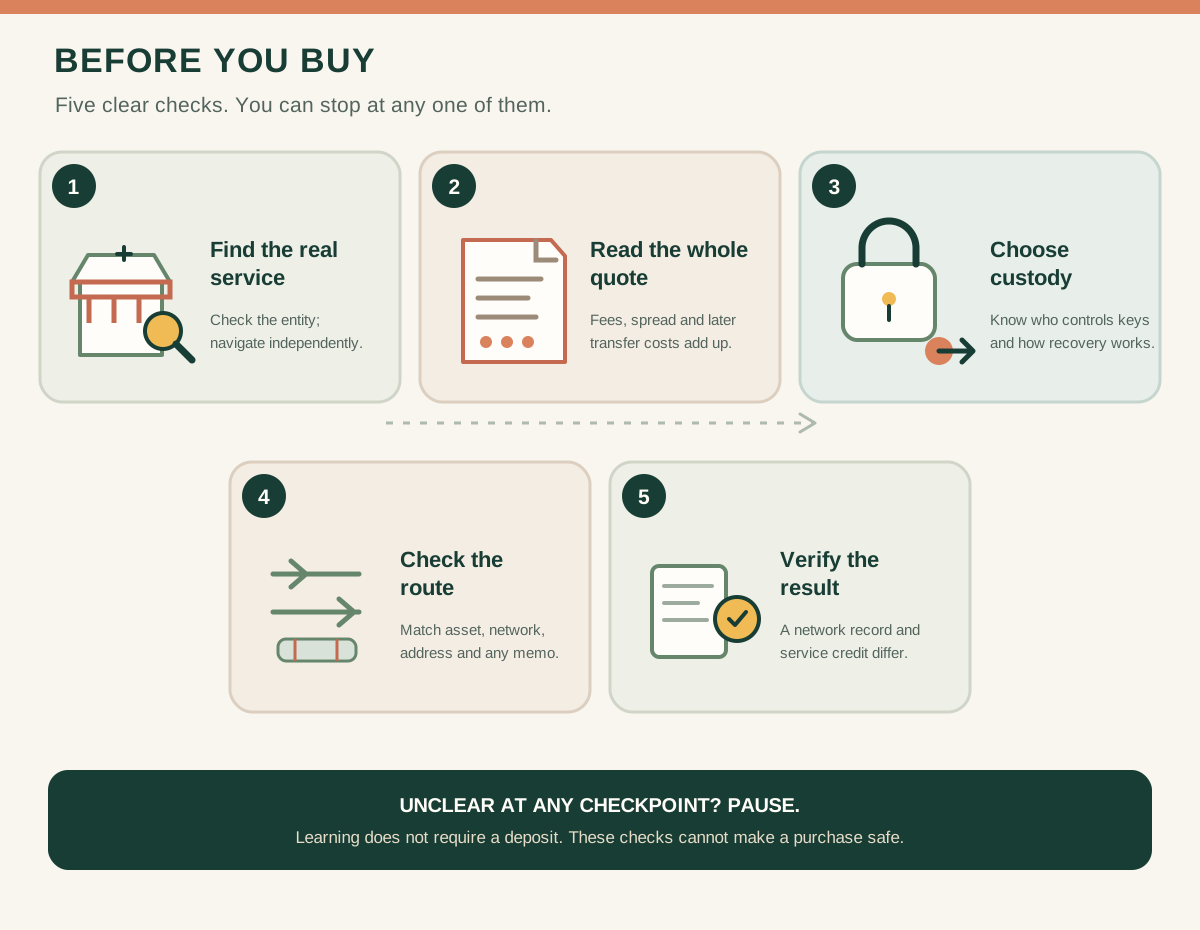
Compare the whole process, including custody and withdrawal costs, before choosing your next lesson.
Sources & context
- Bitcoin.org — Some things you need to know ↗Consulted 2026-10-11
- Bitcoin.org — Securing your wallet ↗Consulted 2026-10-11
- Bitcoin Developer Guide — Block Chain ↗Consulted 2026-10-11
- Bitcoin.org — Protect your privacy ↗Consulted 2026-10-10
Original educational content prepared for this project. Sources provide context, not endorsement or a guarantee that every statement remains current. Rules, product interfaces and availability can change.
Keep learning in Telegram.
Open this published guide in the learning bot. No account connection or wallet is needed.
Join the $STONKB community.
Follow project updates, share useful ideas and meet other builders. You do not need to buy $STONKB to join.
Take what you learned.
Leave the pressure behind.