Scams & security·2 min read
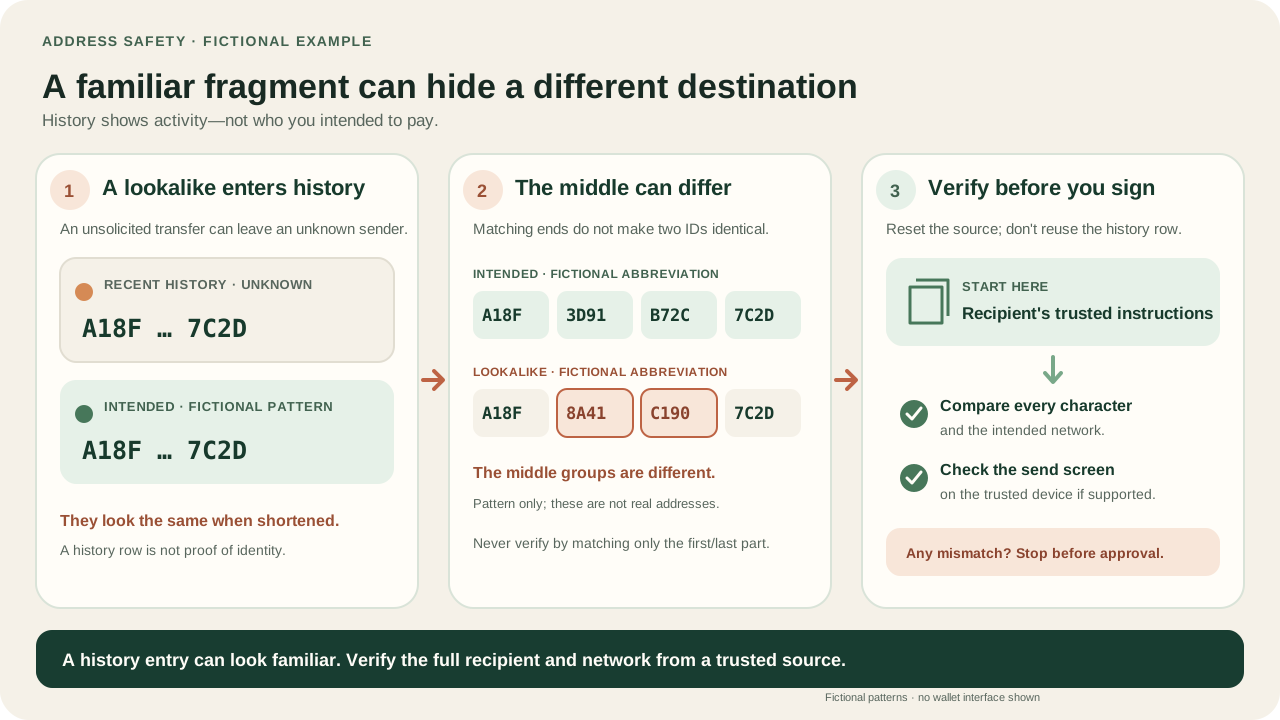
Address poisoning: why transaction history is not an address book
Learn how lookalike crypto transfers poison history—and how to verify the full address and network before sending.
Beginner
Clear explanations, practical examples, and the questions worth asking before you act.
Learn how lookalike crypto transfers poison history—and how to verify the full address and network before sending.
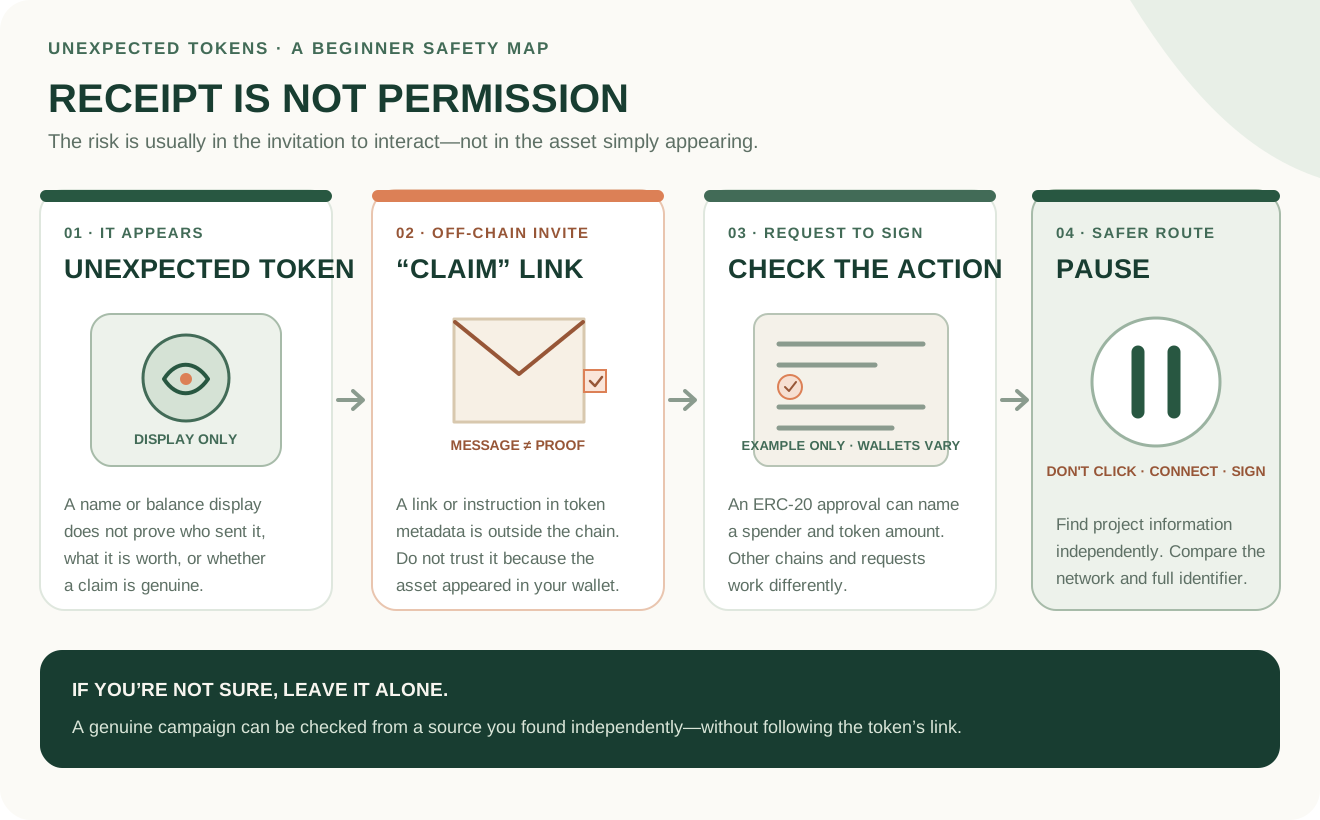
Learn why a token appearing in your wallet is not an invitation to claim, trade or visit a link.
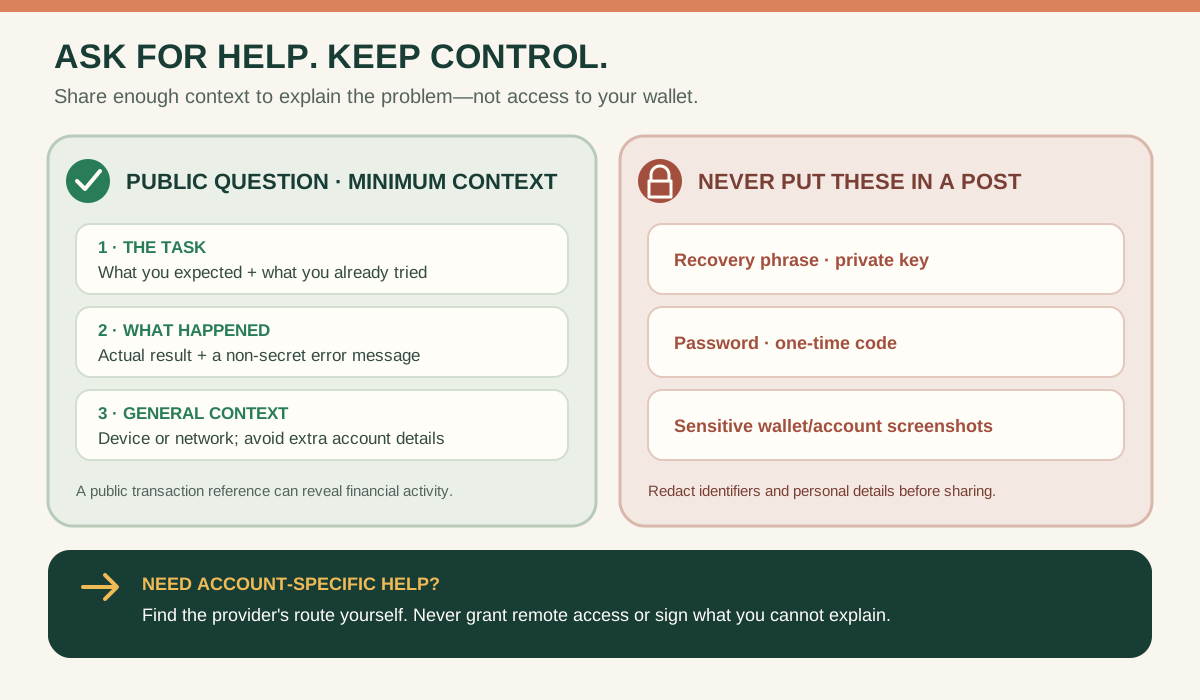
Share enough context to diagnose a problem while keeping credentials and private information private.
Spot lookalike tickers, copied domains, fake support accounts and urgency tactics before they turn into a wallet approval.
Keep track of how many ideas you tried before celebrating the winning result.
Understand the ingredients of a historical simulation before reading its return chart.
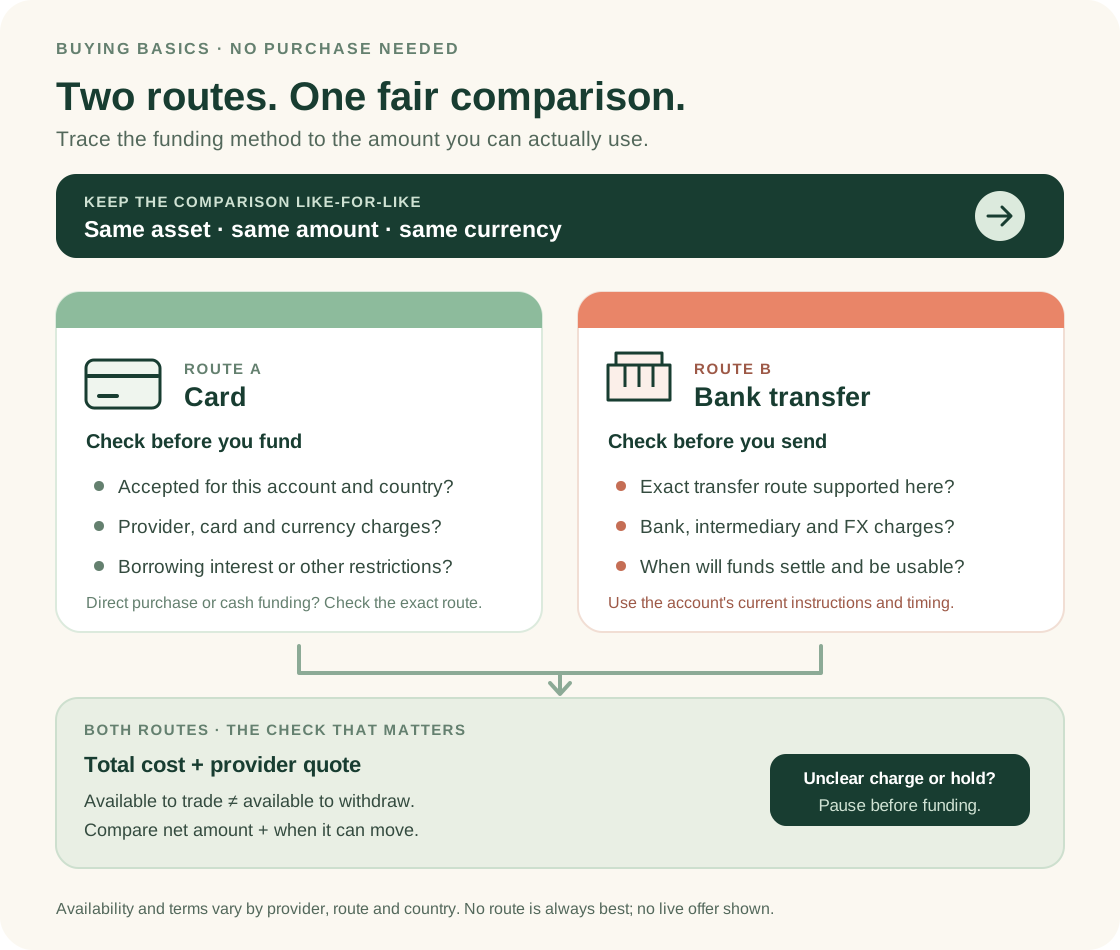
Compare payment fees, currency conversion, settlement and withdrawal availability before funding a crypto purchase.
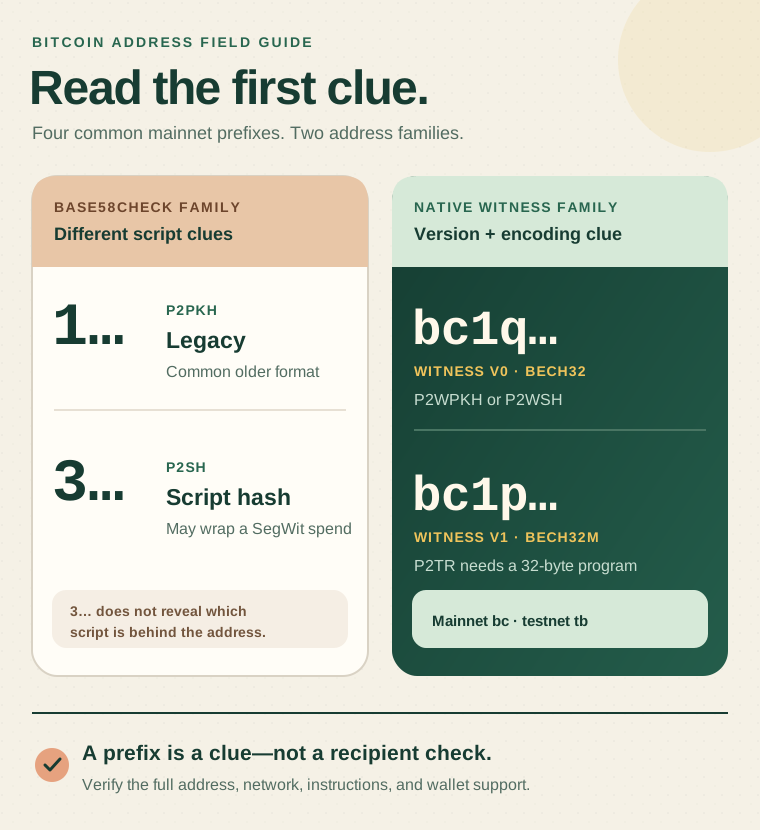
Compare Bitcoin address formats: Legacy, SegWit, and Taproot. Read prefix clues, compatibility limits, and why fees depend on the transaction.
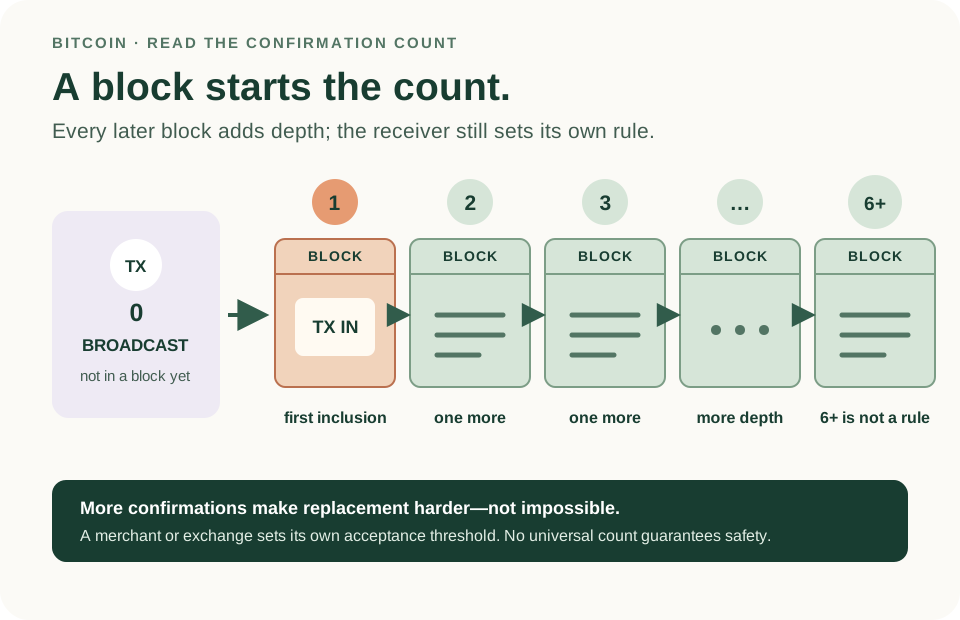
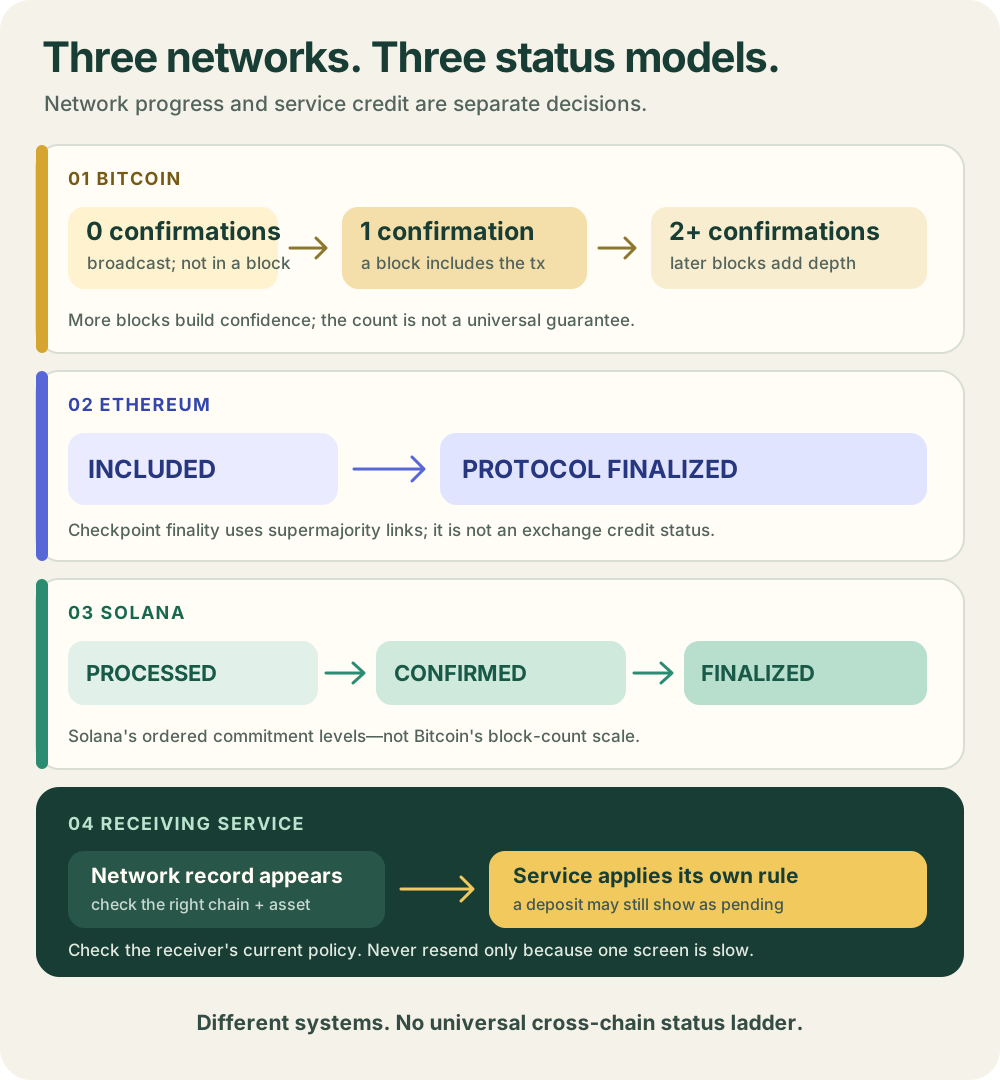
Learn what zero, one and later Bitcoin confirmations mean, why added blocks lower reversal risk, and why no count is a universal guarantee.
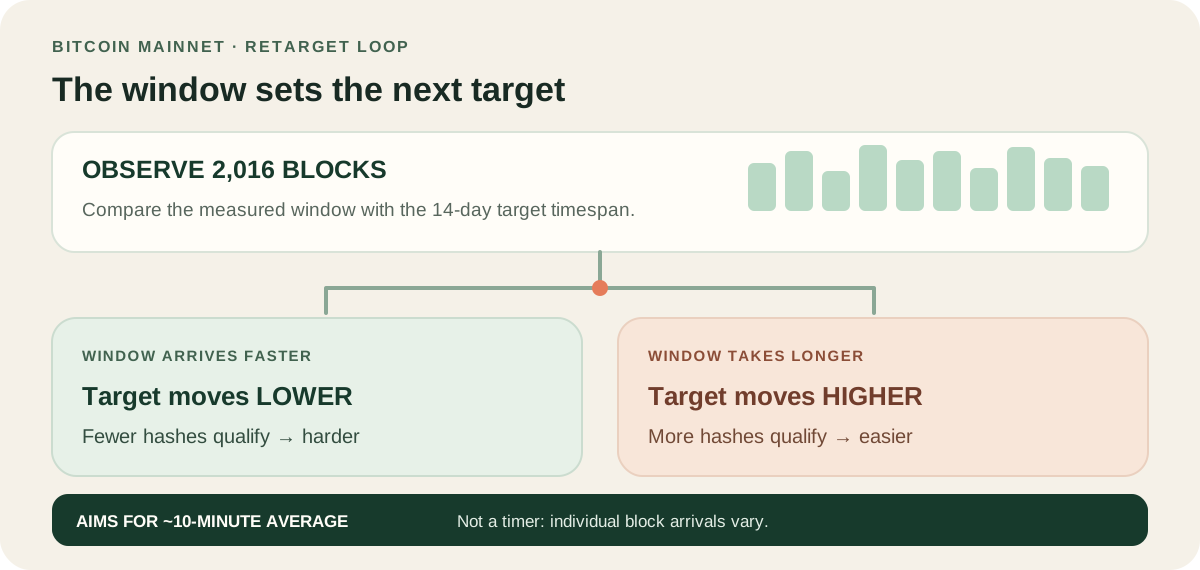
Bitcoin adjusts its mining target every 2,016 blocks. Faster windows raise mining difficulty; slower windows lower it. Ten minutes is an average, not a timer.
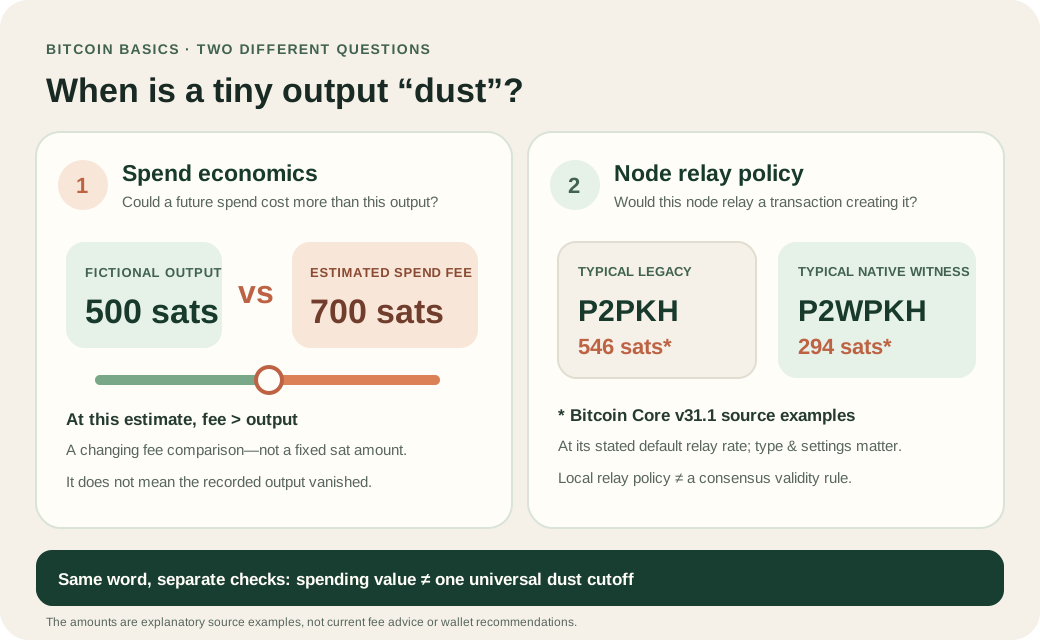
Learn what Bitcoin dust means, when tiny UTXOs cost more to spend, why Core's 546-sat example is not universal, and how dusting can affect privacy.
Compare networks by purpose, transaction model and operating assumptions rather than price predictions.
Learn why Bitcoin transaction fees can vary, what a wallet estimate means and which costs sit outside the network fee.
Learn the basic idea behind Lightning as a separate payment route and the extra assumptions a user must check.
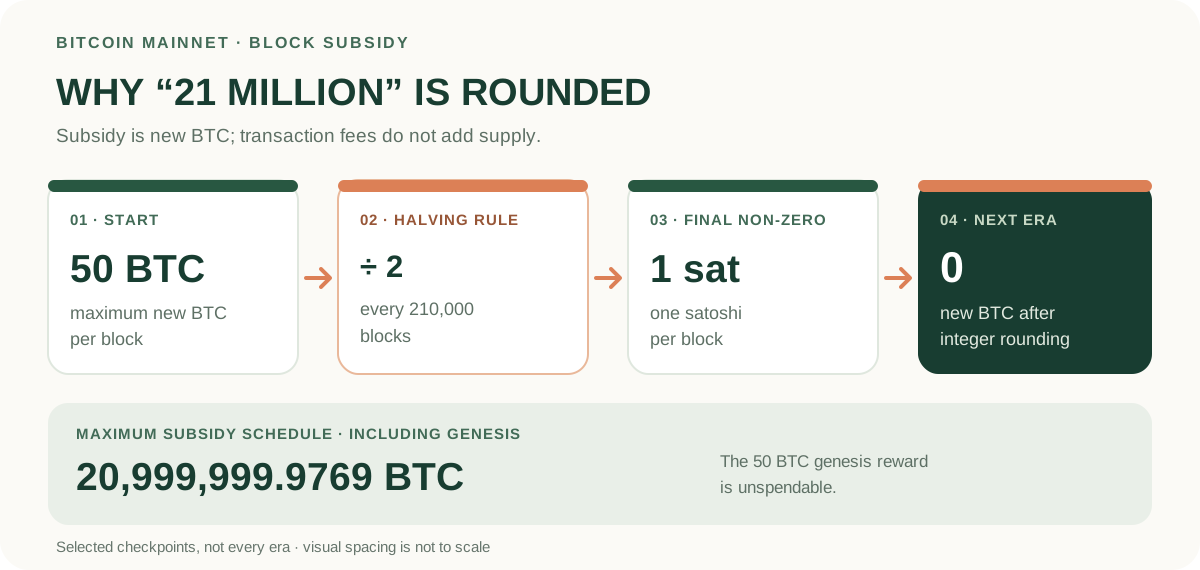
Bitcoin's 21 million limit is rounded. See how halvings shape the subsidy rule, why whole satoshis make the exact sum lower, and how that differs from spendable supply.
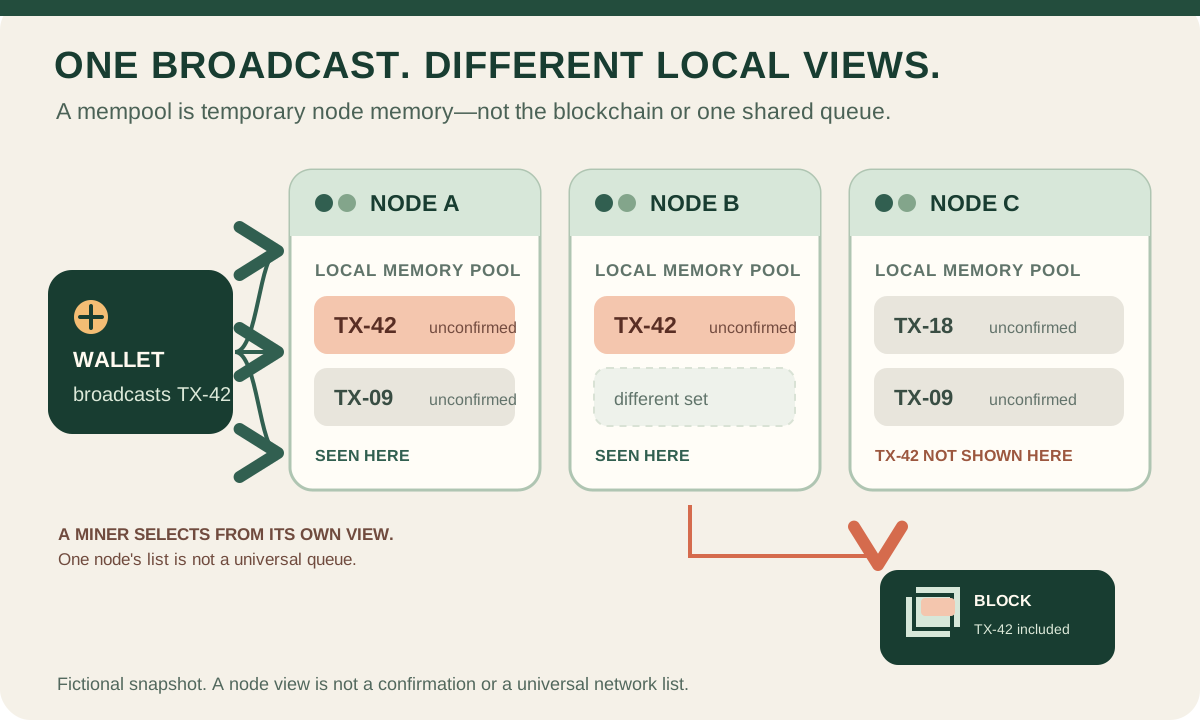
Learn what the Bitcoin mempool is, why nodes can show different pending transactions, and what an explorer's empty result really means.
Understand mining as a process for proposing blocks and competing under network rules, not as a simple passive-income promise.
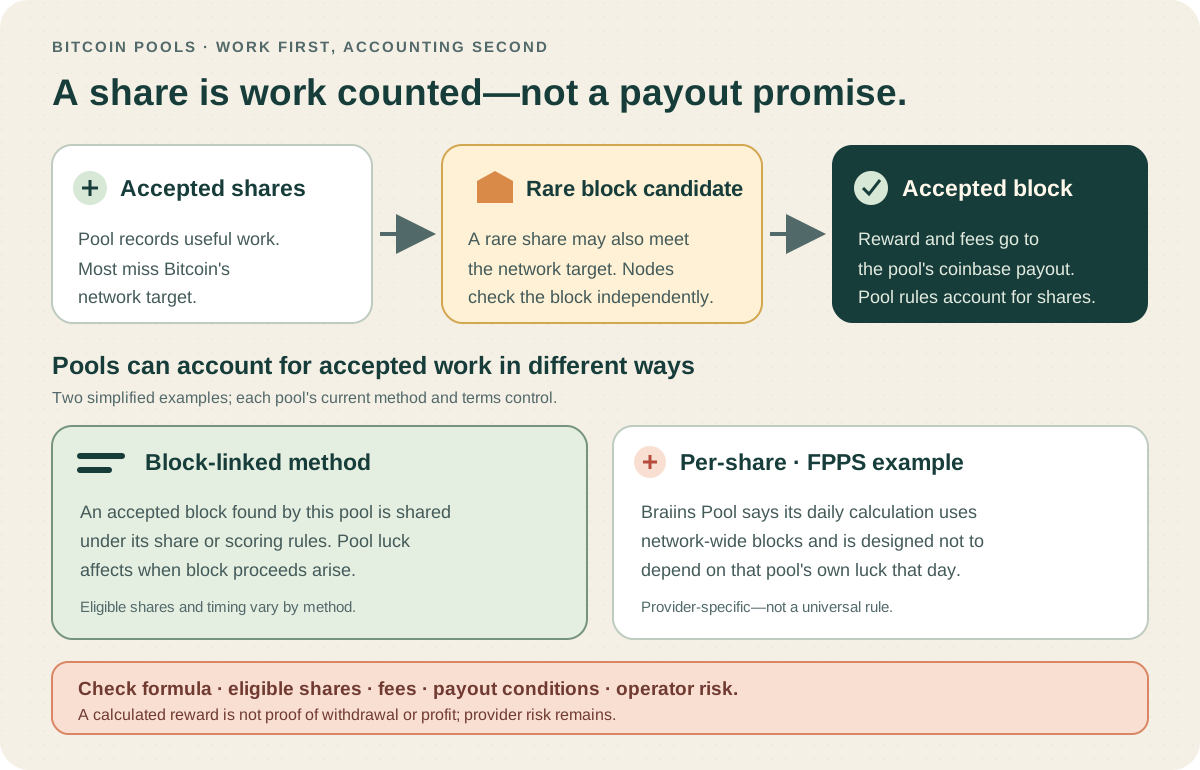
Understand Bitcoin mining pools: what a share proves, how it differs from a block, how pool payouts work, and what to check before trusting an operator.
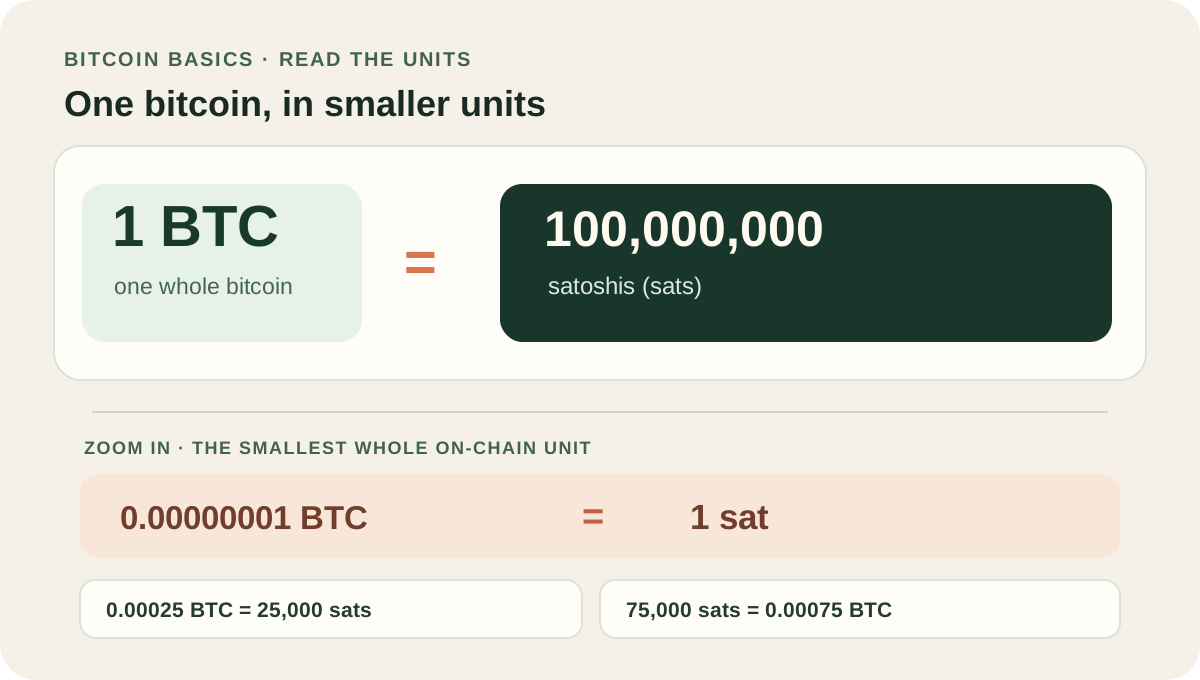
Learn how satoshis relate to BTC, convert common amounts, and separate a Bitcoin unit from its changing cash value.
Understand supply language and issuance changes without turning scarcity into a guaranteed price or investment conclusion.
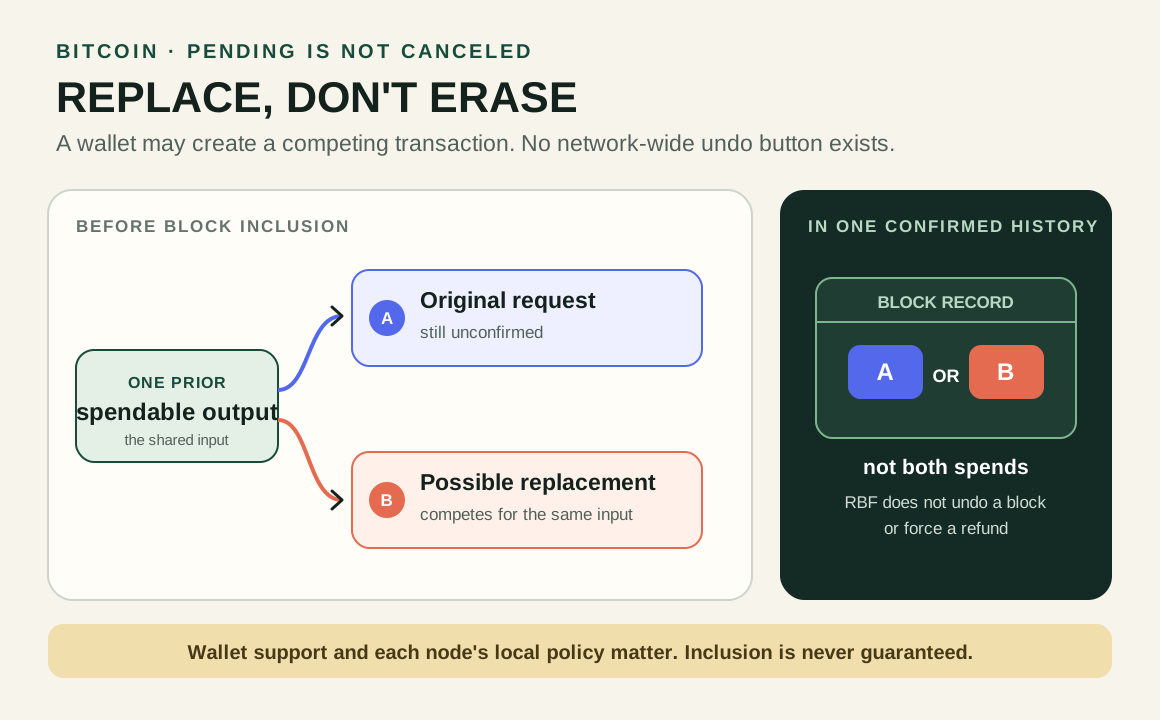
Bitcoin has no central cancel button. Learn what Replace-by-Fee can do to an unconfirmed transaction—and what confirmation changes.
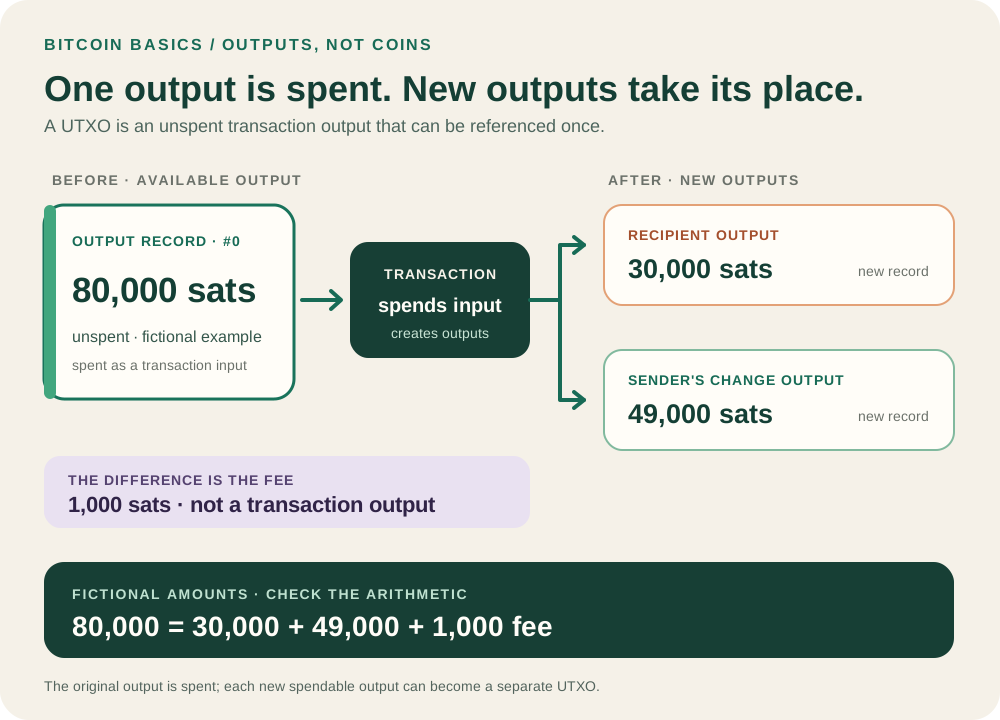
Learn how Bitcoin outputs become UTXOs, why a wallet spends whole outputs, and how payment, change, and fees fit together.
Learn a useful Bitcoin and Ethereum comparison by separating their network purposes, account models and application assumptions.
Compare hosted accounts, software wallets and offline storage by asking who controls authorization and how recovery works.
Learn why a signature without a visible transfer can still deserve a careful pause.
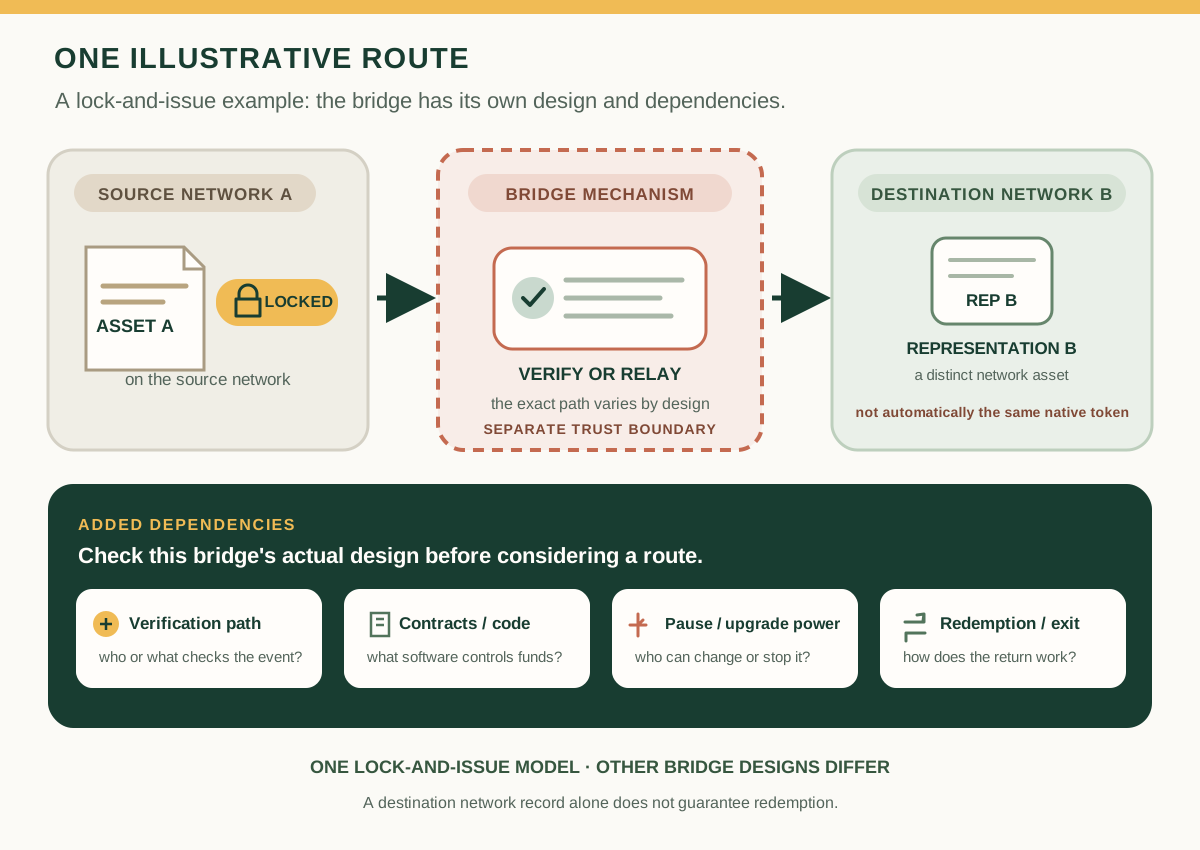
Learn how blockchain bridges move assets between networks, how representations differ, and what to check about verification, controls, fees and exit.
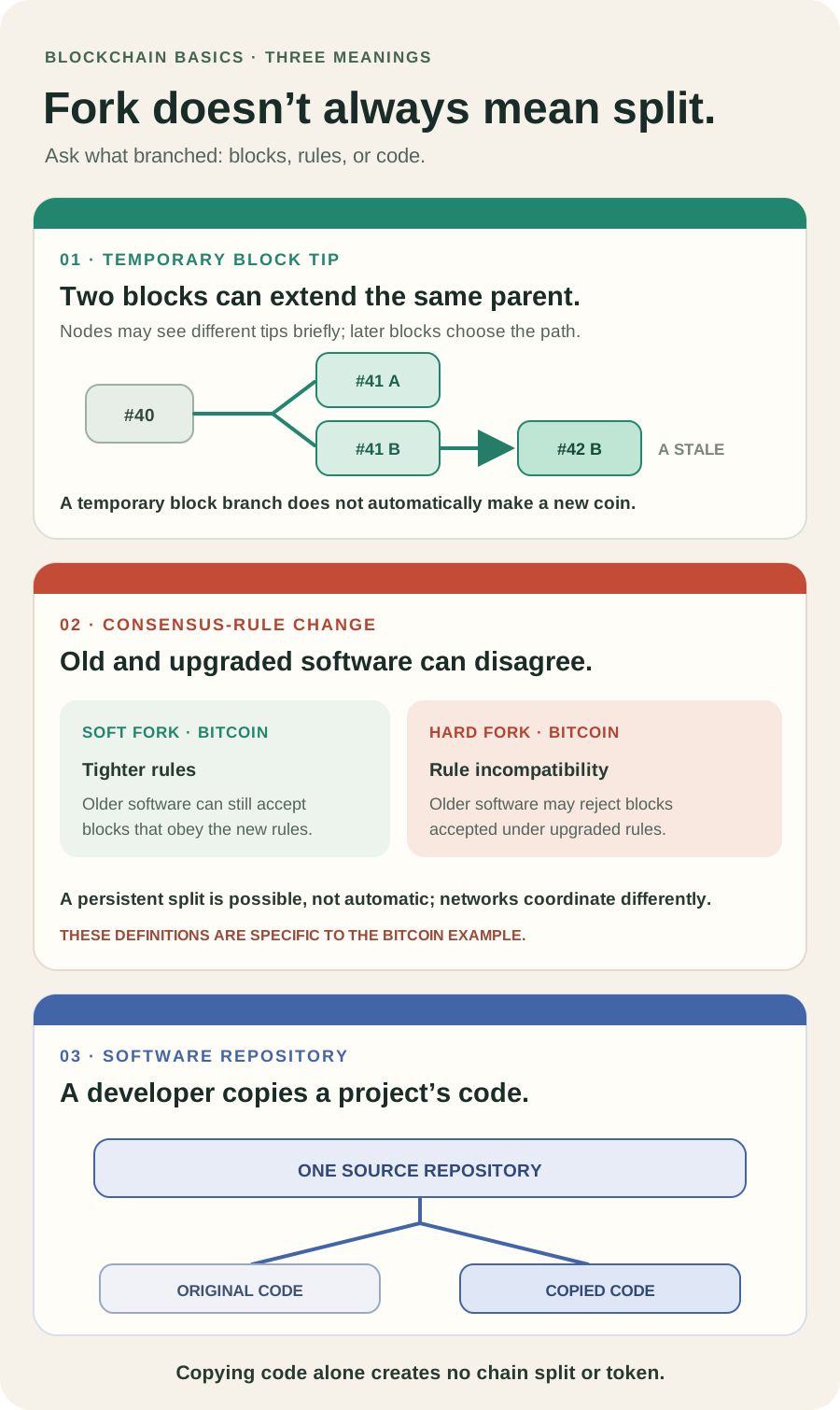
A blockchain fork can mean competing blocks, a protocol-rule change, or copied code. Learn the difference between temporary forks, soft forks, and hard forks.
Compare a blockchain with an ordinary database by asking who can write, verify, coordinate and reverse changes.
Bring questions about claims, custody and redemption to a research-only destination.
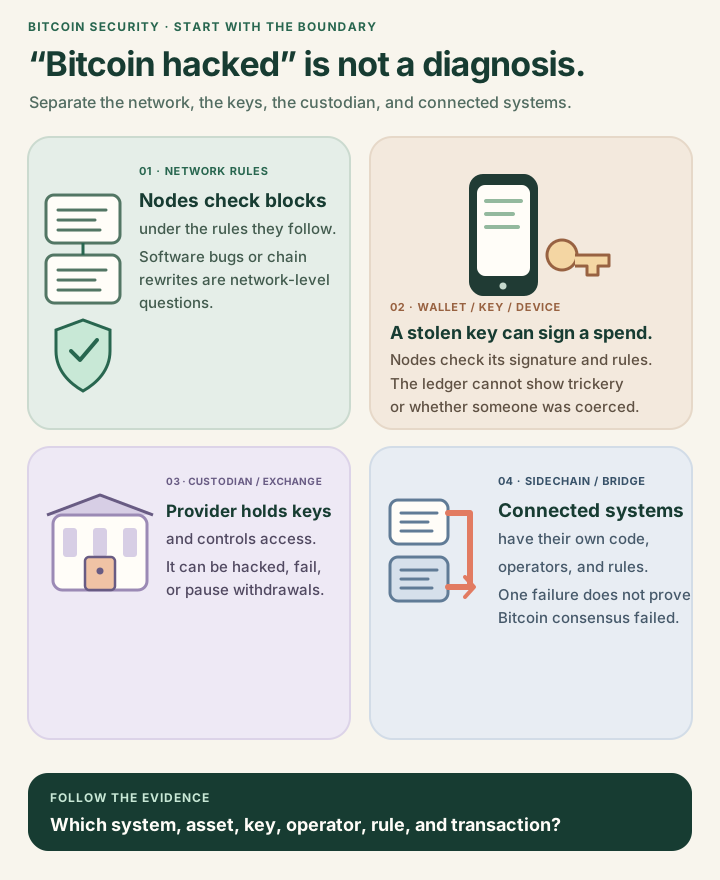
Can Bitcoin be hacked? Separate Bitcoin network attacks and software bugs from stolen wallet keys, exchange failures, and sidechain exploits.
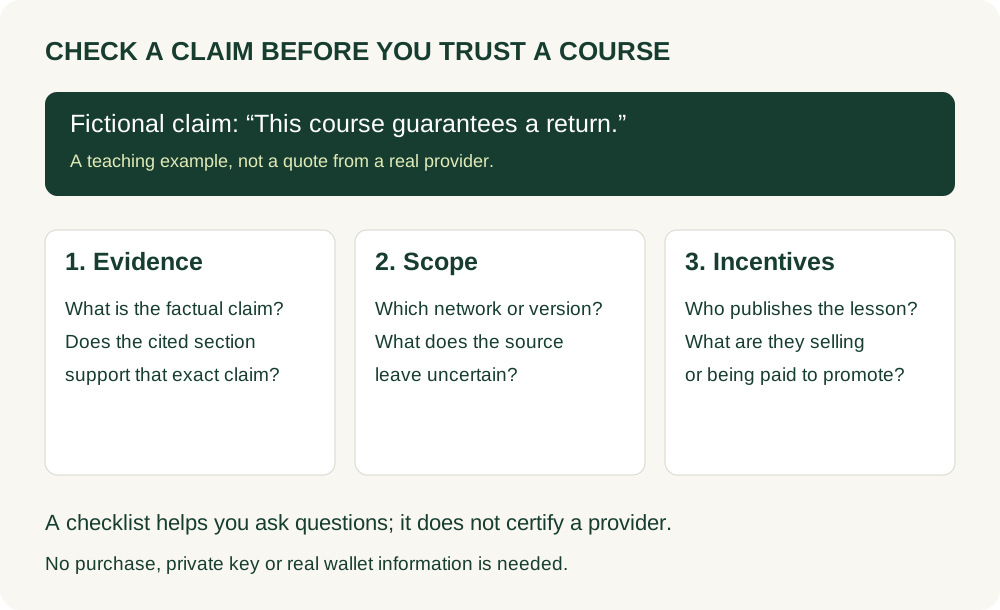
Compare crypto courses and guides by their lesson goals, evidence, exercises and commercial interests, using a practical source-checking worksheet.
Use your learning goal to choose among StonkScope, Community, Link, xRWA and SuperQuant.
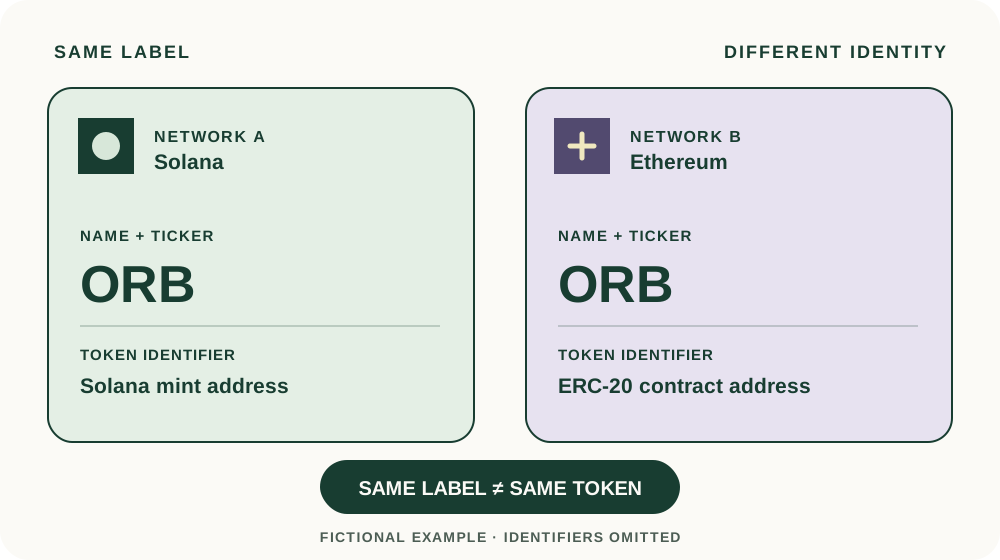
Learn what people mean by crypto coins versus tokens, how network assets differ, and why a ticker cannot identify a token.
Understand how a position can close without your approval when risk limits are crossed.
Build a useful role in a crypto community without treating participation as an investment.
Explore groups, read participation rules and understand the points boundary before joining.
Explain recognition systems without implying redemption, investment value or future rewards.
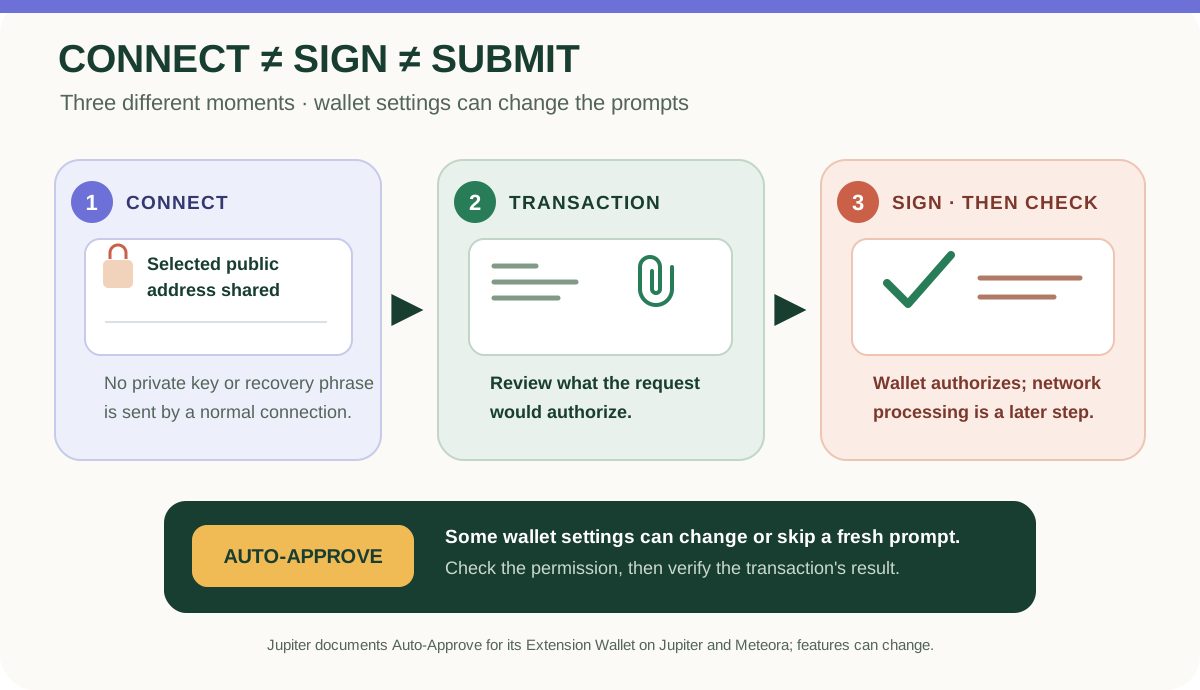
Learn what connecting a Solana wallet to Jupiter shares, how signing differs, and why Auto-Approve settings matter.
Understand incomplete records, timing differences and unknown risk before following trades.
Organize a public page around reader needs instead of internal project names.
Give visitors a clear destination, a useful introduction and one primary next step.
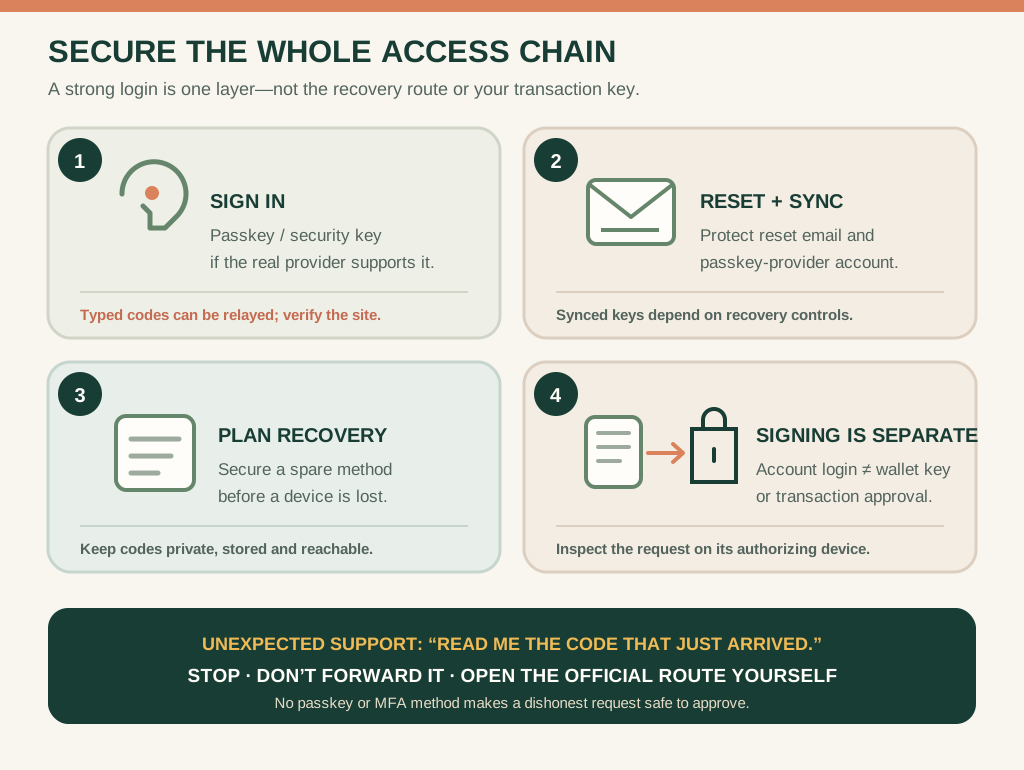
Compare passkeys, authenticator codes and recovery steps for crypto accounts—and what login security cannot protect.
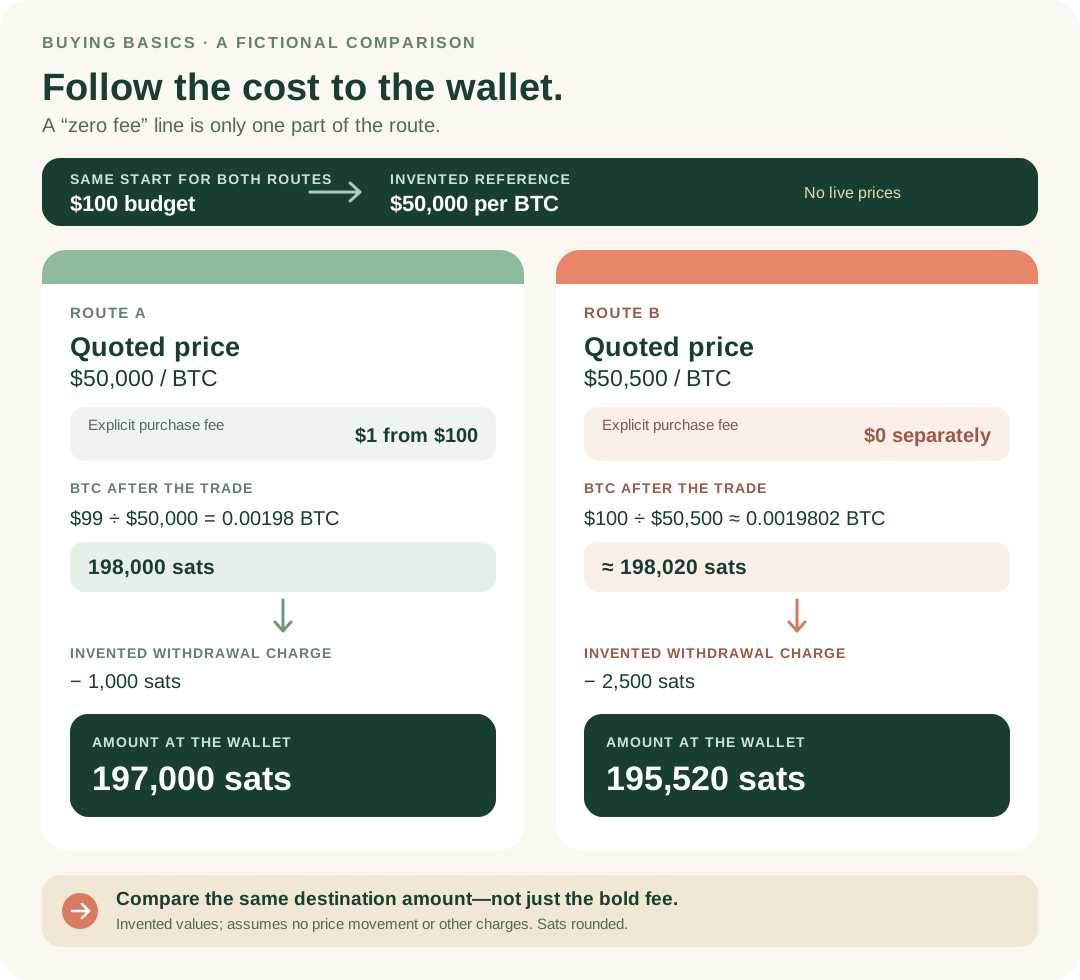
See how quoted prices, explicit fees and withdrawal costs affect the crypto you receive—and how to compare the full route.
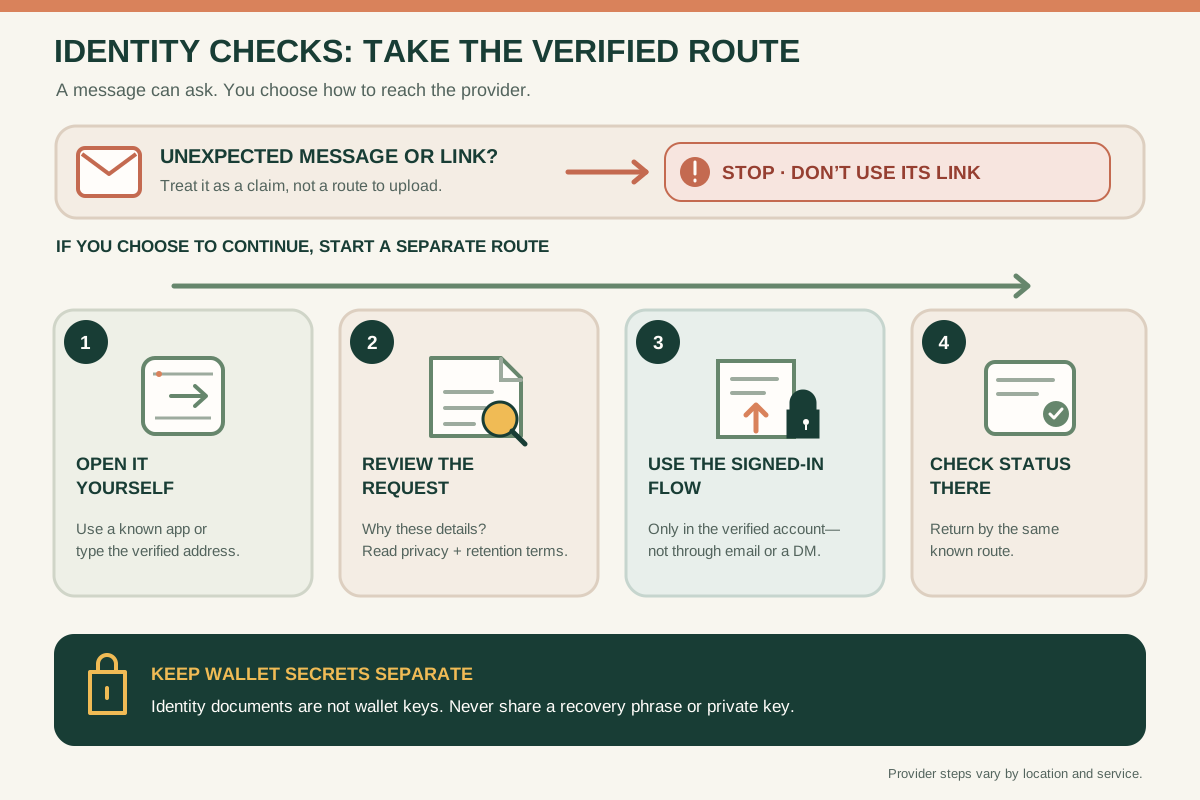
Understand why providers request identity documents and how to avoid sending them to impostors.
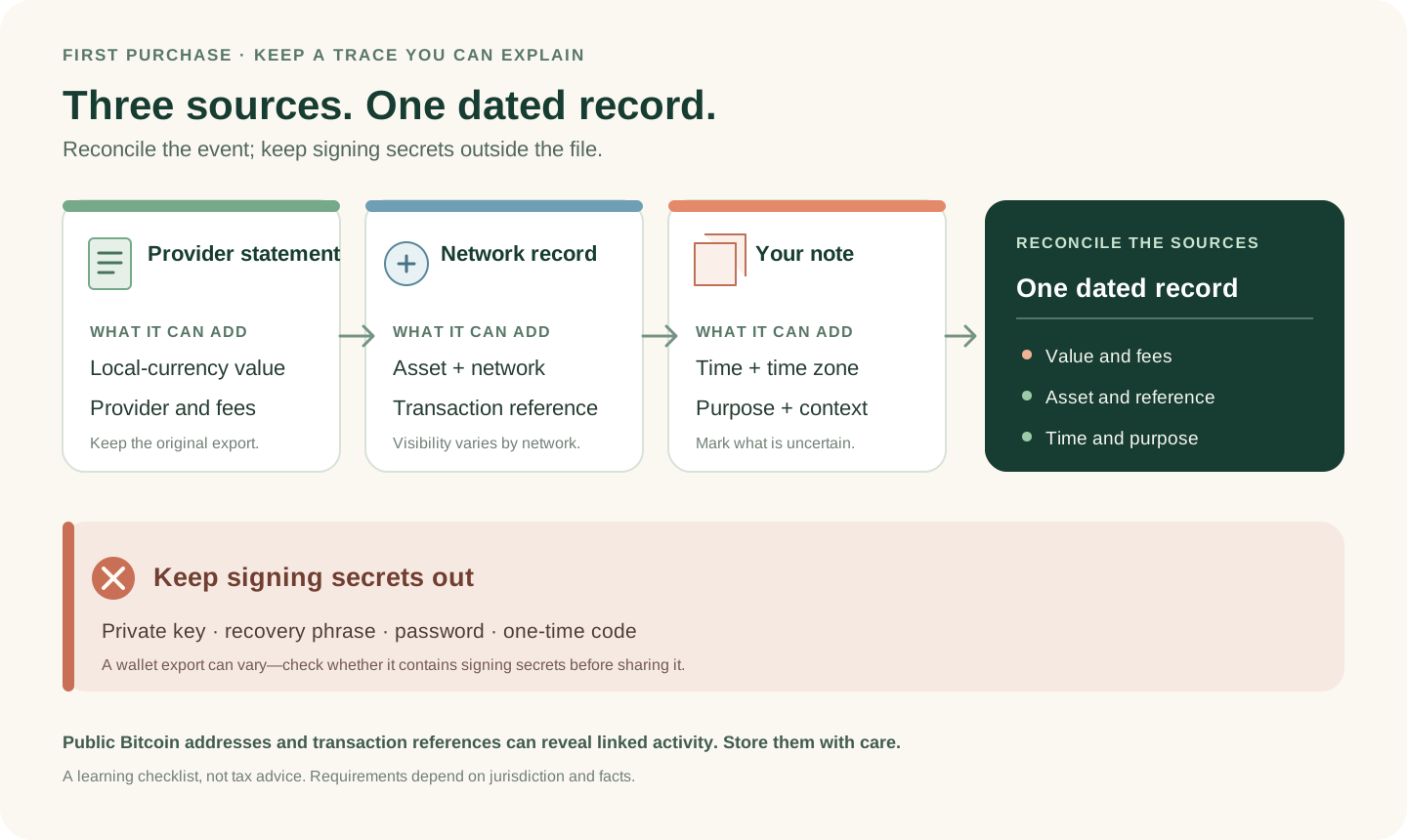
Create a clean transaction trail without storing secrets in your finance records.
Learn how to compare a crypto remittance route by recipient access, network fees, exchange costs and support.
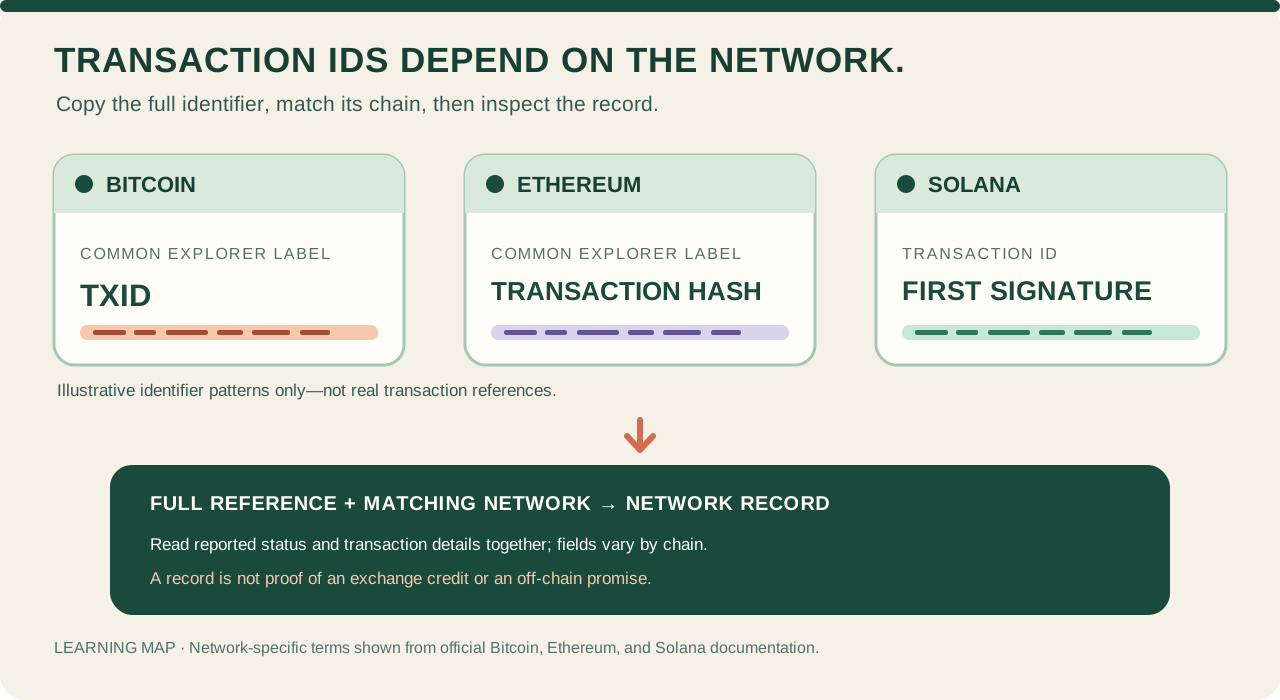
Learn what a crypto transaction ID identifies, how Bitcoin, Ethereum and Solana label it, and how to check a record without mistaking it for payment proof.
Learn the difference between an exchange balance and holding your own signing keys.
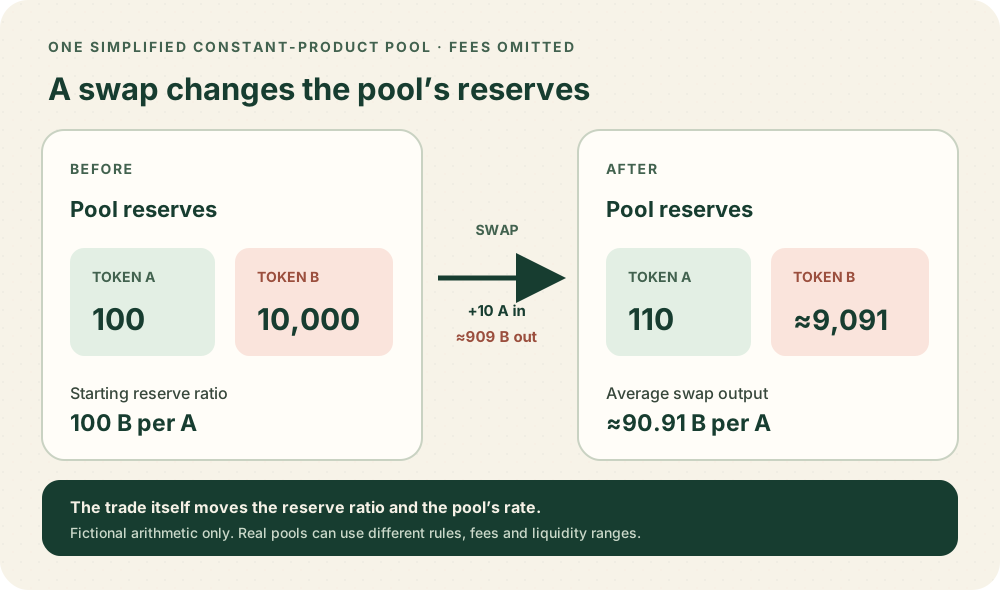
Learn how a DEX liquidity pool prices swaps, why trade size changes output, and how price impact differs from slippage.
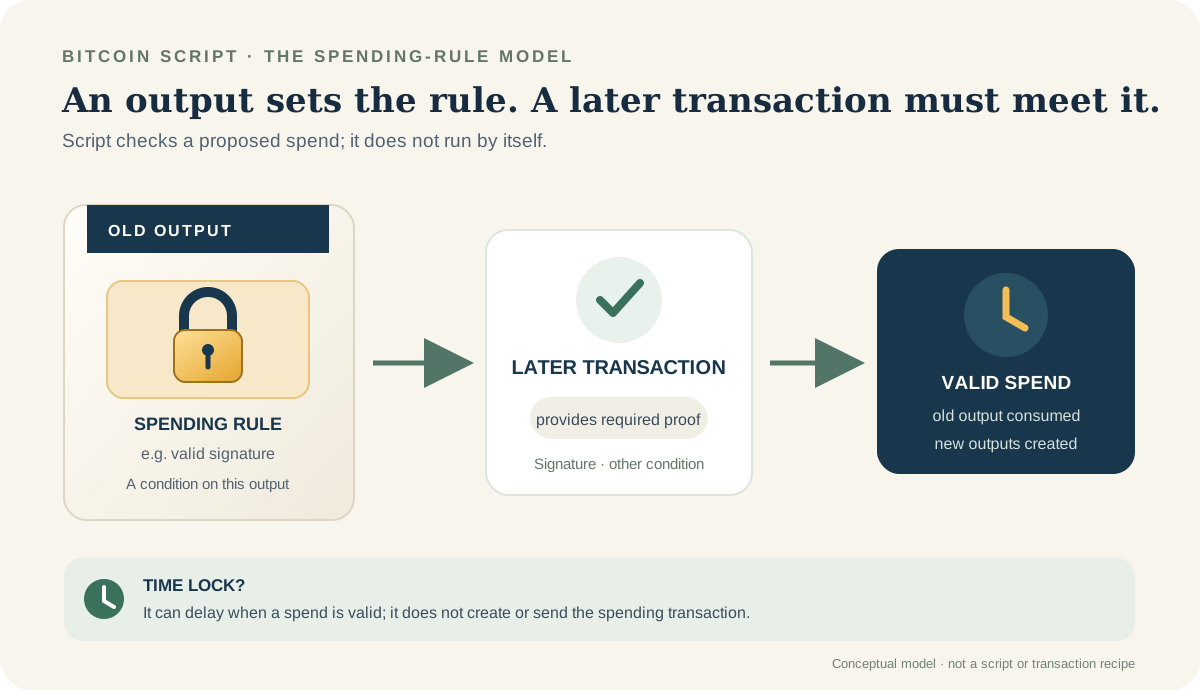
Bitcoin can enforce programmable spending conditions. See how Script checks spends, what time locks do, and how it differs from general-purpose smart contracts.
Understand peak-to-trough loss and why recovery percentages are asymmetric.
Build discoverability around useful explanations, honest expertise and clear navigation.
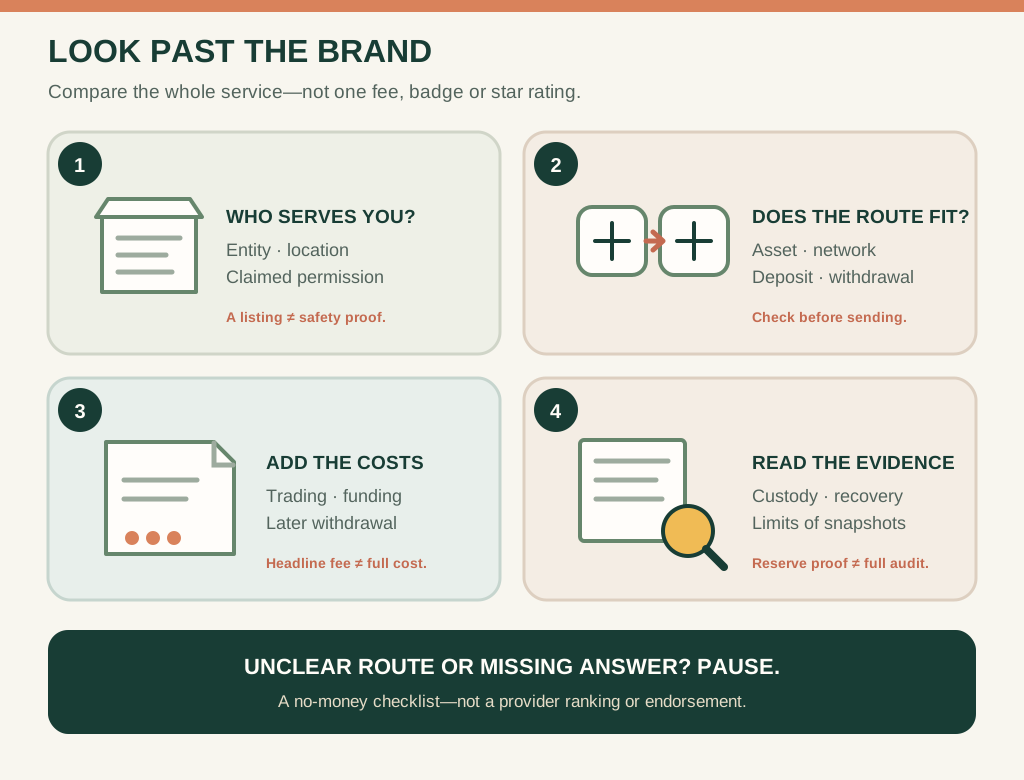
Use evidence about permissions, custody, withdrawals and support instead of a best-exchange list.
Prepare practical instructions for incapacity or death without publishing wallet secrets.
Make costs visible before evaluating whether a trading rule adds value.
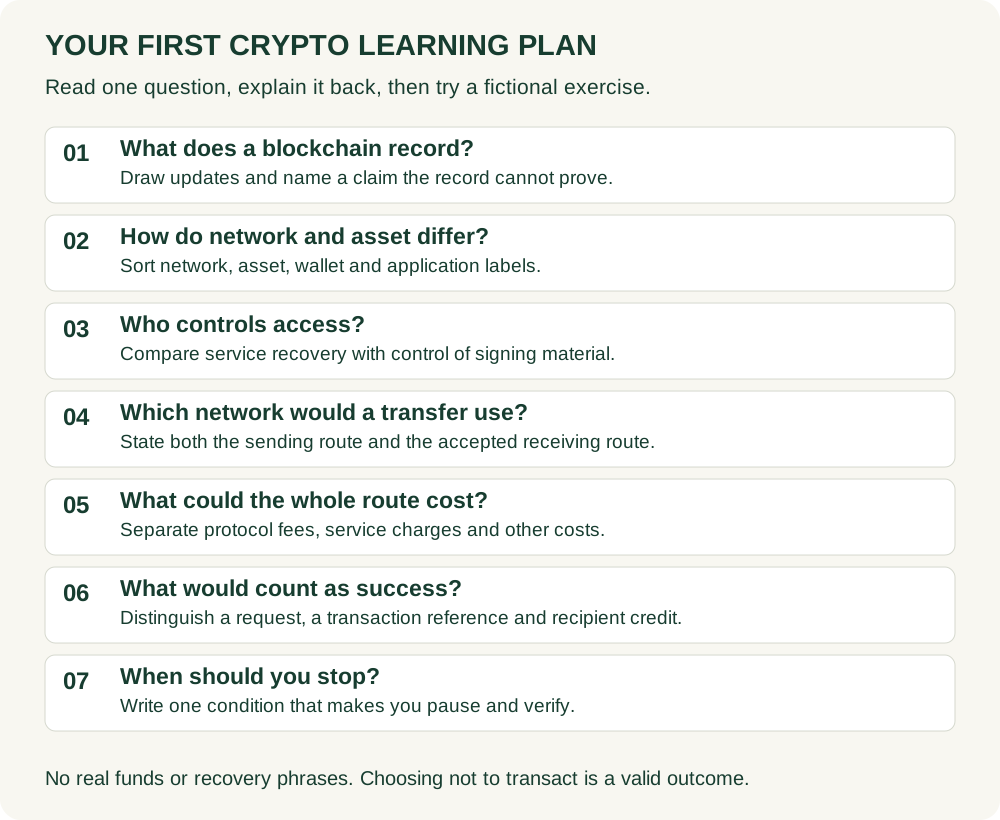
Use seven practical questions to build crypto basics before opening accounts, connecting a wallet or buying anything.
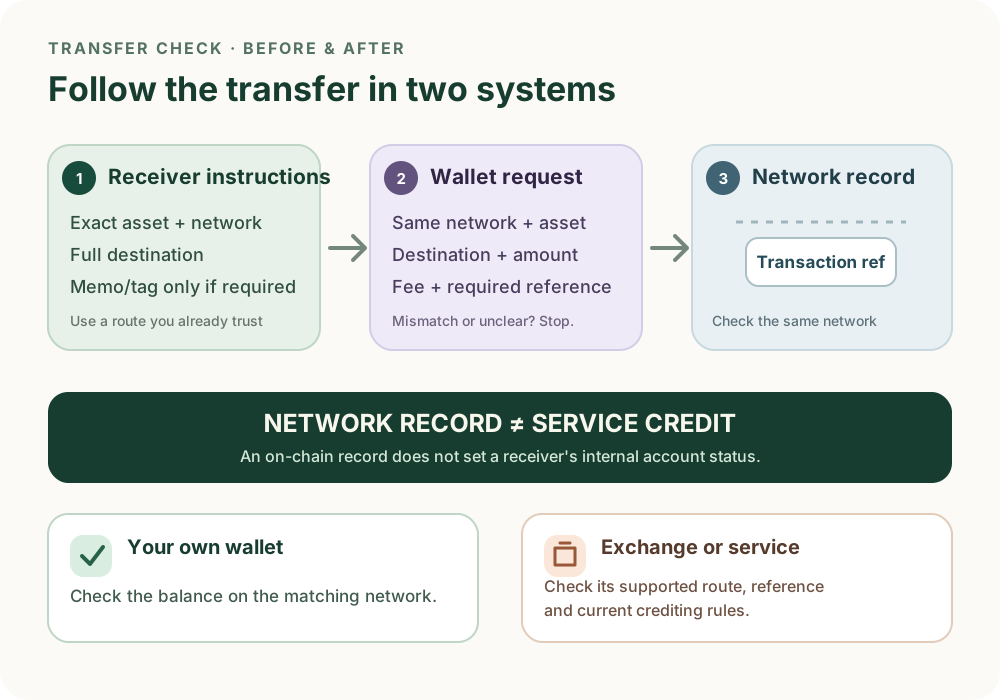
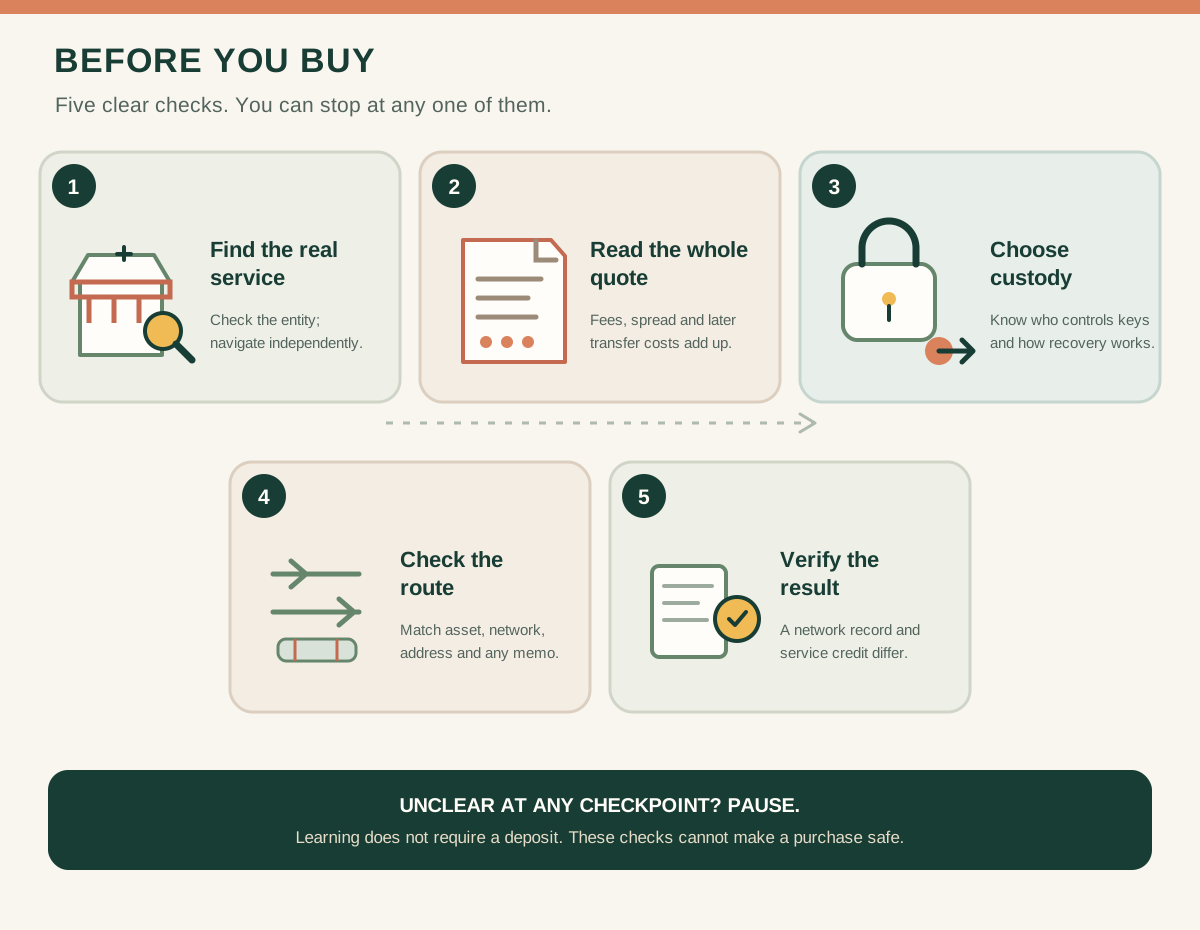
Before signing, match the asset, network, destination, amount, fee and any receiver-required tag. Then verify the network result separately from service credit.
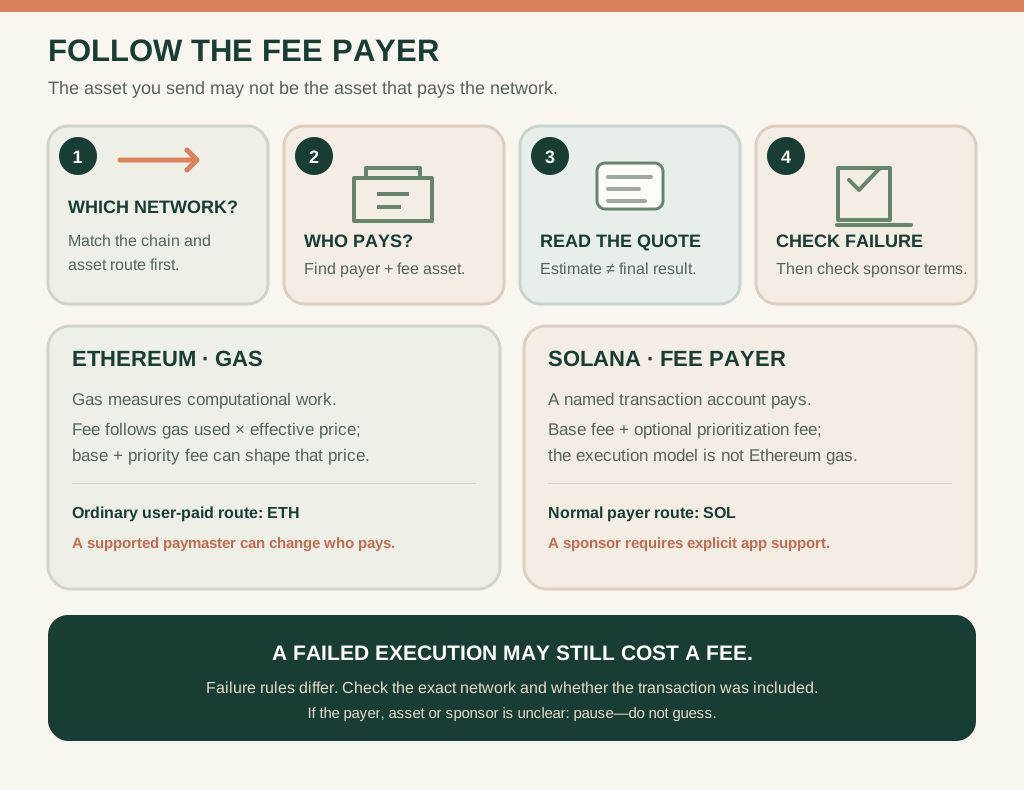
Learn what network fees pay for and why a token balance may not cover them.
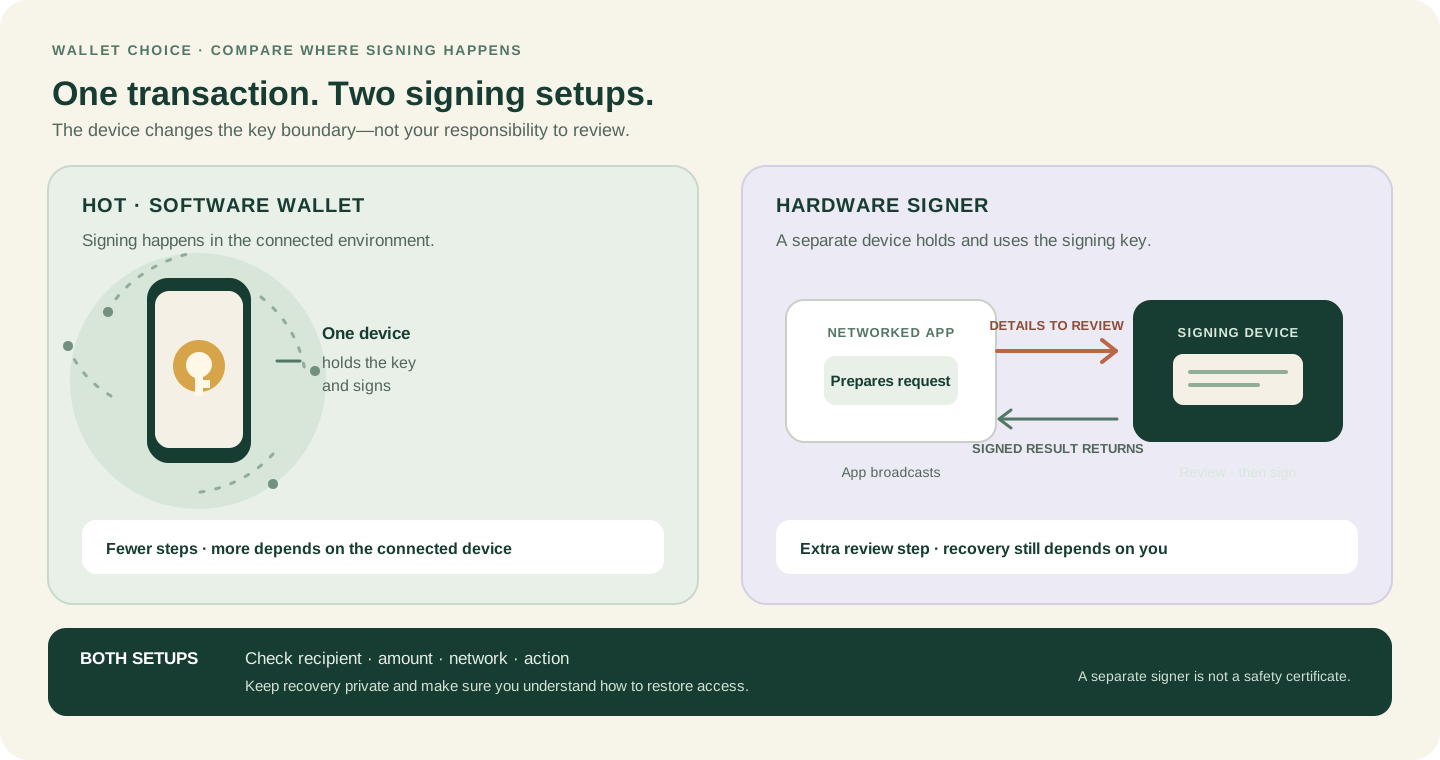
Compare hardware and software crypto wallets by key exposure, convenience, recovery duties and the risks neither can remove.
Compare everyday convenience, signing isolation and recovery responsibilities.
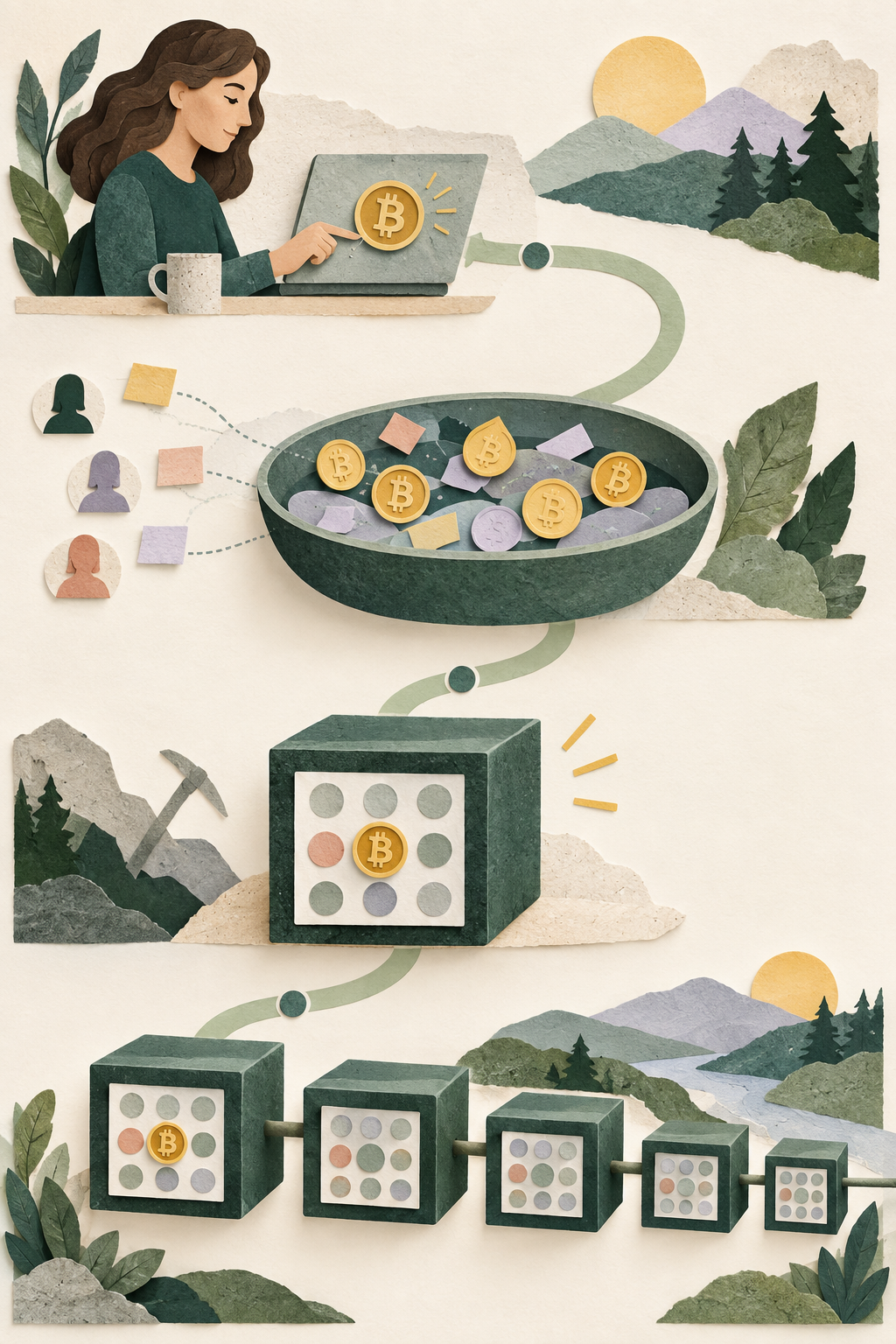
Follow a Bitcoin transaction from authorization to confirmation, and learn what the public record does not establish.
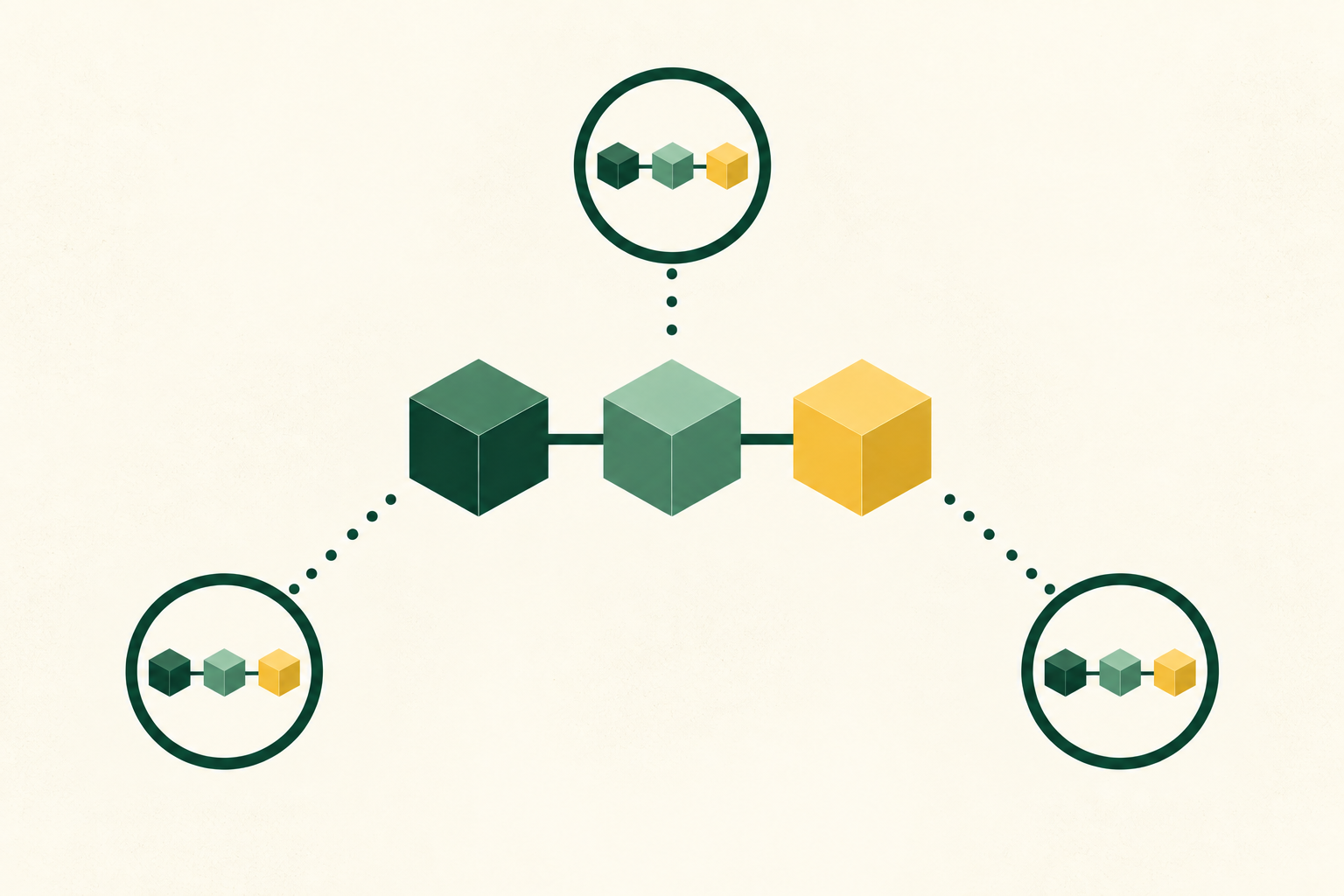
Learn what a shared ledger records, how updates are accepted and what a blockchain cannot verify.
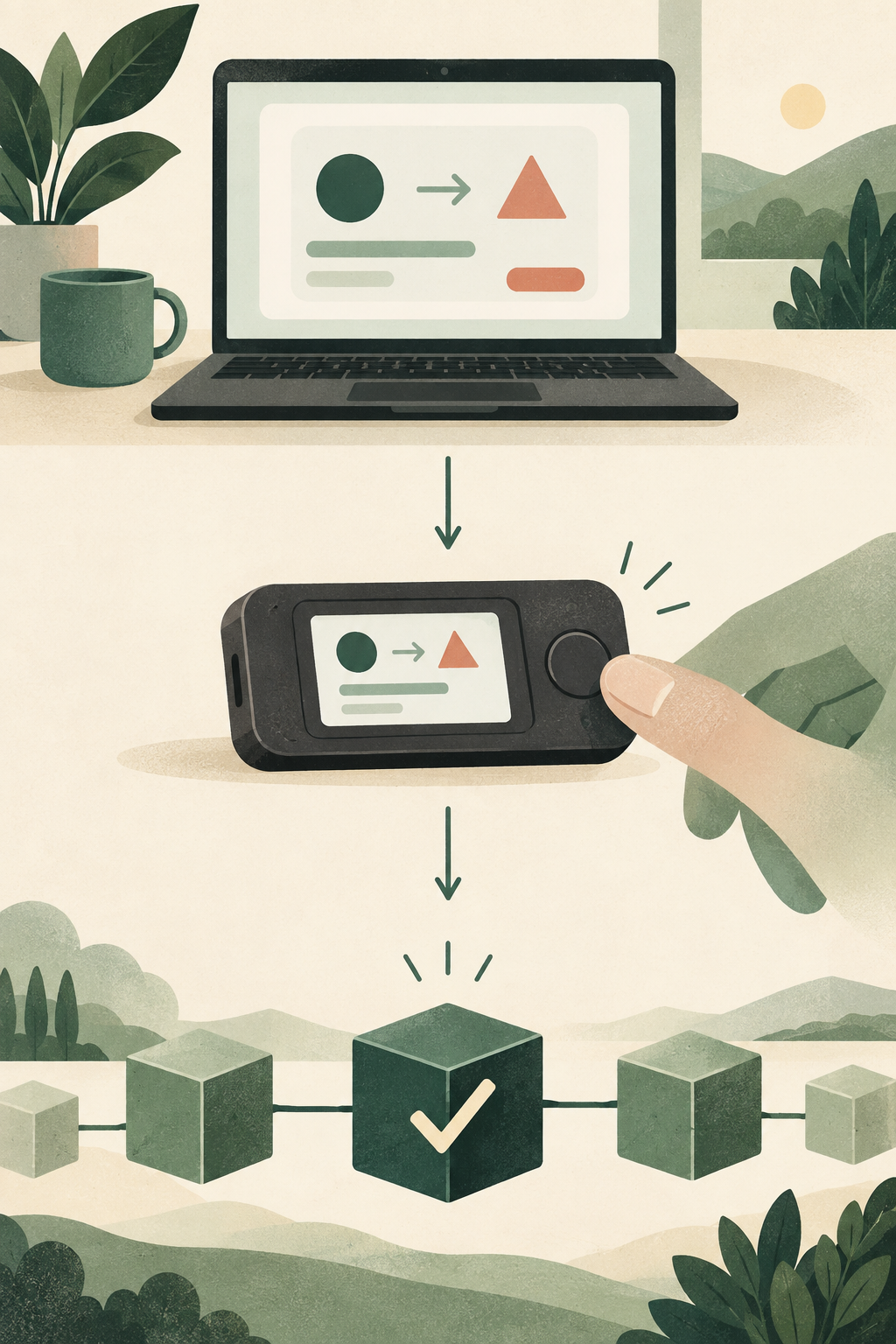
Follow a crypto transaction from wallet software to a Ledger signing device and back to the network, with checks to make before approval.
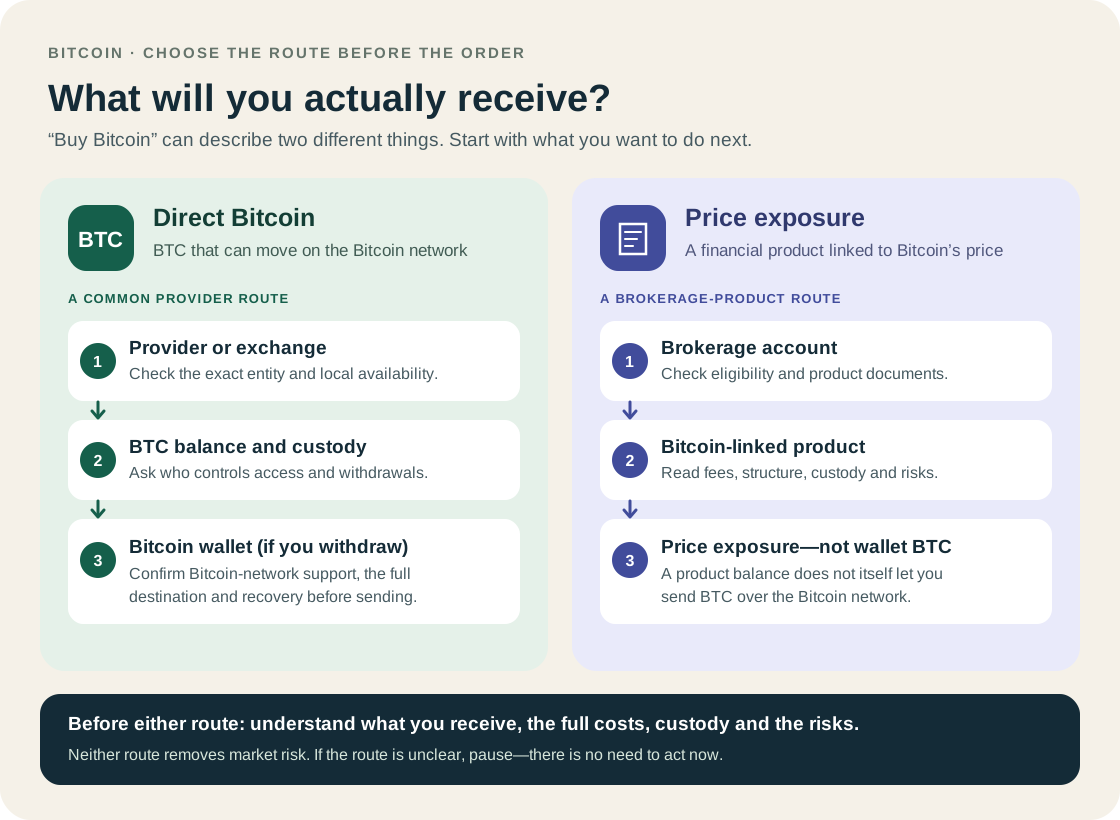
Compare direct BTC with a Bitcoin ETF or ETP where available. Check custody, fees, withdrawals, location limits and risks before deciding.
A step-by-step decision process for verifying a provider, understanding costs and preparing custody.
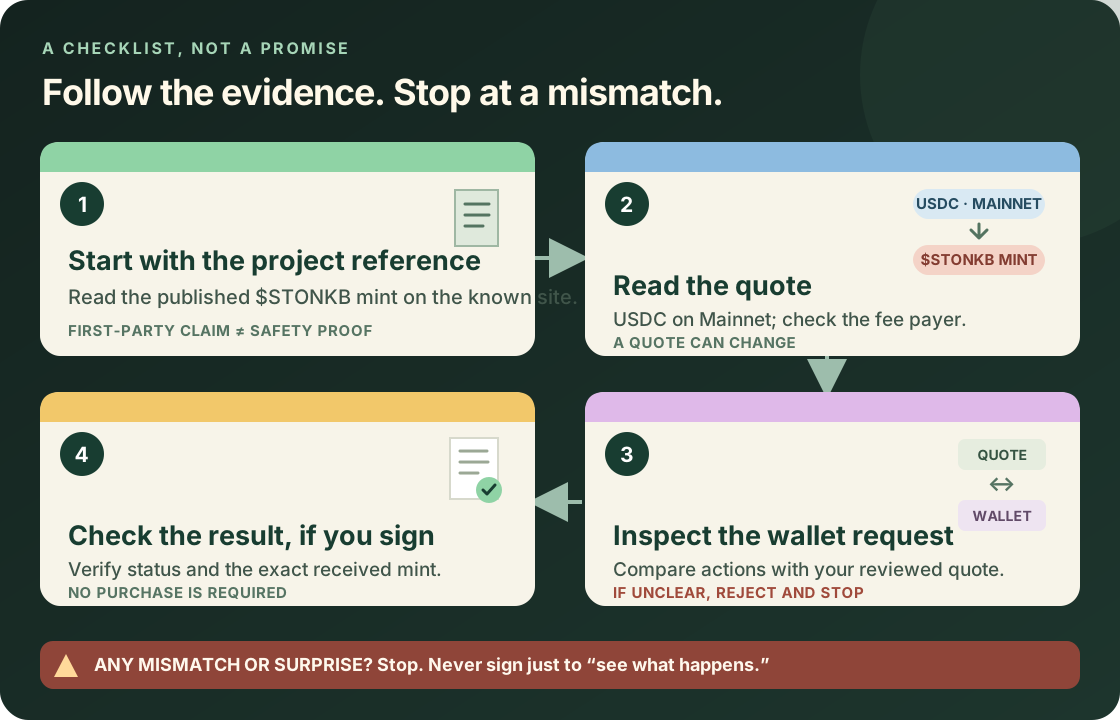
Check the $STONKB mint, confirm USDC is on Solana Mainnet, compare the fee payer and wallet request, and stop at a mismatch.
Compare Ledger devices by supported networks, connection needs, screen preferences, recovery planning and total cost before you buy.
Plan a STONK-style token launch around clear identity, honest claims, safety information and a usable public record.
Learn what a recovery phrase controls, why digital copies create risk, and how to plan a private backup you can still recover.
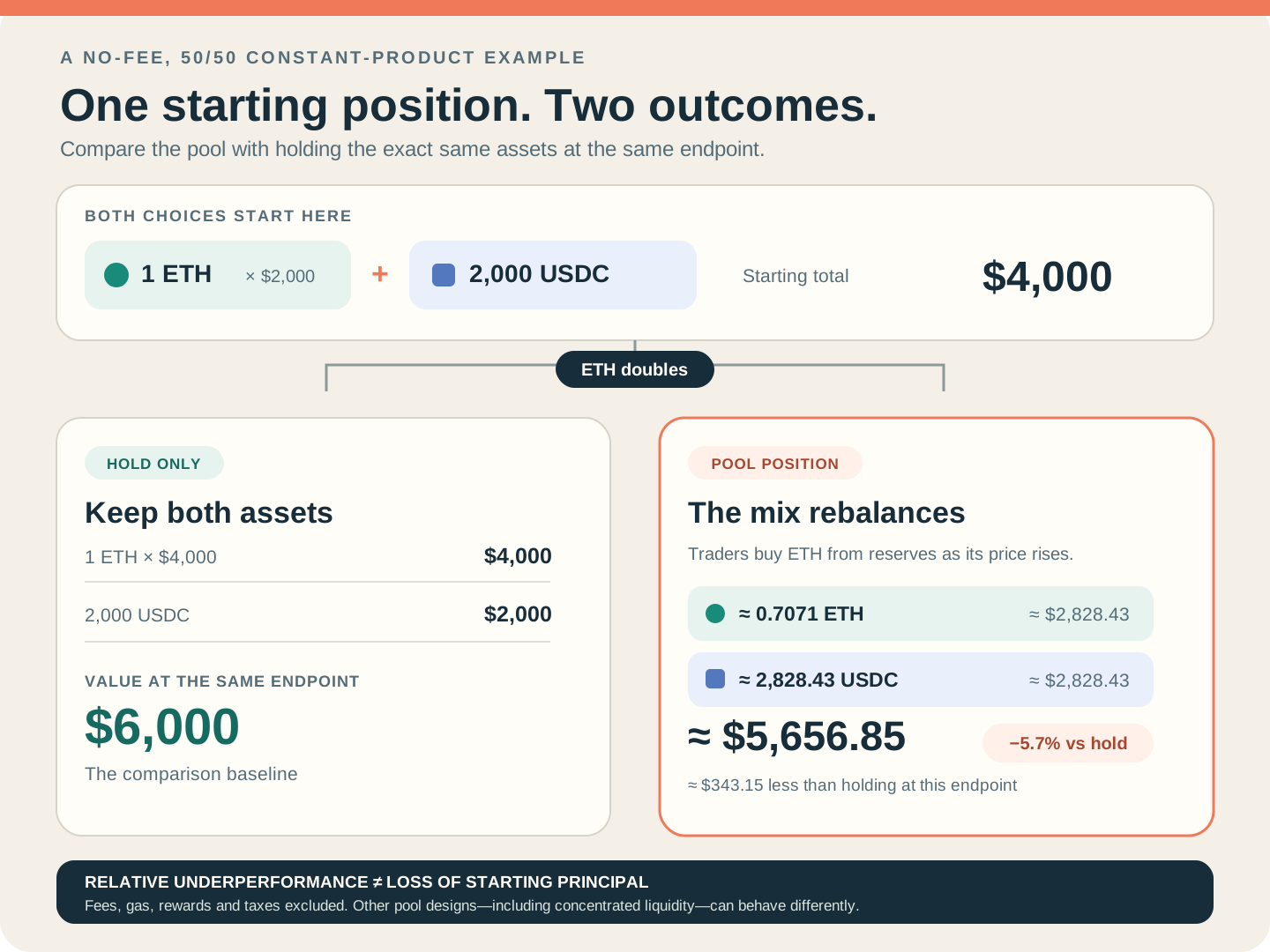
See how a 2× price move can leave a constant-product pool about 5.7% behind holding before fees—and why pool design matters.
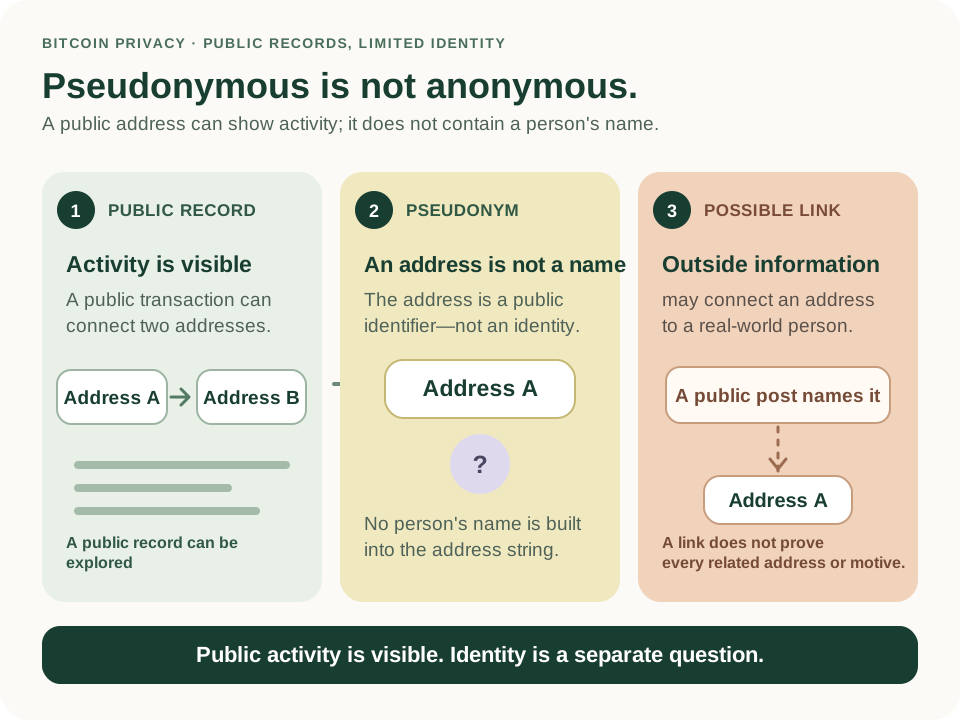
Bitcoin uses public addresses rather than names, but transactions are public and may be linked to people through outside information.
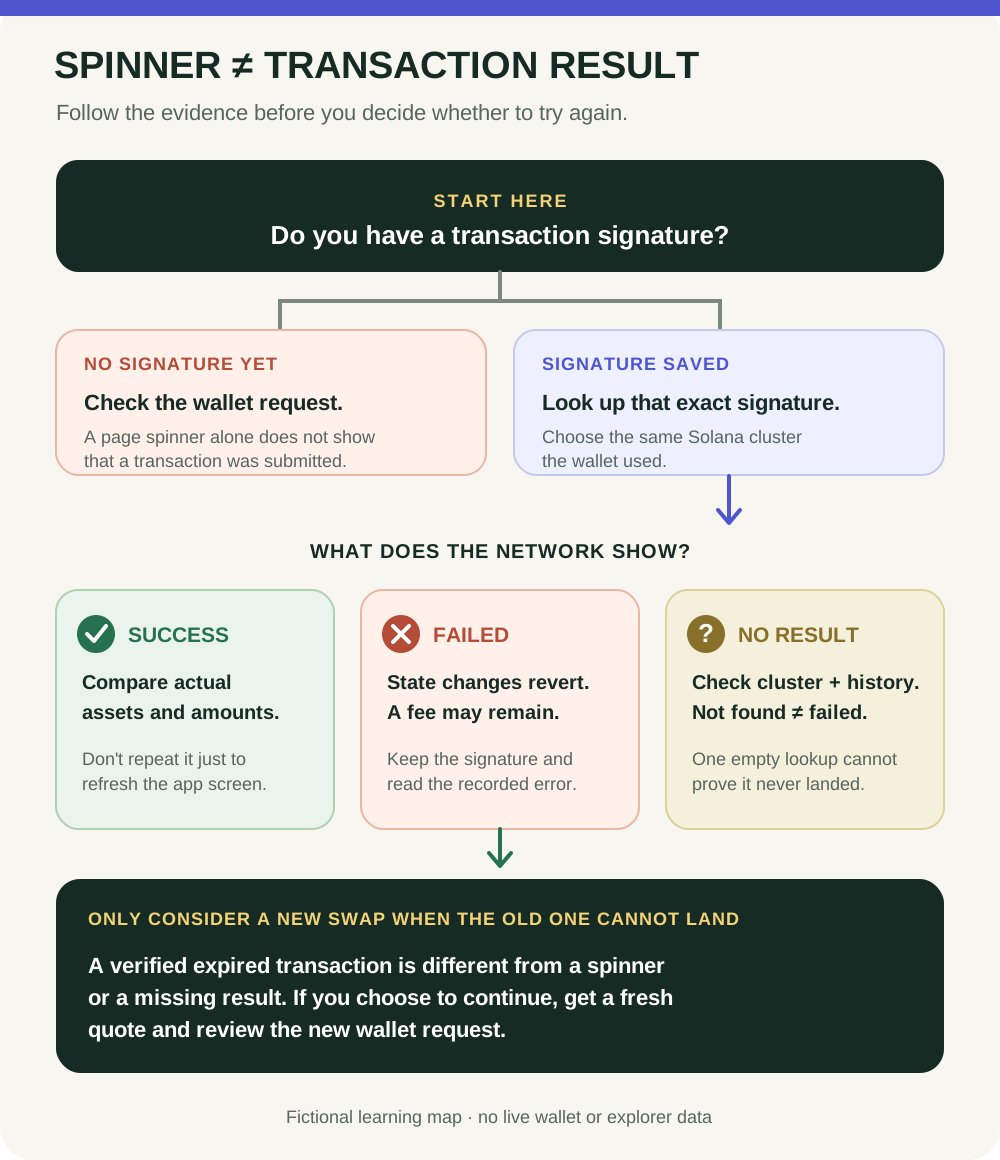
Check for a wallet signature, verify the correct Solana cluster, and learn what success, failure, or no result actually tells you.
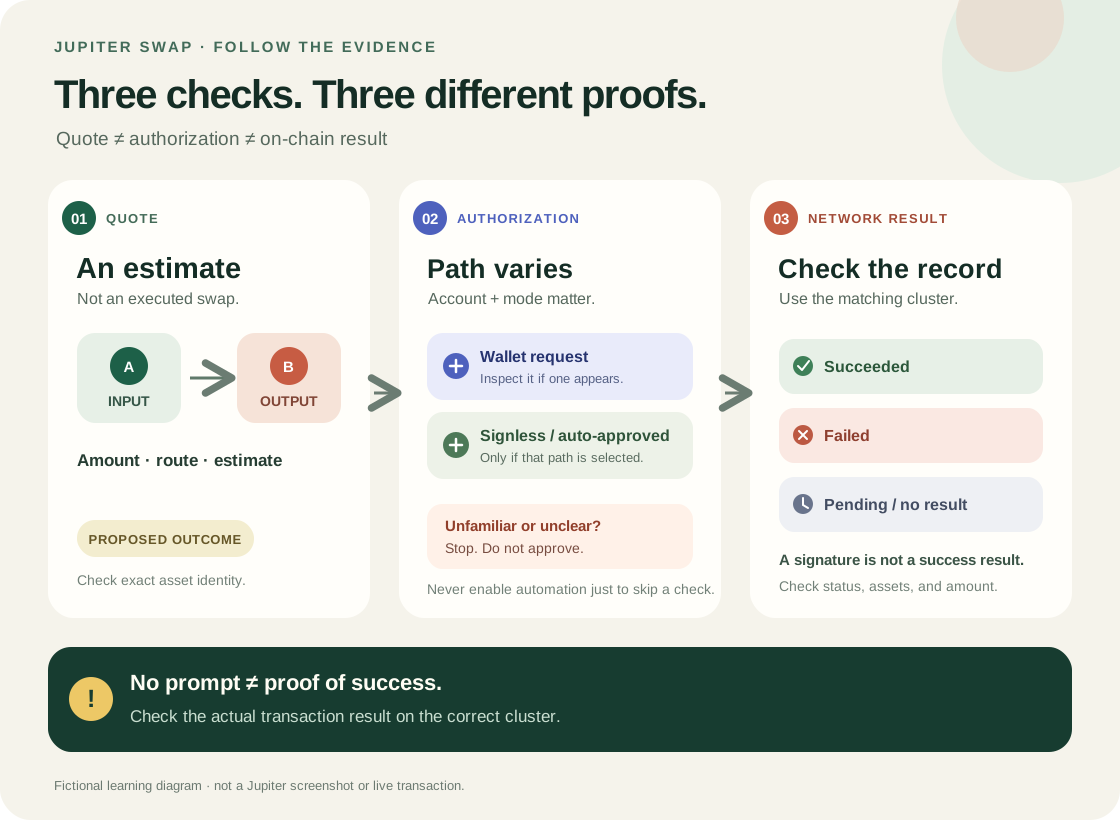
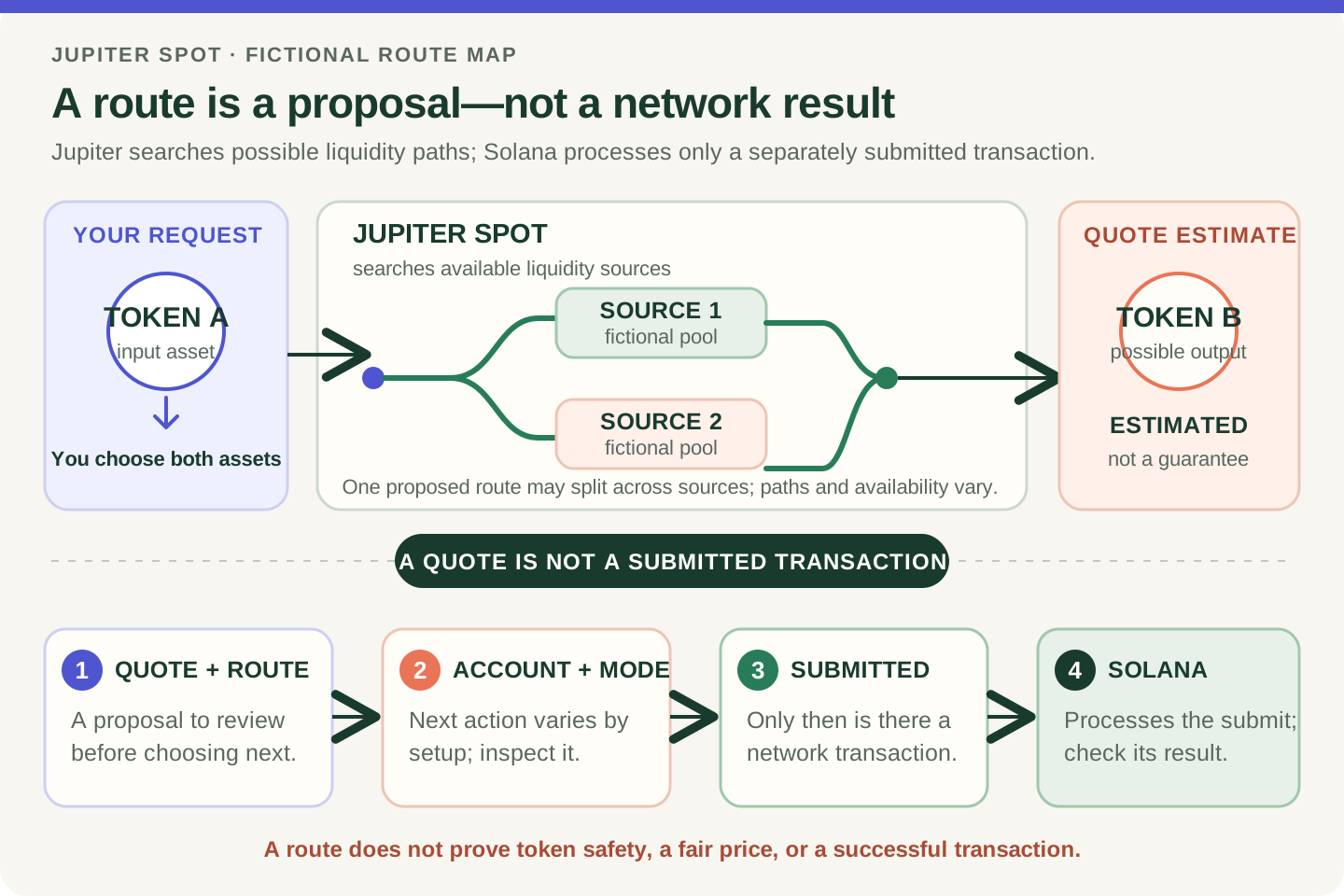
Separate a Jupiter swap quote from its account-dependent authorization path and Solana result; a prompt or signature alone does not prove success.
Follow a practical Jupiter walkthrough for the supplied USDC-to-$STONKB pair, including wallet checks, quote review and safe stopping points.
A careful Ledger setup checklist covering purchase source, official software, device verification, recovery backup and first-use preparation.
Prepare a useful bio, deliberate link order and a preview checklist before entering the editor.
Use a practical launch checklist to preview a creator page, verify links and revisit the reader journey.
Understand the difference between a displayed price and an executable exit.
Check signal timing, data revisions and execution assumptions before trusting a result.
Practice the recovery decision tree without moving money or exposing your backup.
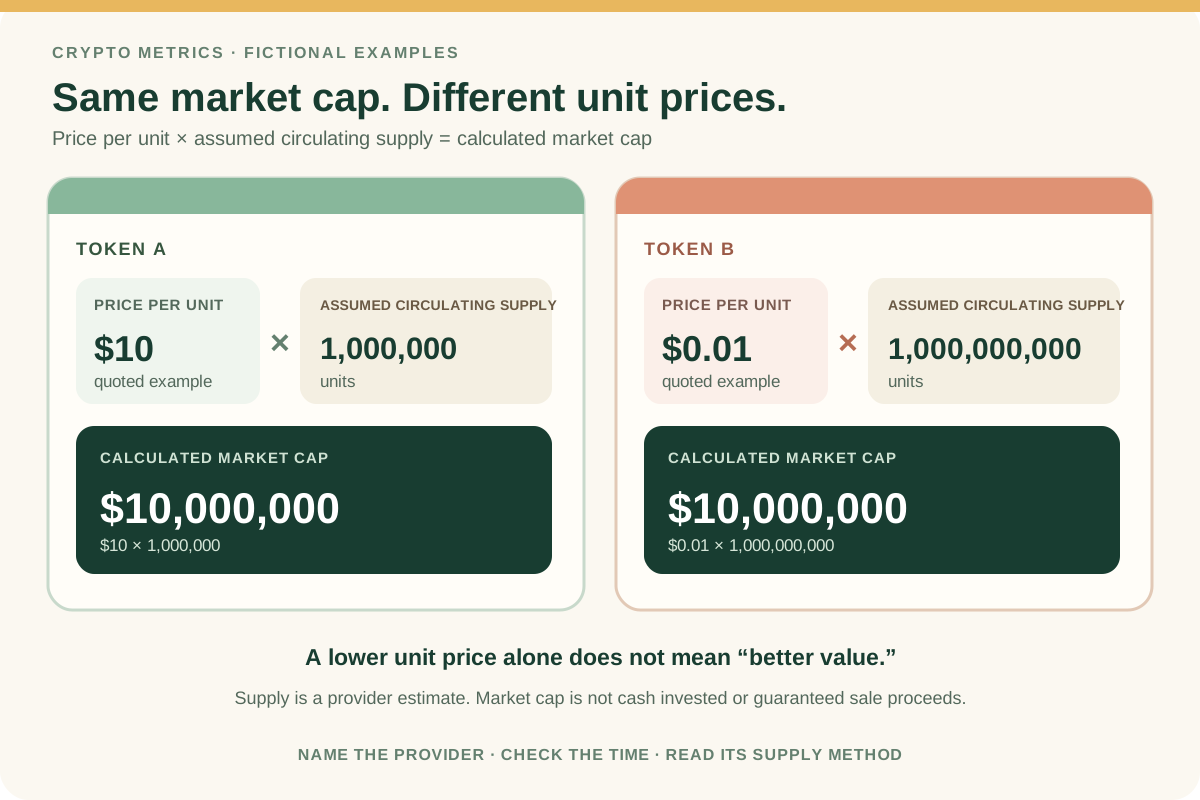
Learn how crypto market cap uses quoted price and circulating supply—and why it is not cash invested or guaranteed sale value.
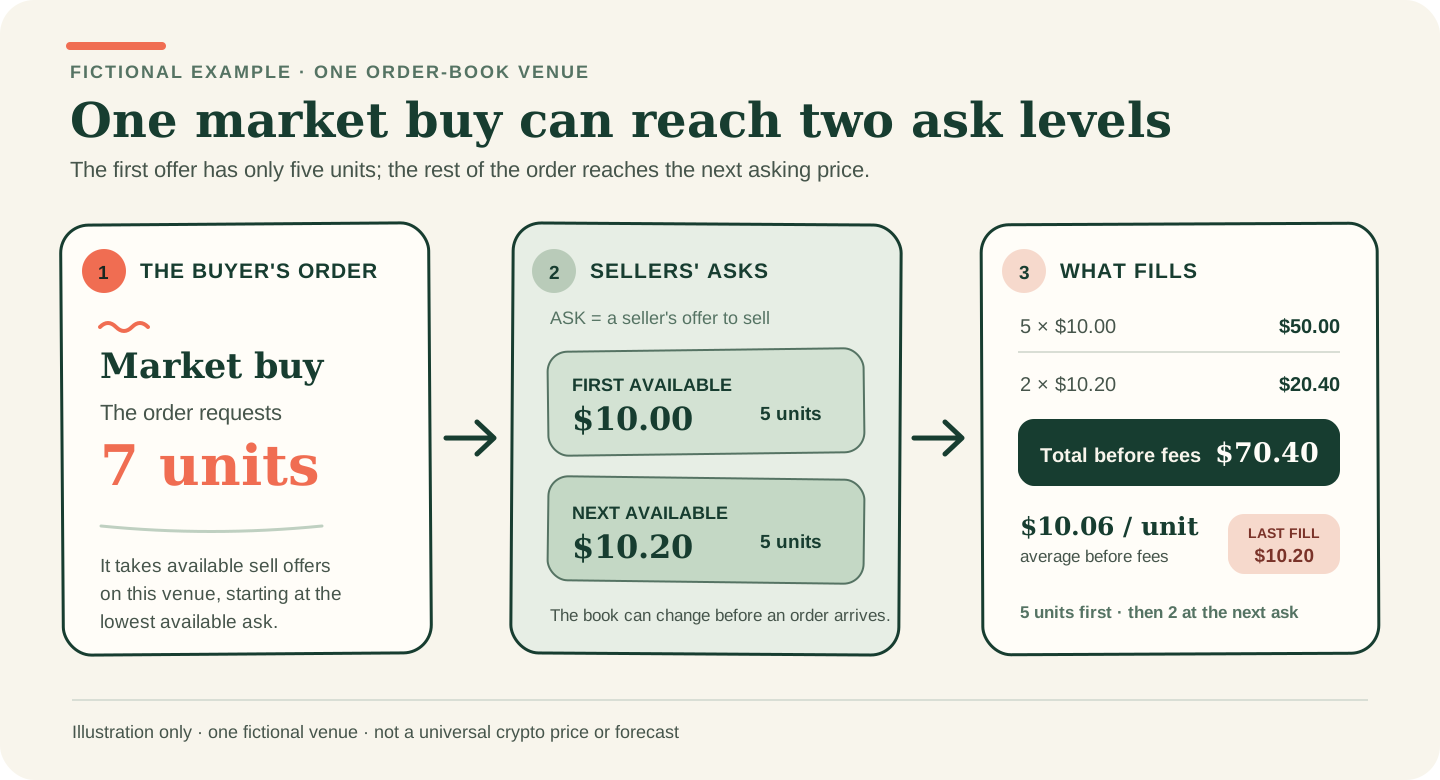
Compare market and limit orders by control, execution uncertainty, fees and the risks beginners should rehearse.
Understand how shared deposit addresses can identify individual customer accounts.
Make clear rules, reporting routes and financial boundaries part of the welcome.
Understand valuation timestamps, market demand and redemption frictions.
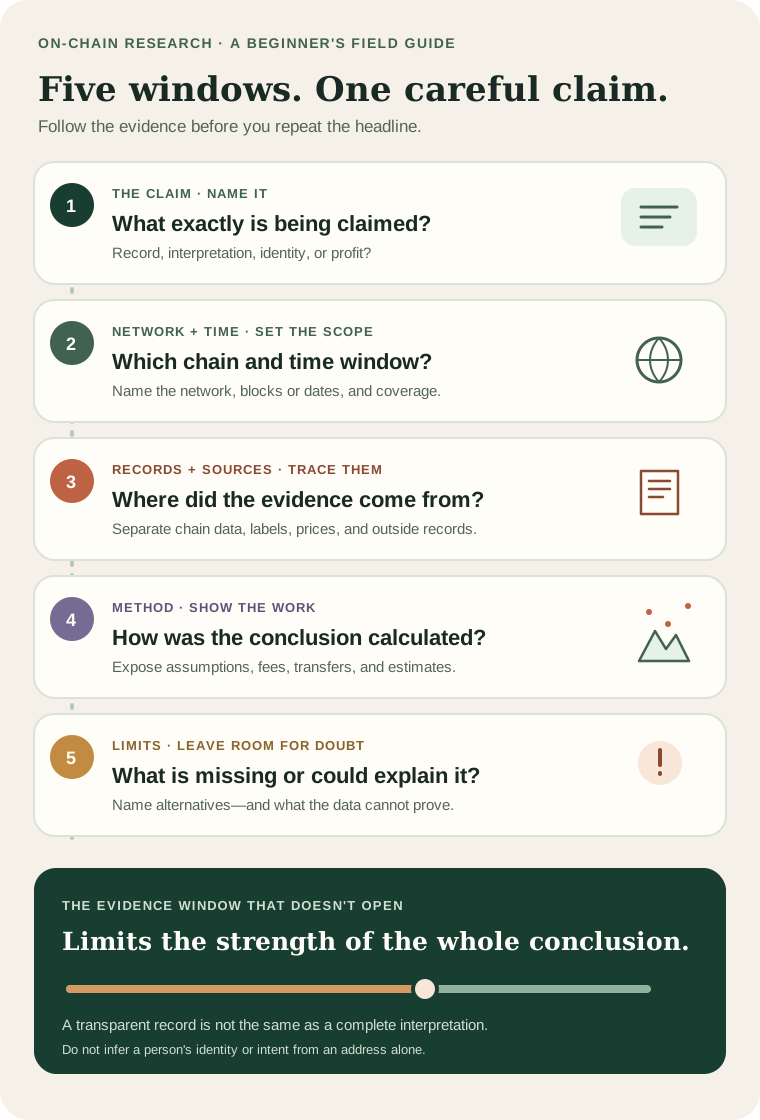
Evaluate evidence quality before sharing a chart or turning it into a decision.
Separate token records from custody, valuation and legal enforceability.
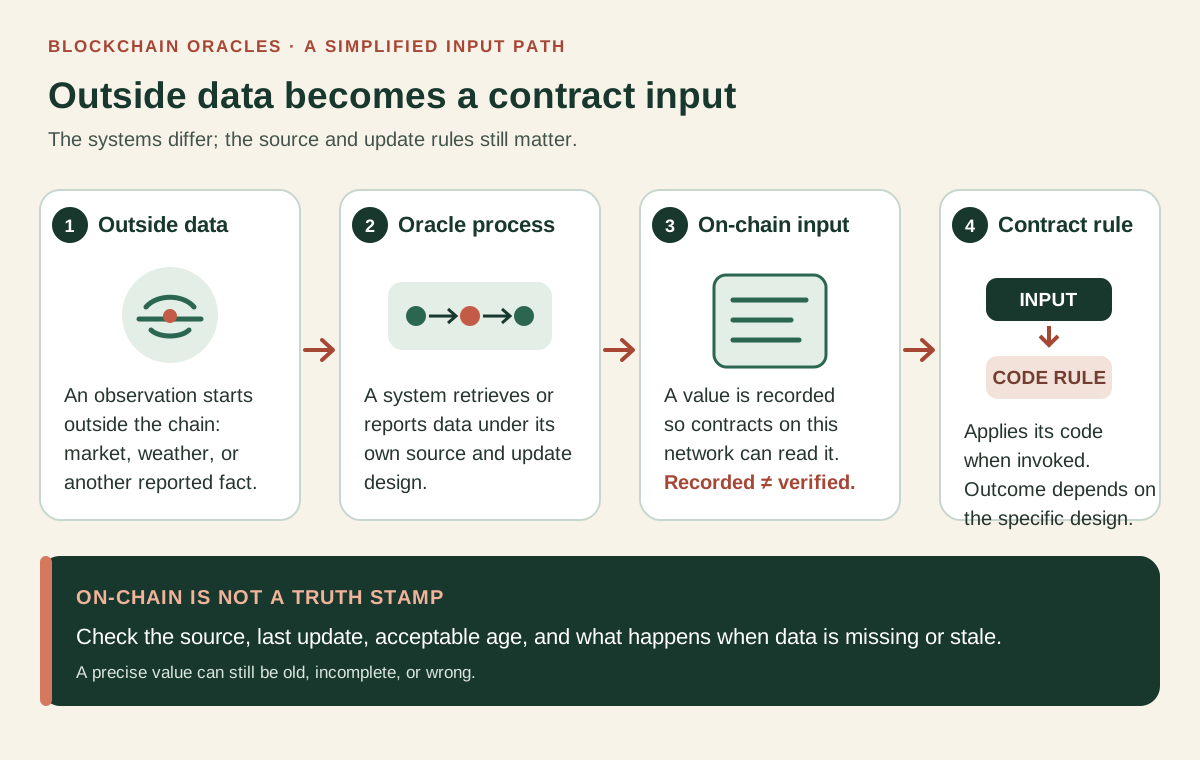
Learn how blockchain oracles bring outside data to smart contracts—and why source quality, update timing and stale-data rules matter.
Learn a decision process without mistaking simulation for real execution.
Pending, confirmed and finalized differ on Bitcoin, Ethereum and Solana. See why an exchange may still wait after a network update.
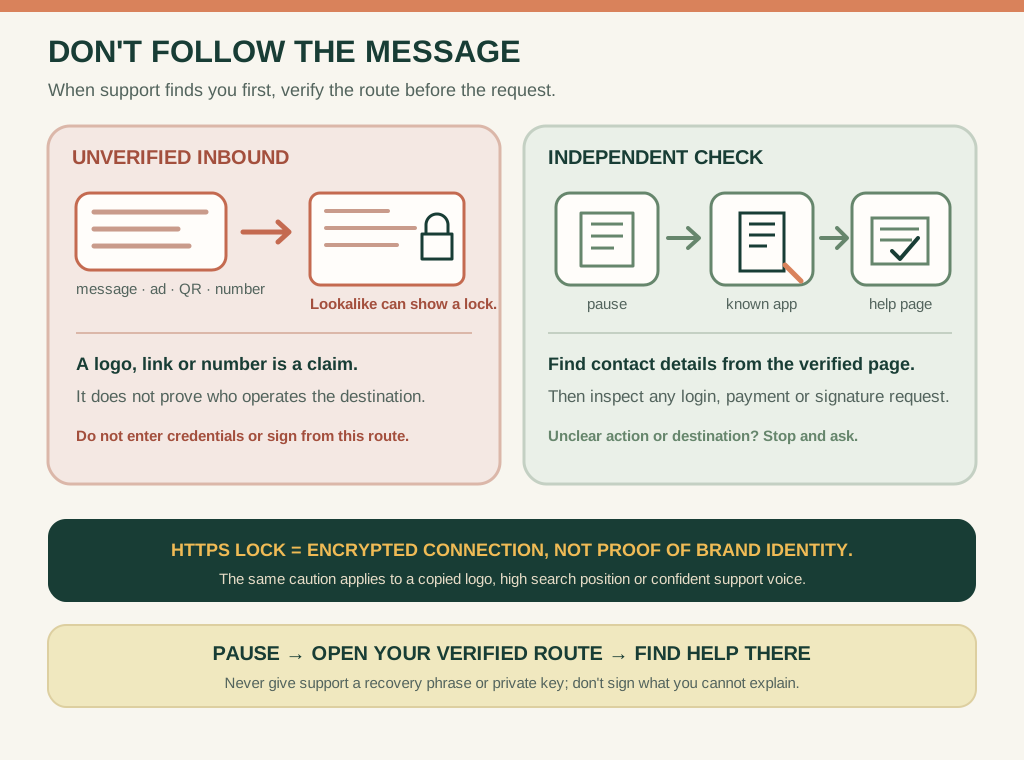
Build a repeatable way to reach important sites without trusting messages or search ads.
Understand a risk-budget model without assuming a stop order guarantees the planned loss.
Understand the high-level difference between proof-of-work and proof-of-stake without turning either mechanism into a return promise.
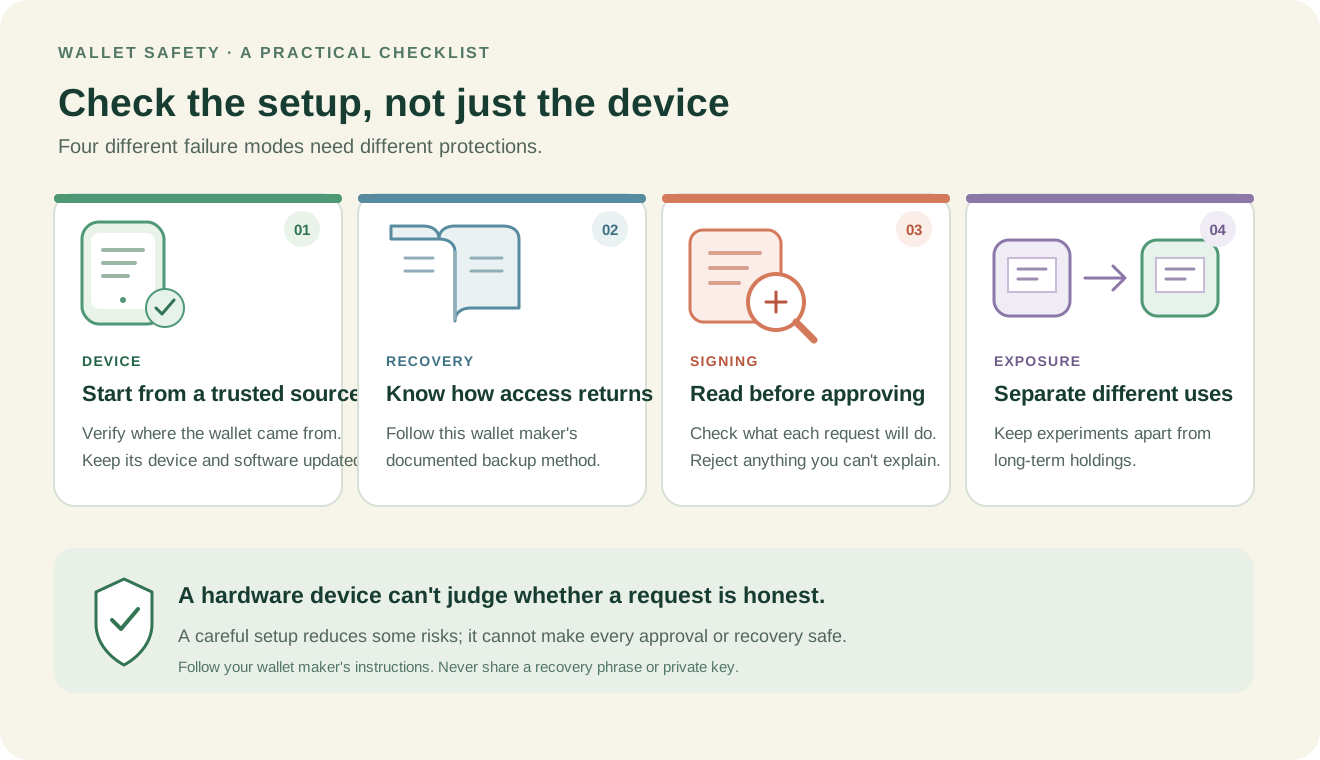
Build protection around your device, recovery method, signing habits and exposure limits.
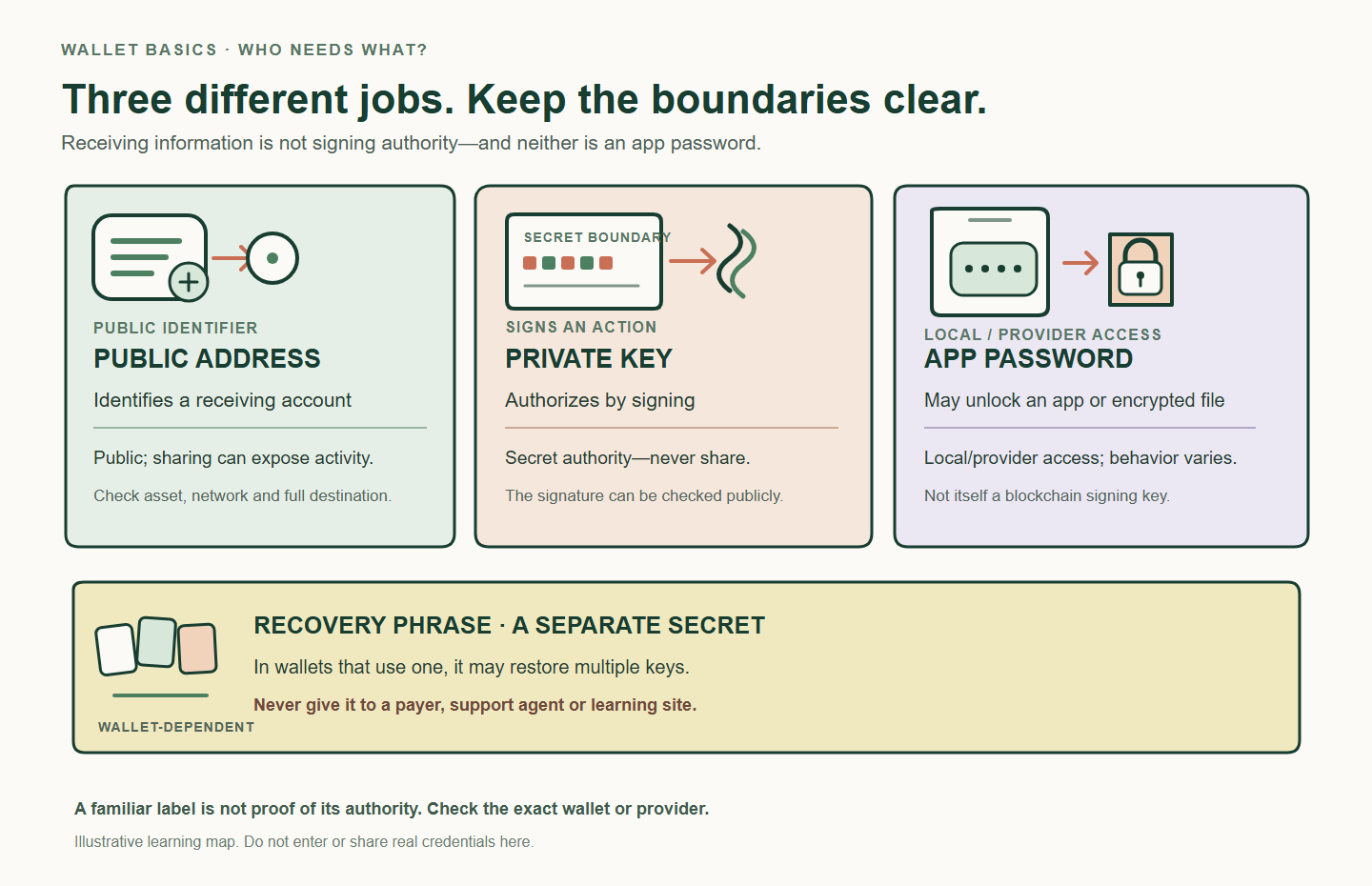
Know which information receives funds, which authorizes them and which protects an application.
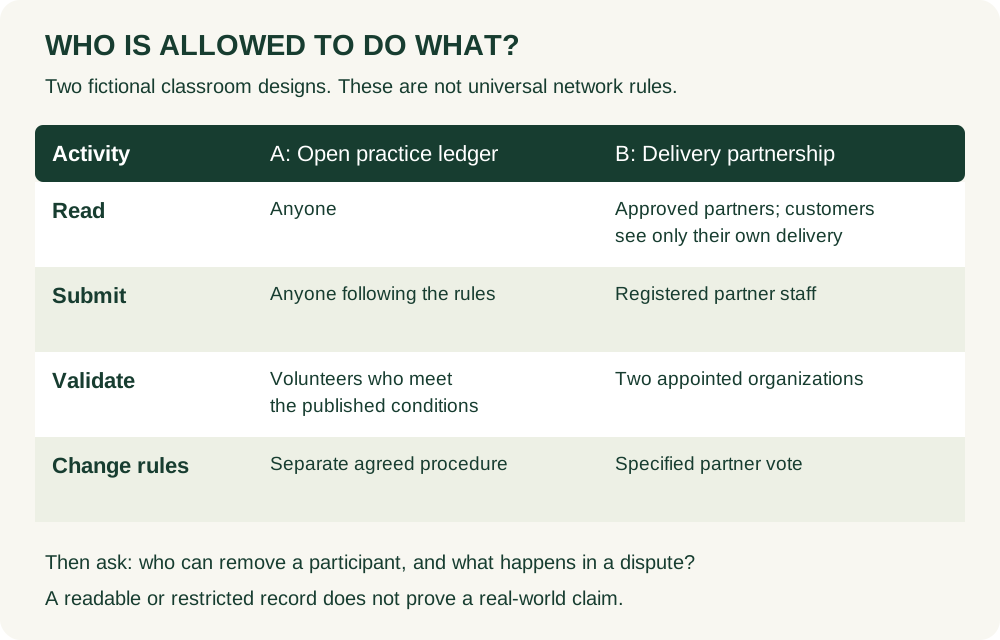
Compare who can read records, submit requests, validate updates and change rules in two fictional blockchain designs, without treating labels as a security rating.
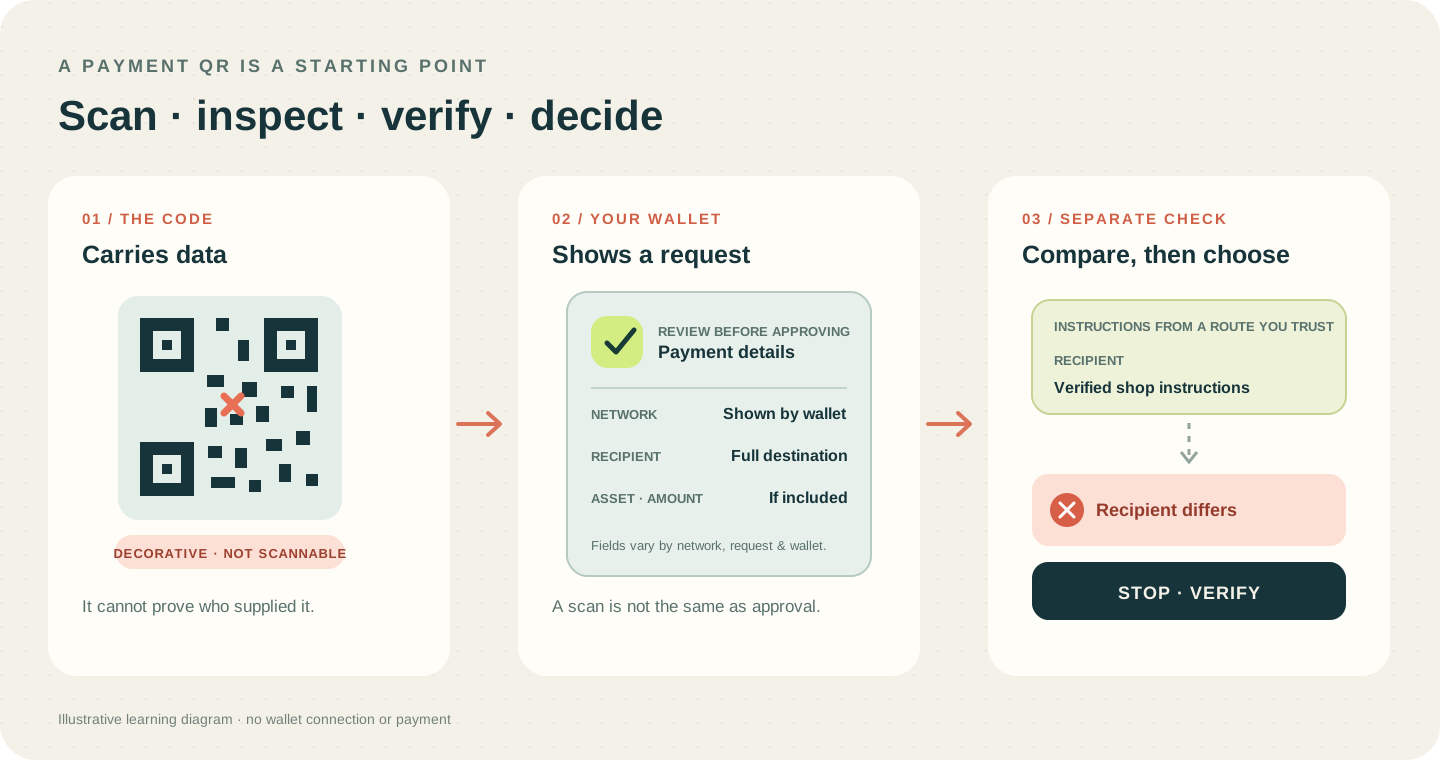
Learn what a crypto payment QR may contain, what to check in your wallet, and when to stop before approving.
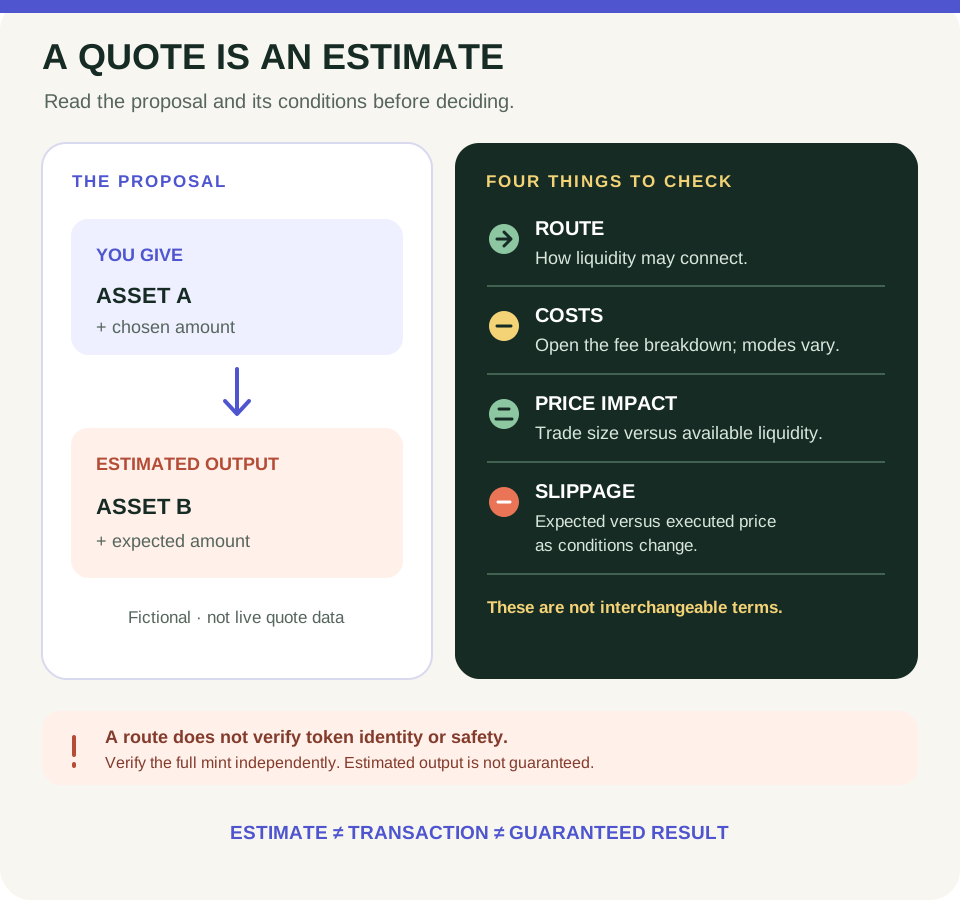
Check token identities, estimated output, route and fee details in a Jupiter quote—and understand why an estimate or failed swap is not fee-free.
Know what a public-address lookup can show and why it should not need signing secrets.
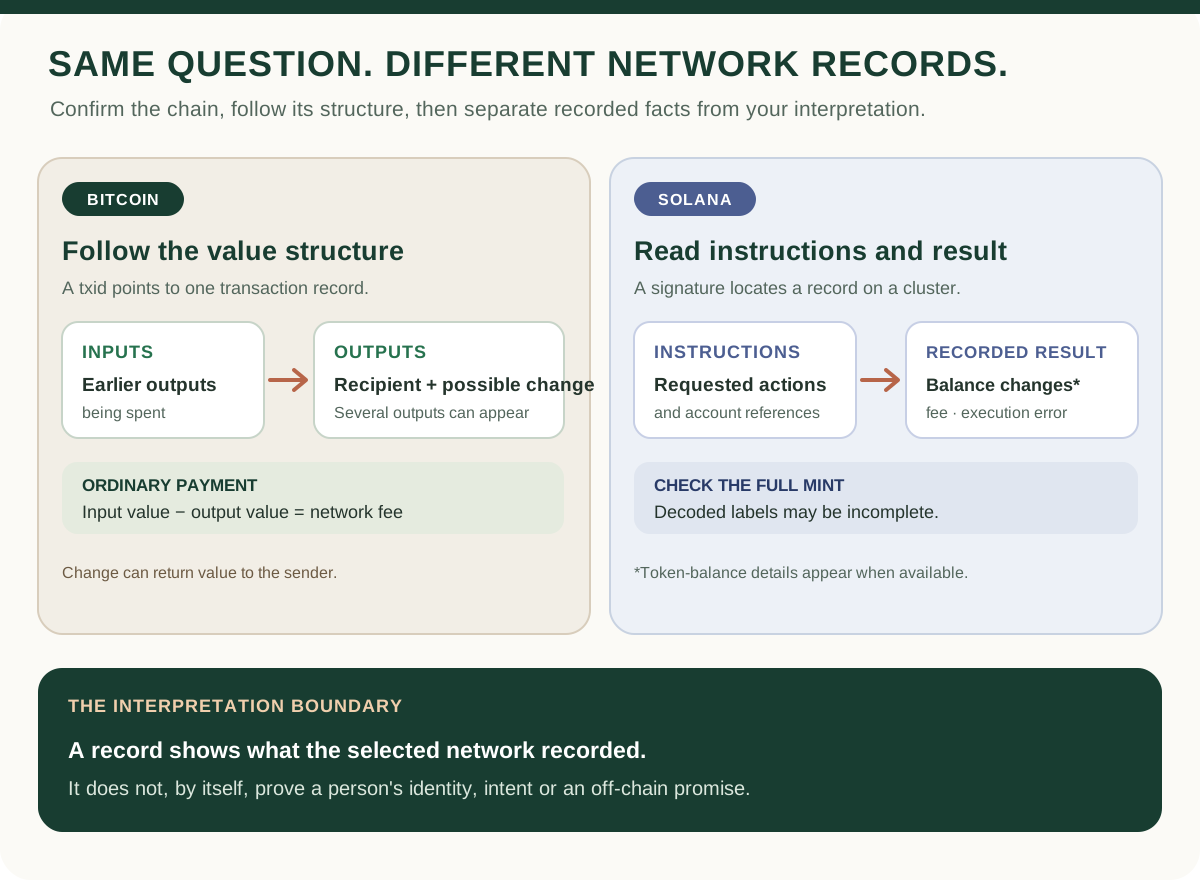
Compare Bitcoin inputs and outputs with Solana instructions and fees; learn what an explorer record shows—and what it cannot prove.
Learn why an estimated paper gain is not the same as completed sale proceeds.
Understand why wallet backup words are sensitive and why not every wallet uses the same recovery model.
Record the question, evidence and next test rather than only the final score.
Turn a market opinion into a rule, a dataset and a condition that could prove it wrong.
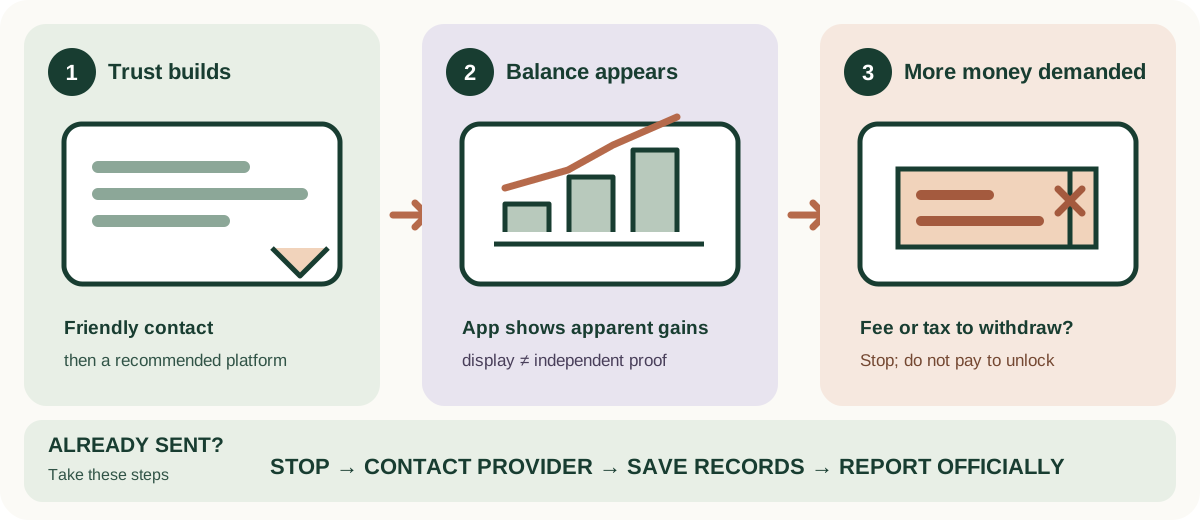
Learn how romance-linked crypto investment scams use fake balances, what to check before sending money, and what to do if you already paid.
Map custodians, issuers and special-purpose vehicles to understand who stands between a token and its referenced asset.
Turn a promising product page into a set of evidence-backed questions.
Understand why a technically accessible product may not be available to every investor.
Identify who can exchange a token for what, when and under which conditions.
Reduce exposure from extensions, remote access, updates and shared devices.
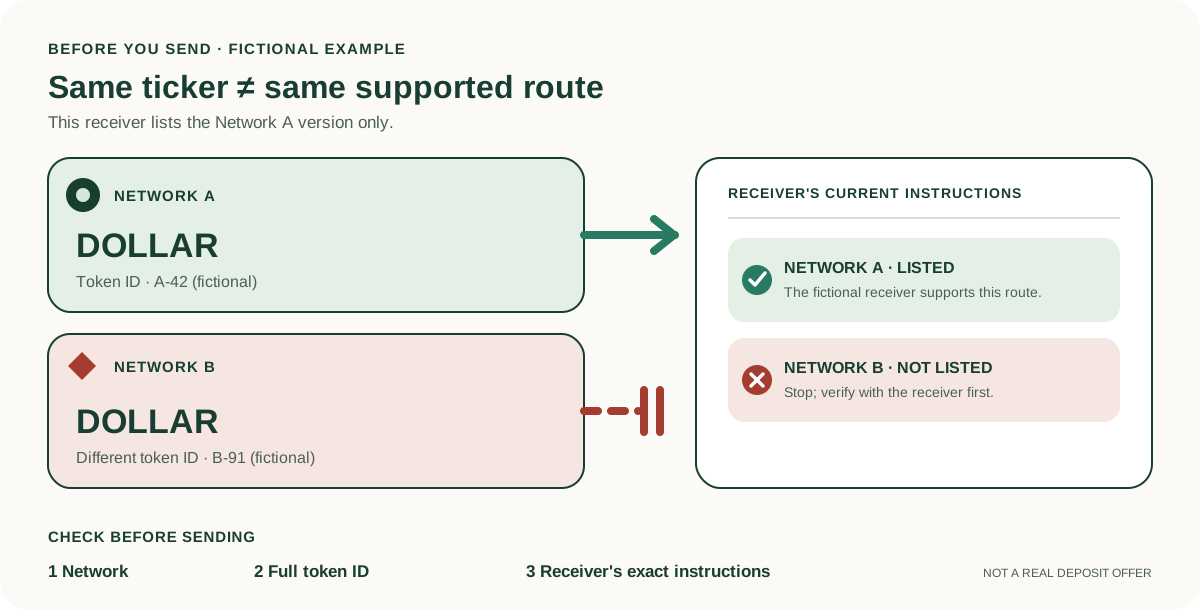
The same ticker can name different token versions. Check the network, full mint or contract, and the recipient’s current deposit rules before sending.
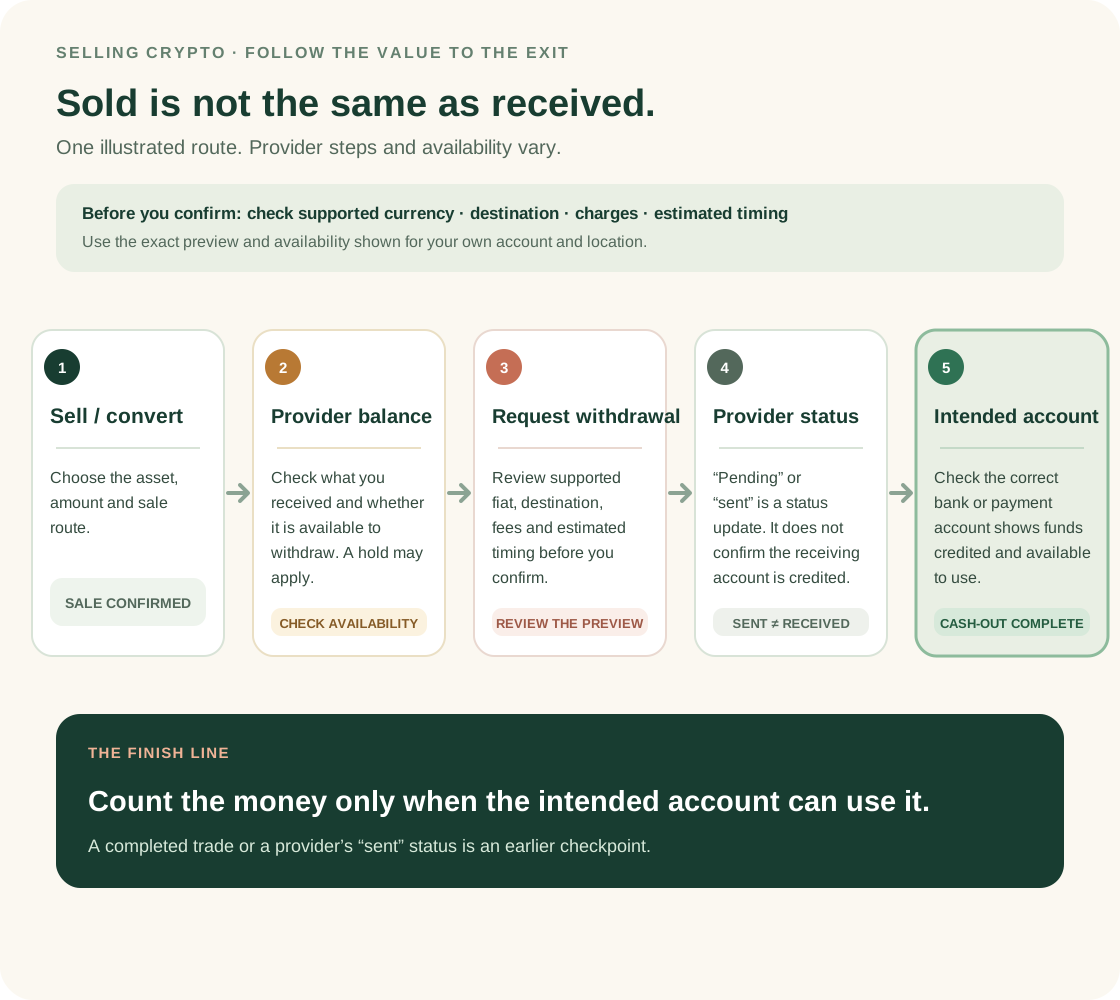
Distinguish selling an asset from receiving spendable money in a bank account.
Distinguish an order’s own effect from other changes between quote and execution.
Use a rehearsal thoughtfully without overlooking minimums, fees or later address changes.
Read audit scope, deployed versions and remaining powers before trusting a security badge.
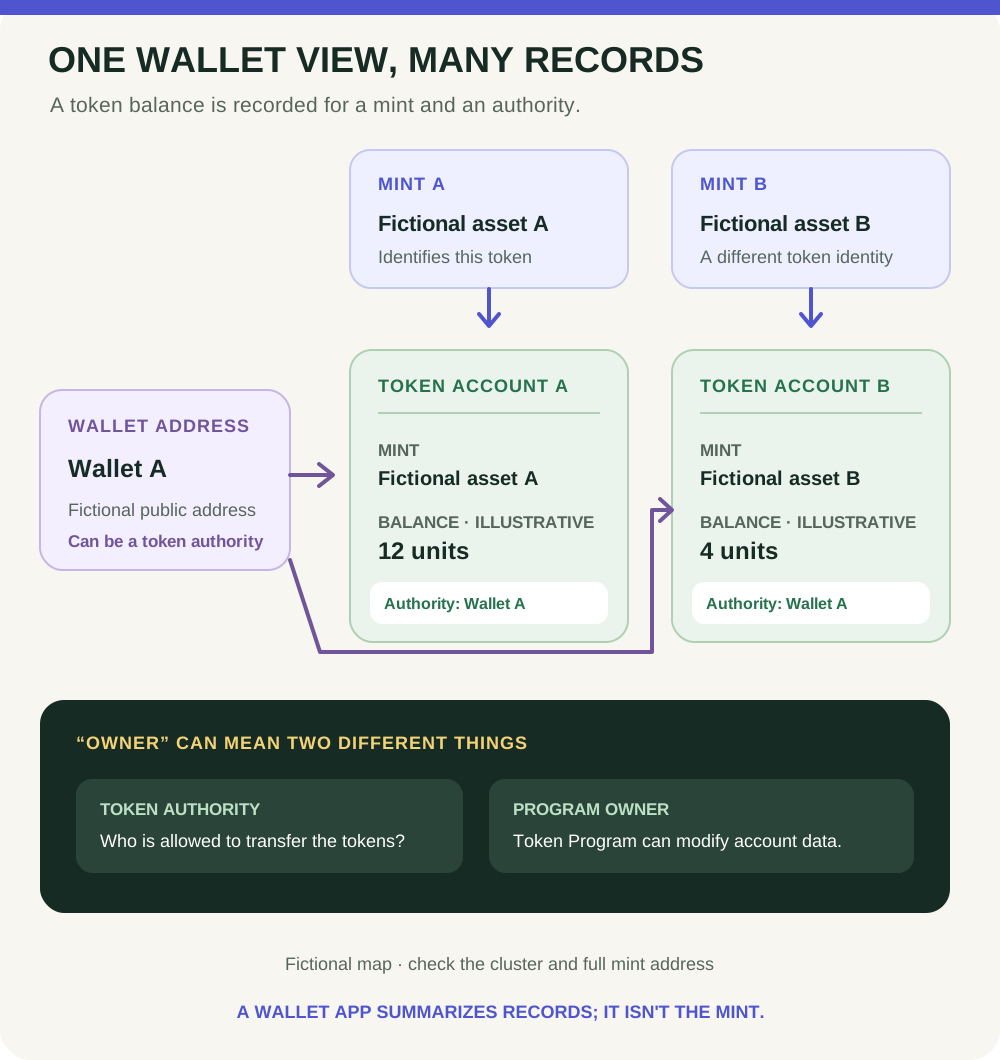
See how a Solana token account links one mint, a balance, and an authority—and why wallet labels alone do not prove token identity.
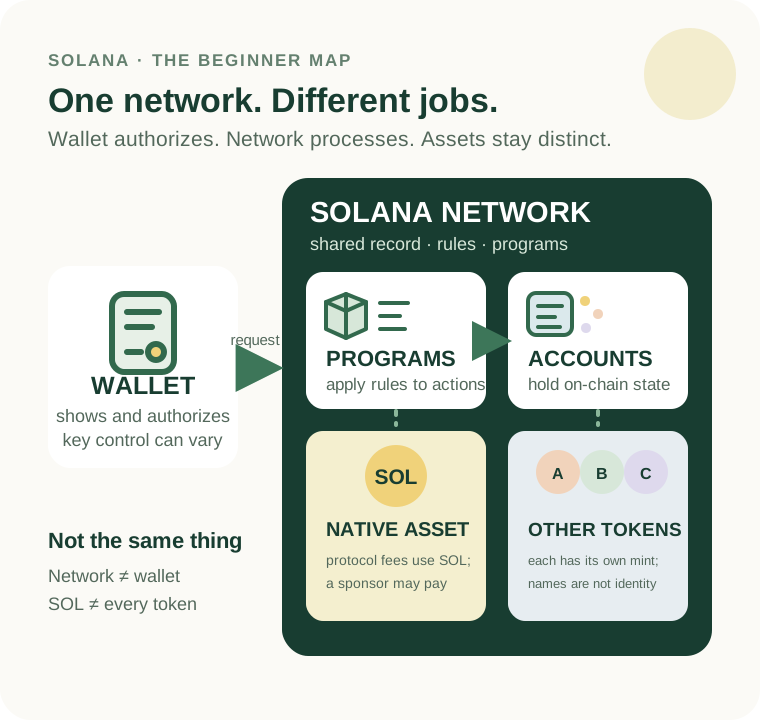
Learn what Solana is, how SOL and other tokens differ, what a wallet does, and how transactions and network fees fit together.
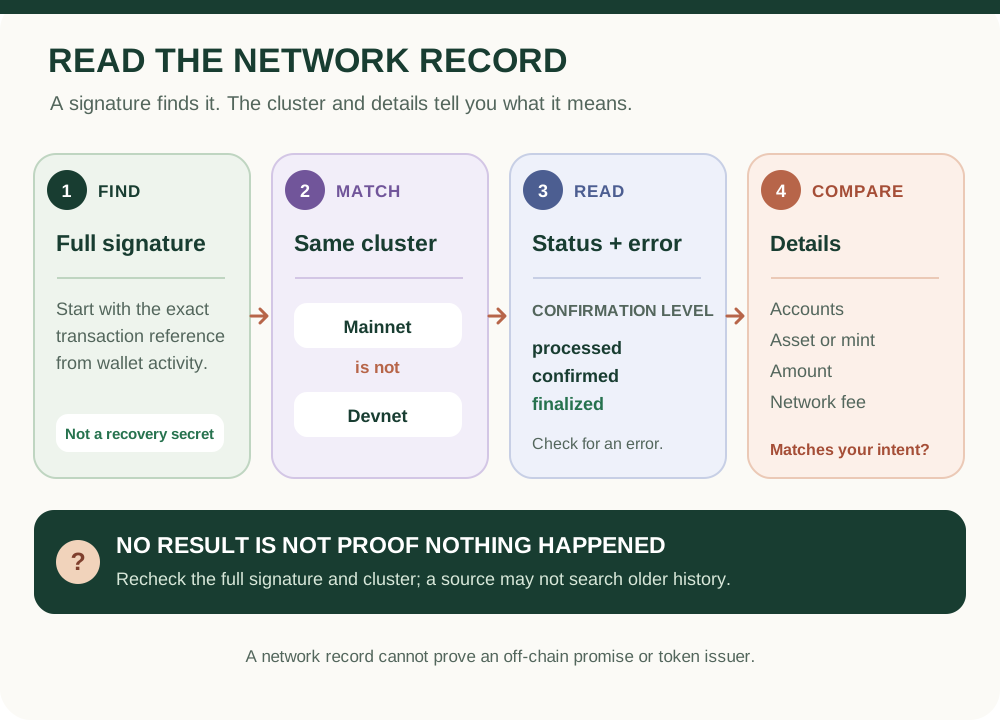
Look up a Solana transaction signature on the right cluster, read its confirmation and error status, and understand what a missing result does—and does not—mean.
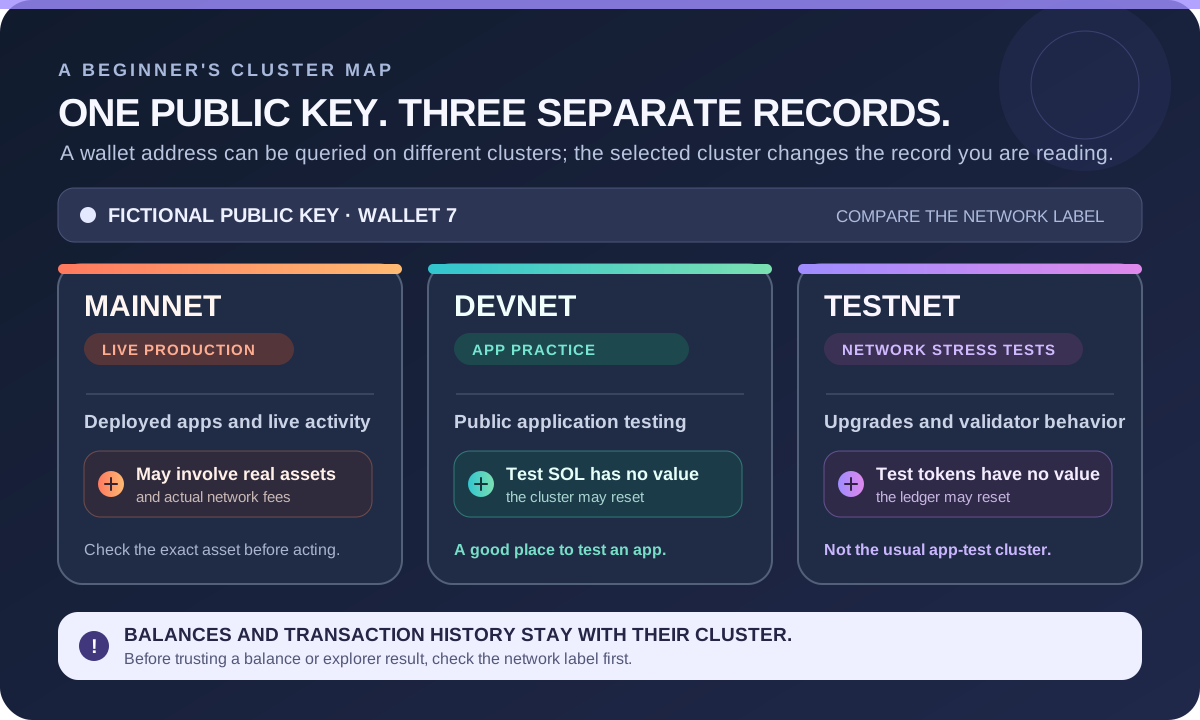
Devnet is for public testing; Mainnet is the live production network, and Testnet serves network testing. Learn why test balances are not real.
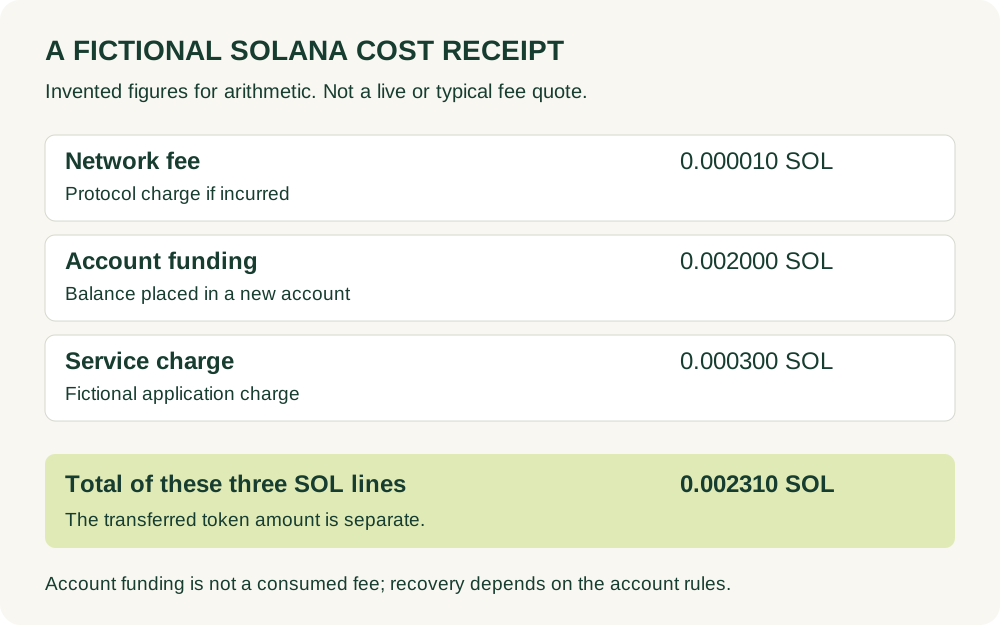
Separate Solana transaction fees, priority fees, account funding and service charges, with a fictional cost receipt and questions to check before signing.
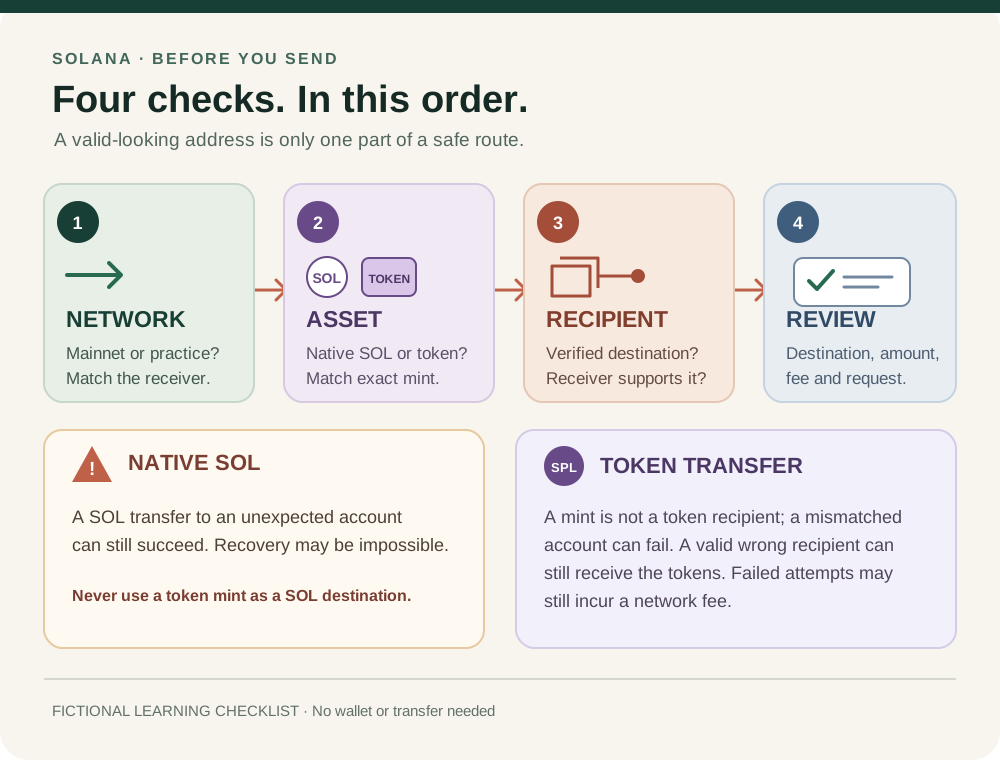
Before a Solana transfer, match the network, exact asset and verified recipient. Learn why SOL and token transfers have different address risks.
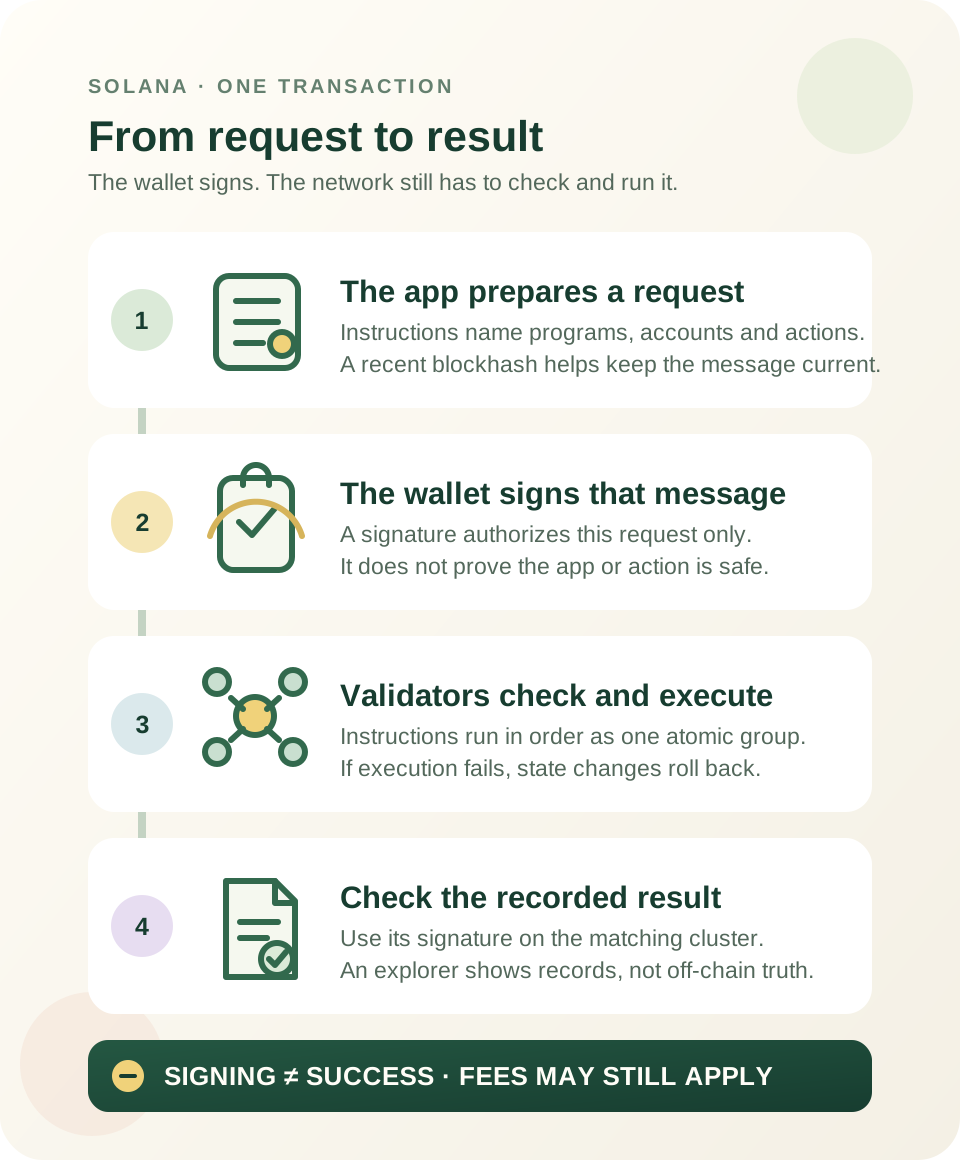
Follow a Solana transaction from wallet signing through execution and confirmation. Learn how instructions work, when fees may still apply, and what a signature proves.
Understand the wallet, network and approval boundaries involved before connecting a Solana wallet to a $STONKB swap.
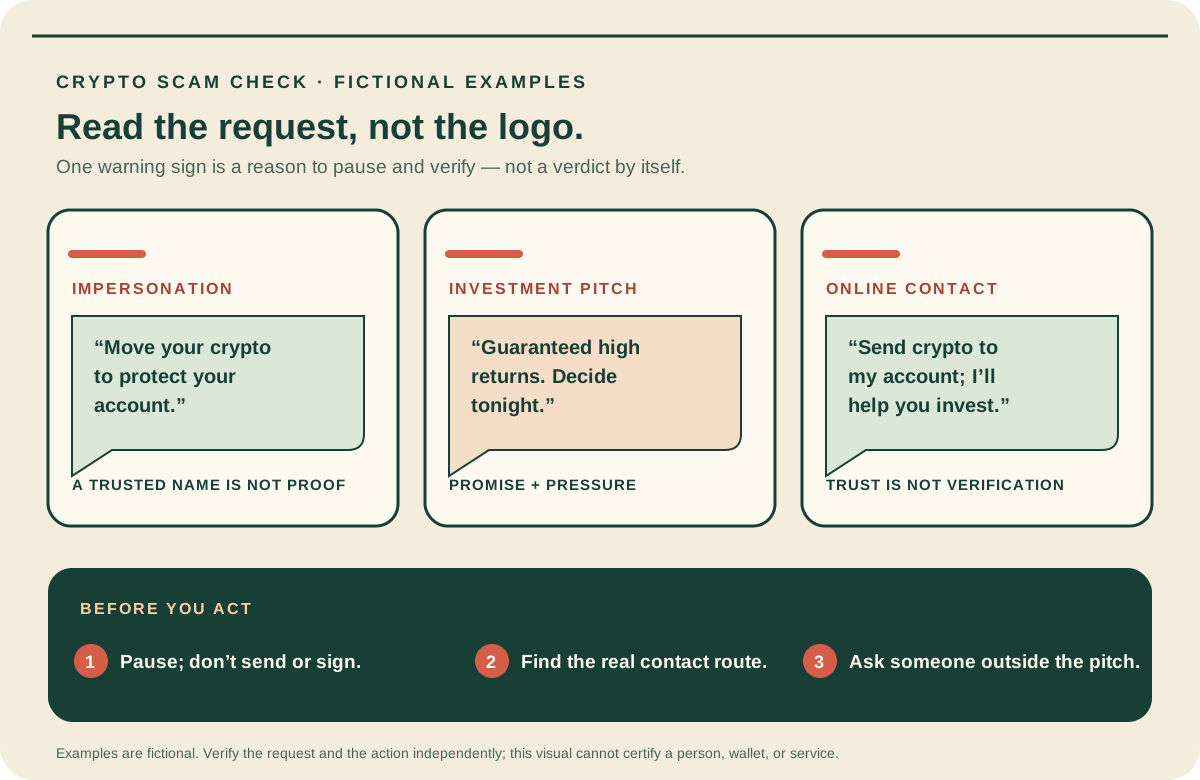
Recognize pressure, secret requests and manufactured trust without relying on a single red flag.
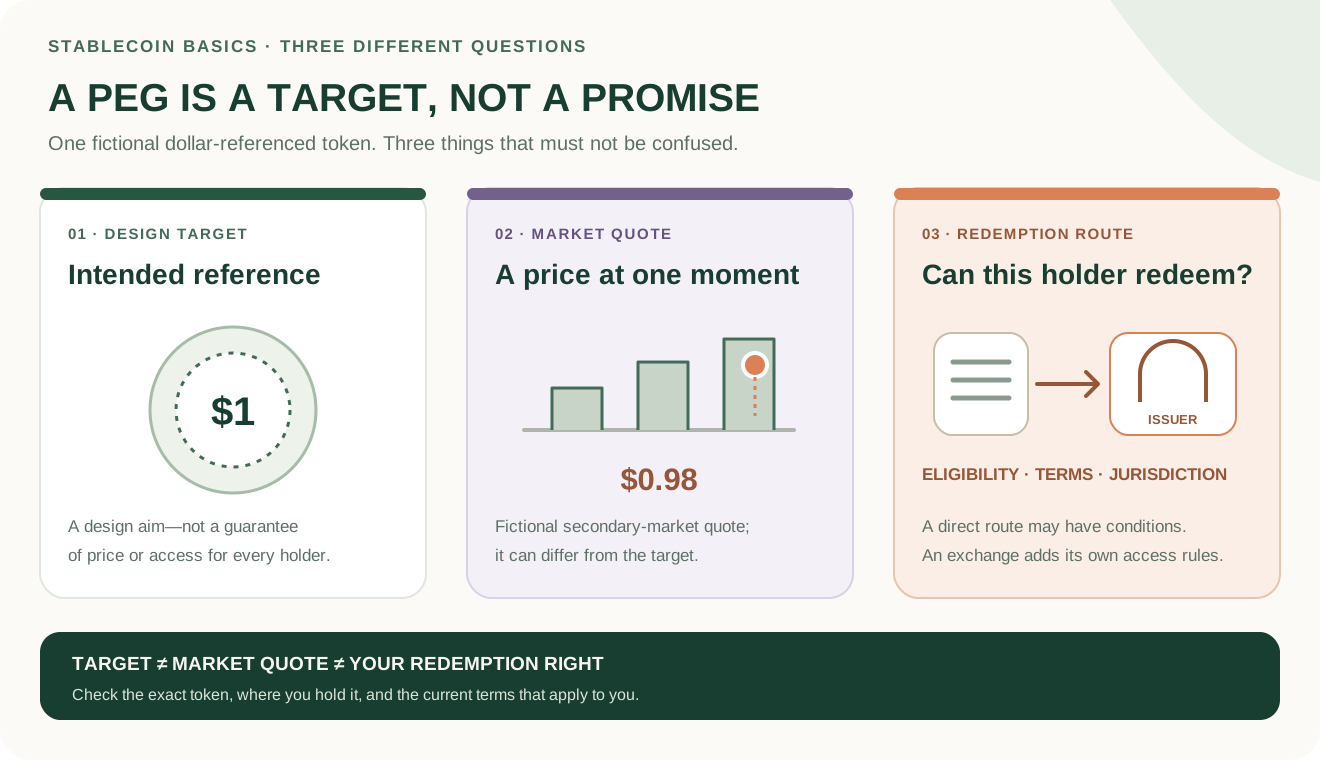
Understand a stablecoin depeg by separating market price, liquidity, collateral and redemption stress.
Learn how administrative powers can coexist with blockchain transfers.
Include buying, network movement, conversion and cash-out rather than focusing only on transfer fees.
Ask what a reserve disclosure proves at a particular date and what remains unknown.
Learn why stablecoin yield depends on the activity and risk paying it, not on a guaranteed savings-account rate.
Evaluate access, claims and protection without treating similar screen balances as identical.
Compare staking and lending by where returns come from, what can fail and which risks the user carries.
A practical guide to finding useful STONK conversations, asking questions and keeping wallet and identity boundaries intact.
Understand why stonk memes spread, how humor builds community, and where a joke can become misleading financial promotion.
Read three fictional STONK learning scenarios that celebrate better questions, safer workflows and honest outcomes instead of price promises.
Understand the difference between the broad stonk idea and the specific $STONKB token so a search result does not become a wrong-asset transaction.
A plain-English FAQ for the STONK meme, $STONKB identity, Jupiter buying flow, wallet safety and transaction verification.
Use holder concentration as one research signal, while remembering that addresses do not automatically reveal people, intent or future behavior.
A reader-first checklist for reviewing a STONK launch page, token identity, swap link, risk notes and change history.
Learn how liquidity, slippage and price impact affect a token swap so a displayed quote is not mistaken for a guaranteed fill.
Understand why order size and available liquidity can move a $STONKB quote, and what to review before approving a route.
Review the main risk layers around a token page and Jupiter swap, from price movement and liquidity to phishing and stale information.
Learn how to read supply, distribution, liquidity and authority information for a token such as $STONKB without turning numbers into a promise.
Understand what stays in this learning hub and what changes when you visit another site.
Understand what the public entry page confirms before exploring the application.
Understand SuperQuant’s public evidence concept and build a useful research record.
Follow the public observe, define, test, practice and review method without treating it as live trading.
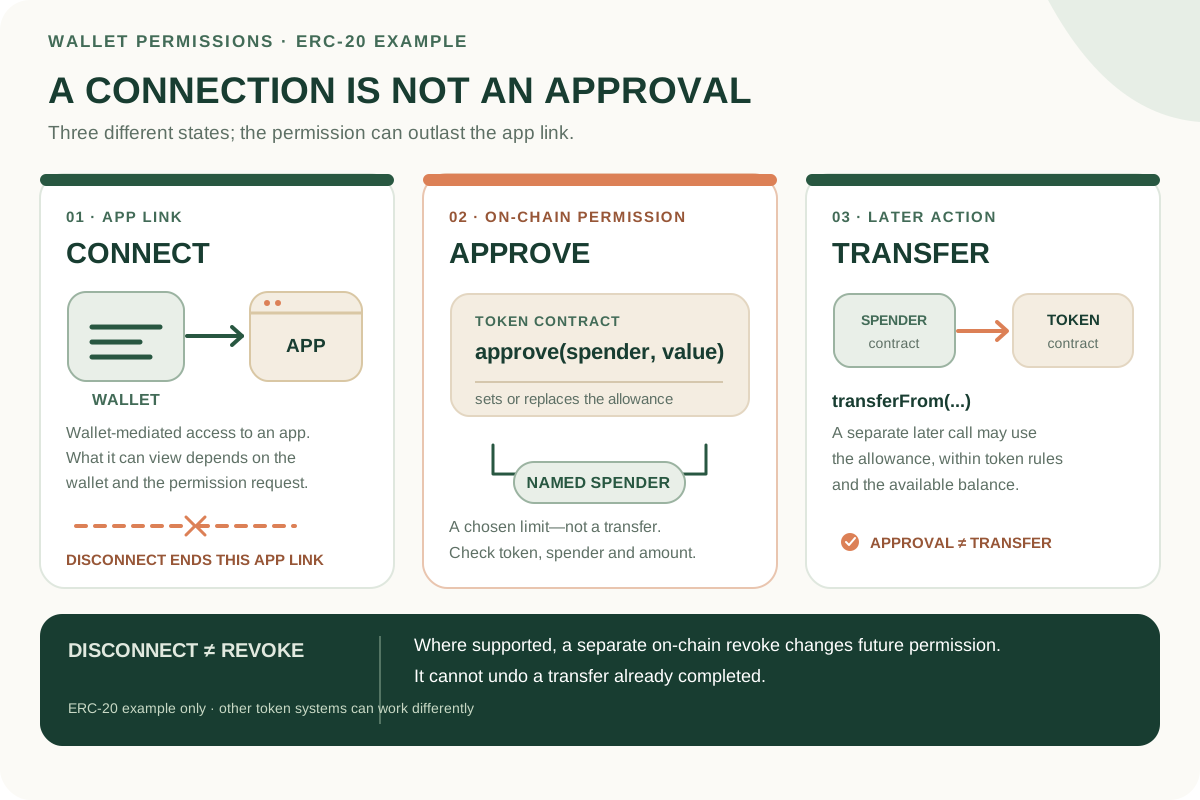
Understand spending permissions and why disconnecting a website may not remove them.
Learn why a top-holder list needs context before it becomes a risk conclusion.
Understand potential supply changes and the uncertainty around selling behavior.
Distinguish issuer-sponsored securities, custodial interests and synthetic exposure.
Separate a fund interest from directly owning a government security or holding bank cash.
Learn which explorer fields help you confirm a $STONKB transaction, token mint, balance change and final status.
Use issuer disclosures, supported networks and redemption terms to build your own comparison.
Use a repeatable mint-address checklist to reduce the chance of buying a lookalike STONK token on the wrong network.
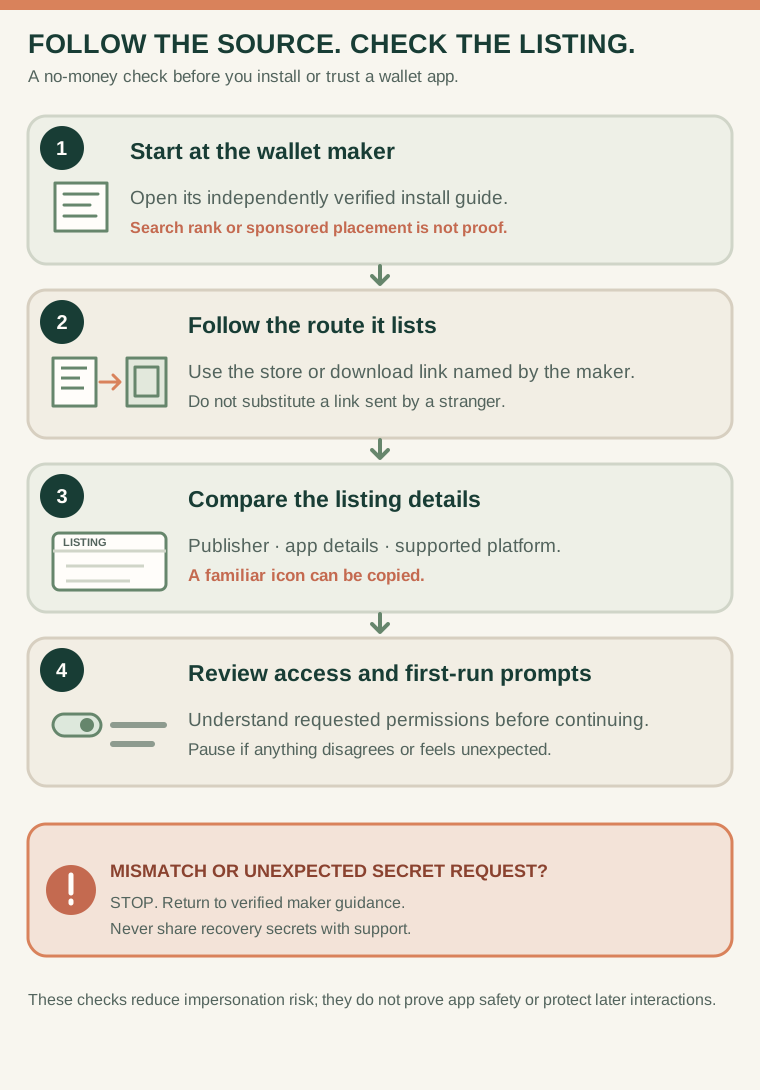
Verify the installation route before trusting the interface with anything valuable.
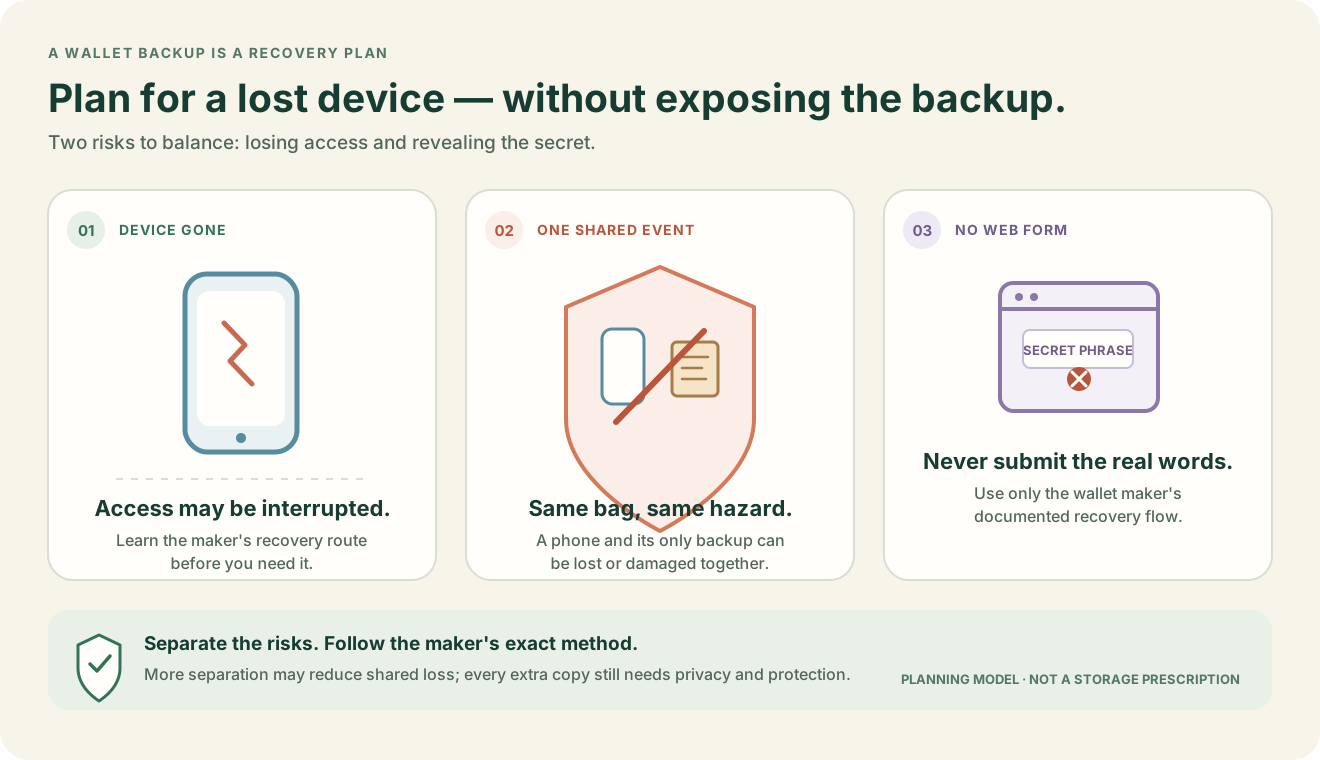
Balance confidentiality, durability and recoverability in a wallet backup plan.
Understand why transfers, missing history and price assumptions change performance estimates.
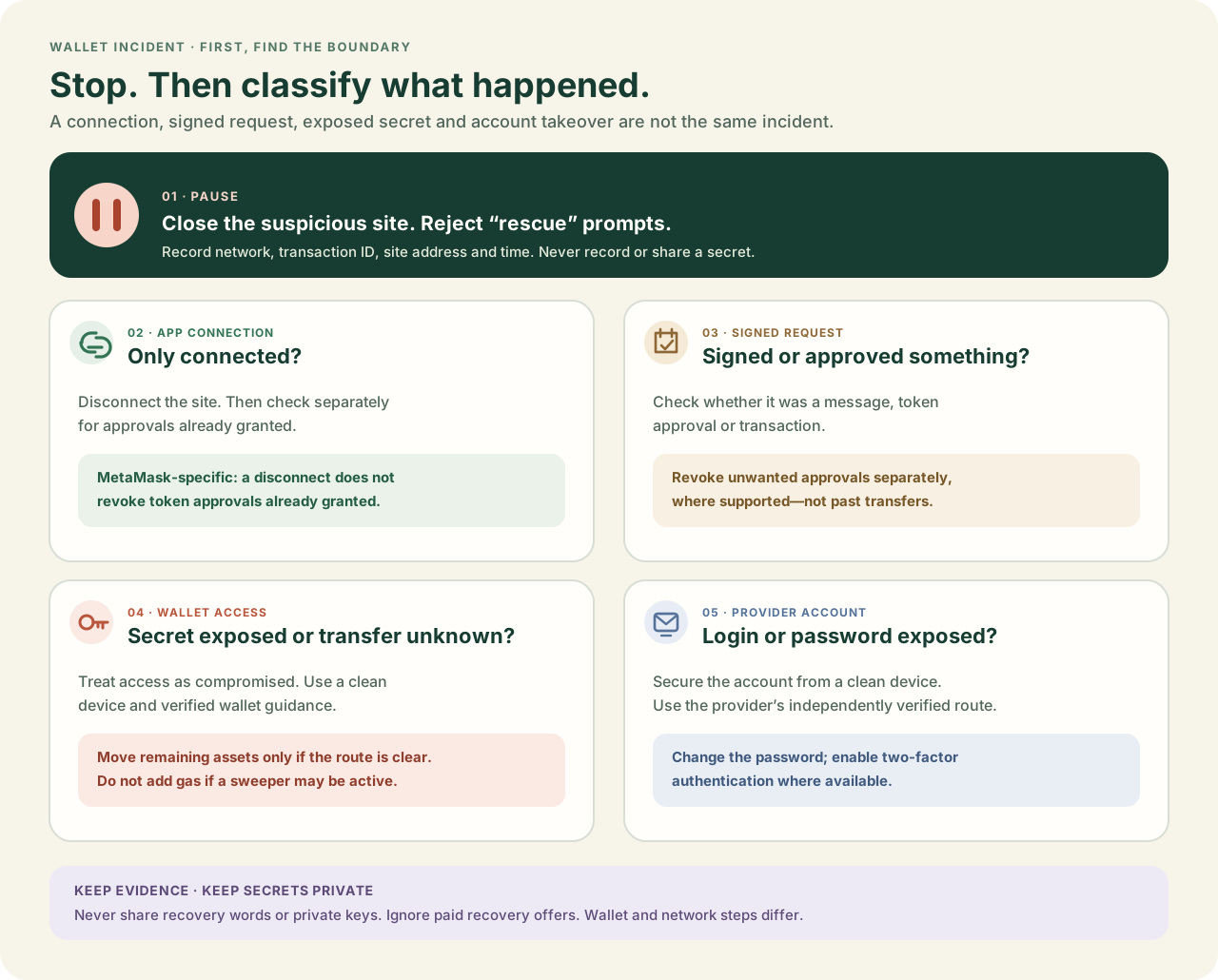
Separate a suspicious connection, harmful approval and exposed signing key before deciding on a response.
Avoid turning an address tag into an unsupported claim about a person.
Understand tokenization as a representation of rights, not automatic ownership of a physical asset.
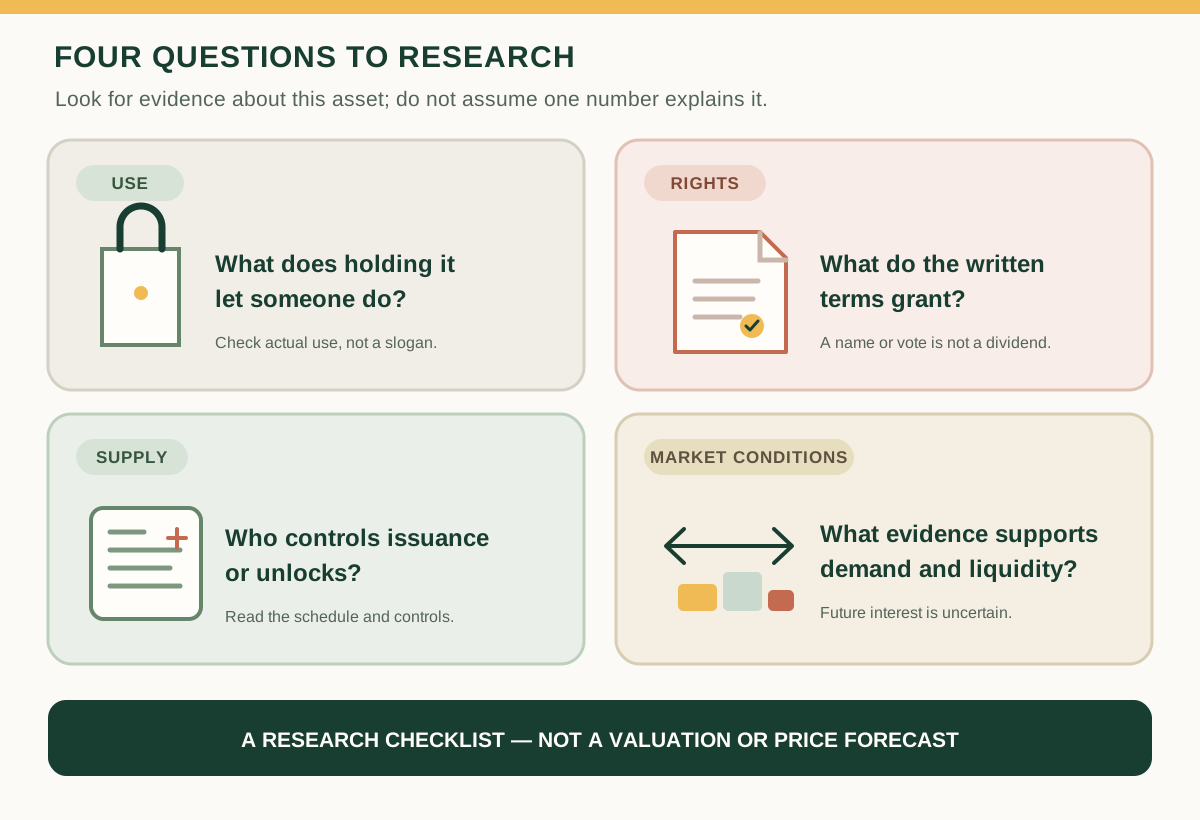
See how token use, holder rights, supply, demand and liquidity matter—and why none gives a reliable fair-value formula.
Learn what a blockchain node does, why independent verification matters and what a node cannot prove about the real world.
Learn what a crypto hardware wallet does, what it cannot protect you from, and the recovery duties that come with self-custody.
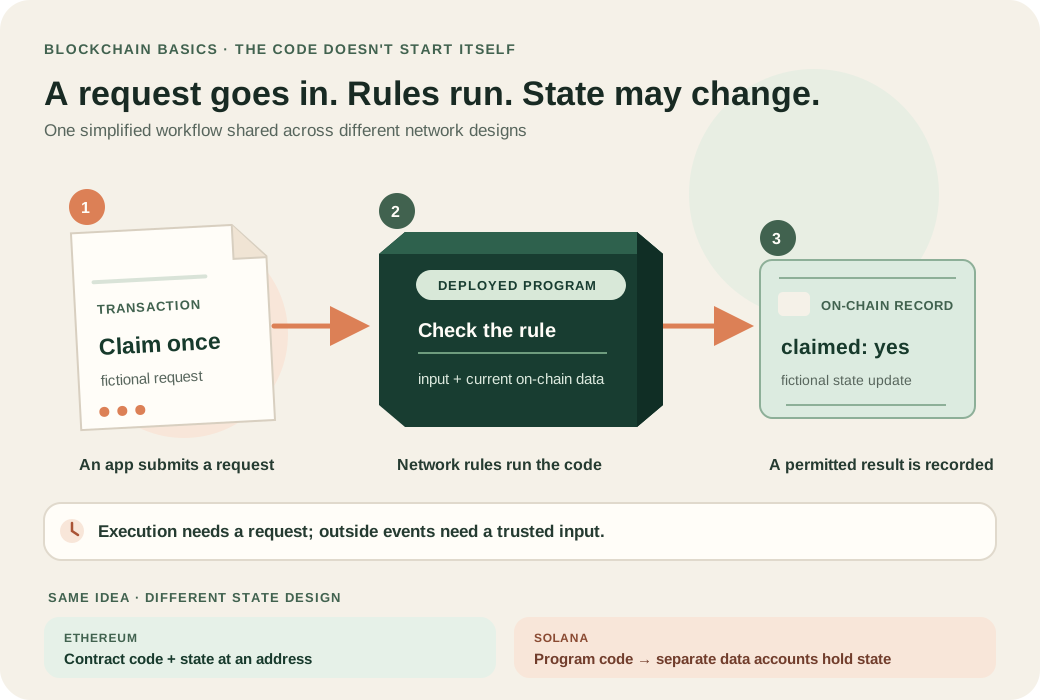
Learn how blockchain programs run, how Ethereum contracts differ from Solana programs, and what smart contracts cannot prove.
Understand reserve-backed, crypto-backed and other mechanisms without assuming guaranteed stability.
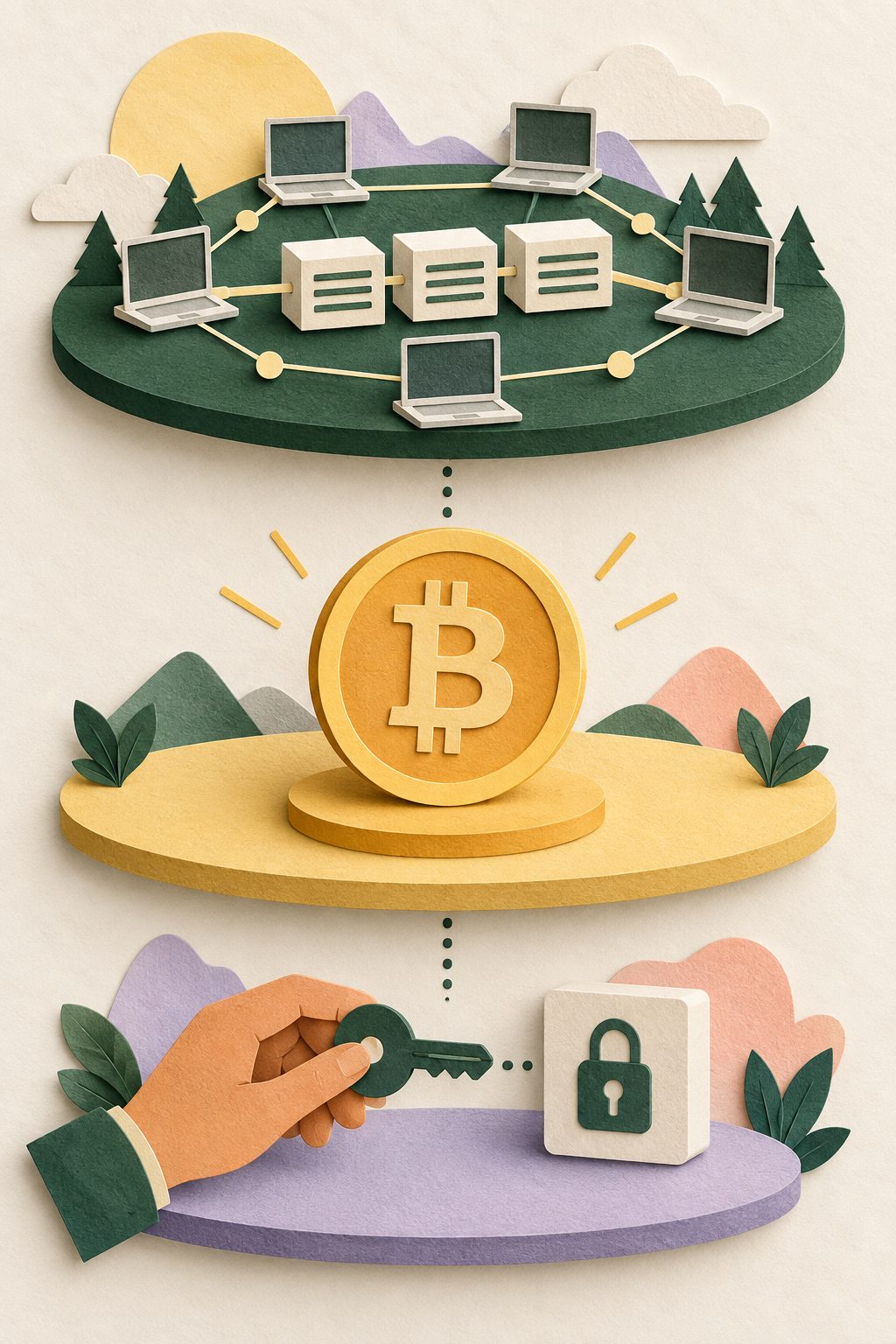
Understand Bitcoin as a network, asset and public transaction record without treating the explanation as a price prediction.
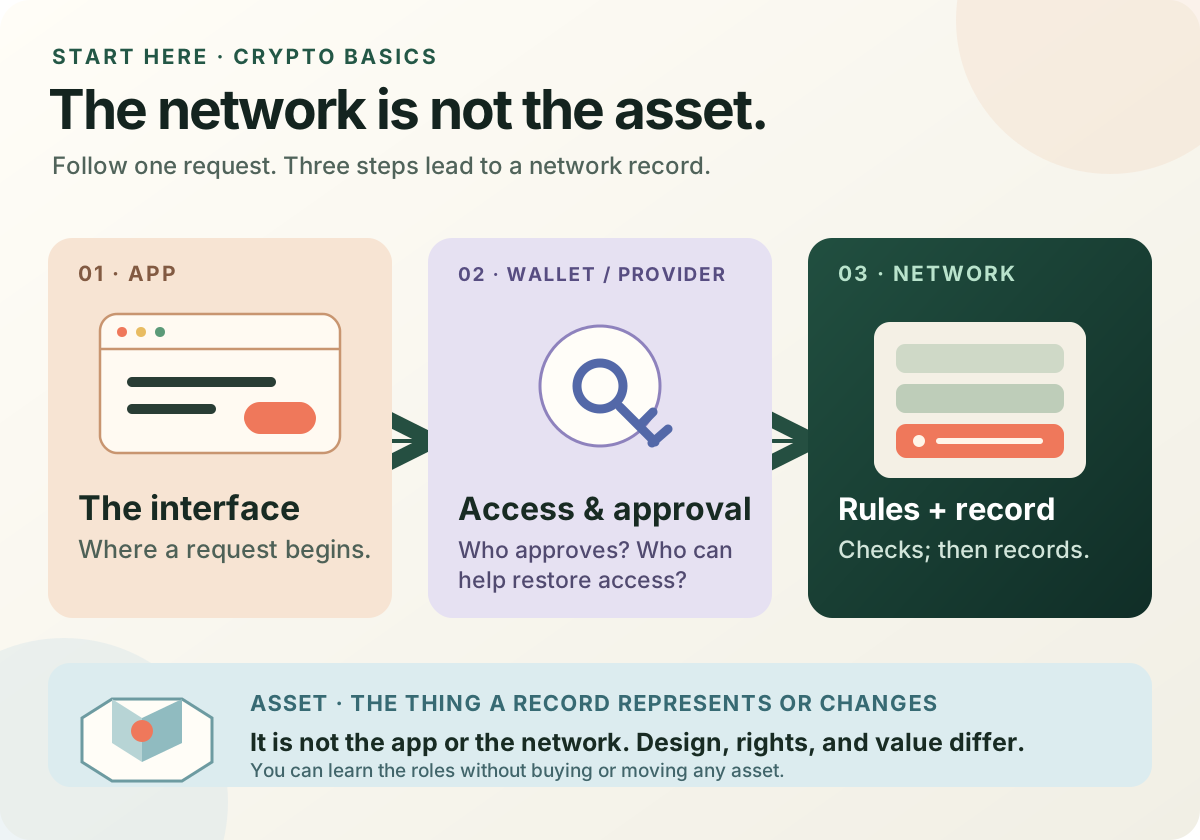
Learn how blockchain networks and cryptocurrencies differ. Use Bitcoin and Ethereum to map the network, asset, wallet and app—without buying anything.
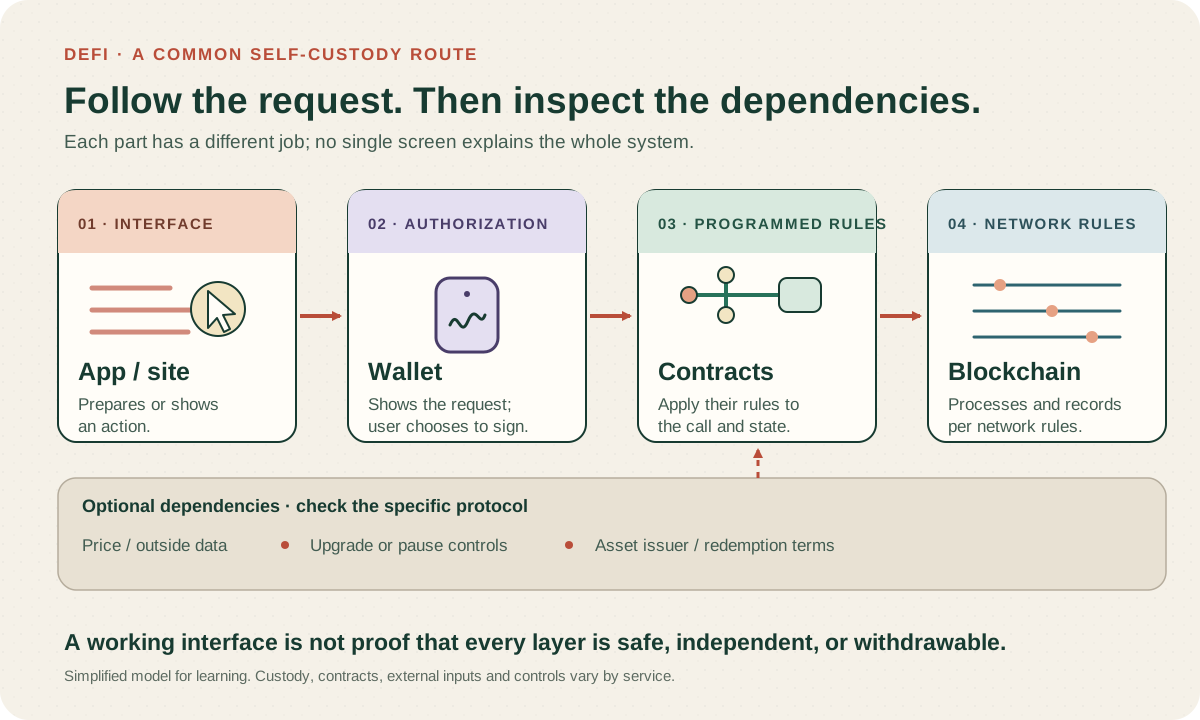
What is DeFi? See how interfaces, wallets, smart contracts and assets fit together—and what decentralization does not guarantee.
Understand the stonk meme, what www.stonkfun.xyz is, and why $STONK should be identified separately from $STONKB.
Learn what www.stonkfun.xyz is, how it relates to the $STONK token, and what to verify before following links or acting.
Jupiter offers several Solana products. Learn how Spot searches available swap routes, where liquidity comes from, and what a quote cannot guarantee.
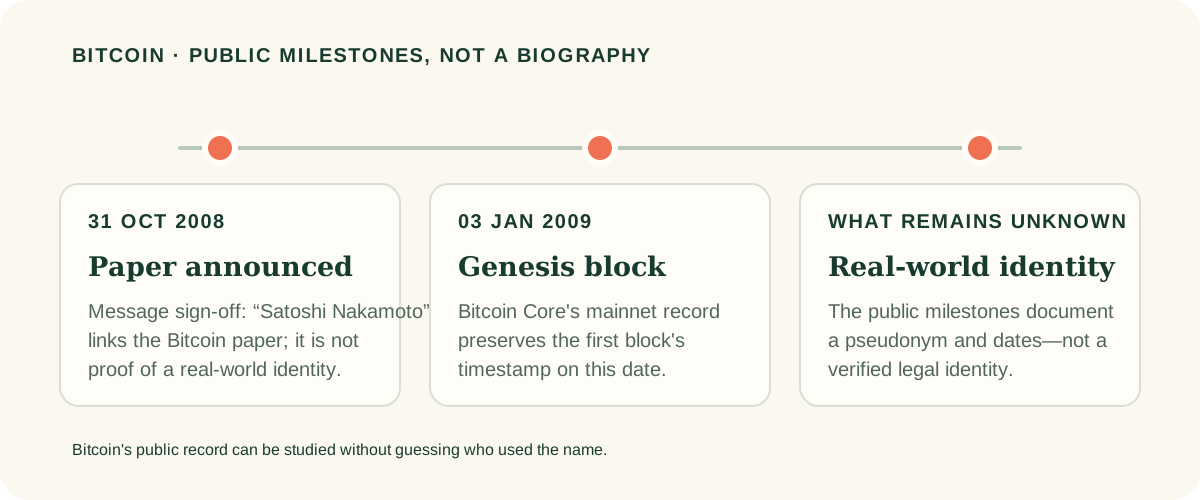
Bitcoin's first public paper appeared under the name Satoshi Nakamoto. Follow the early milestones and learn what they do—and do not—reveal about its creator.
See how orders, available liquidity, and new information can move crypto prices—and why a chart cannot prove the cause or predict the next move.
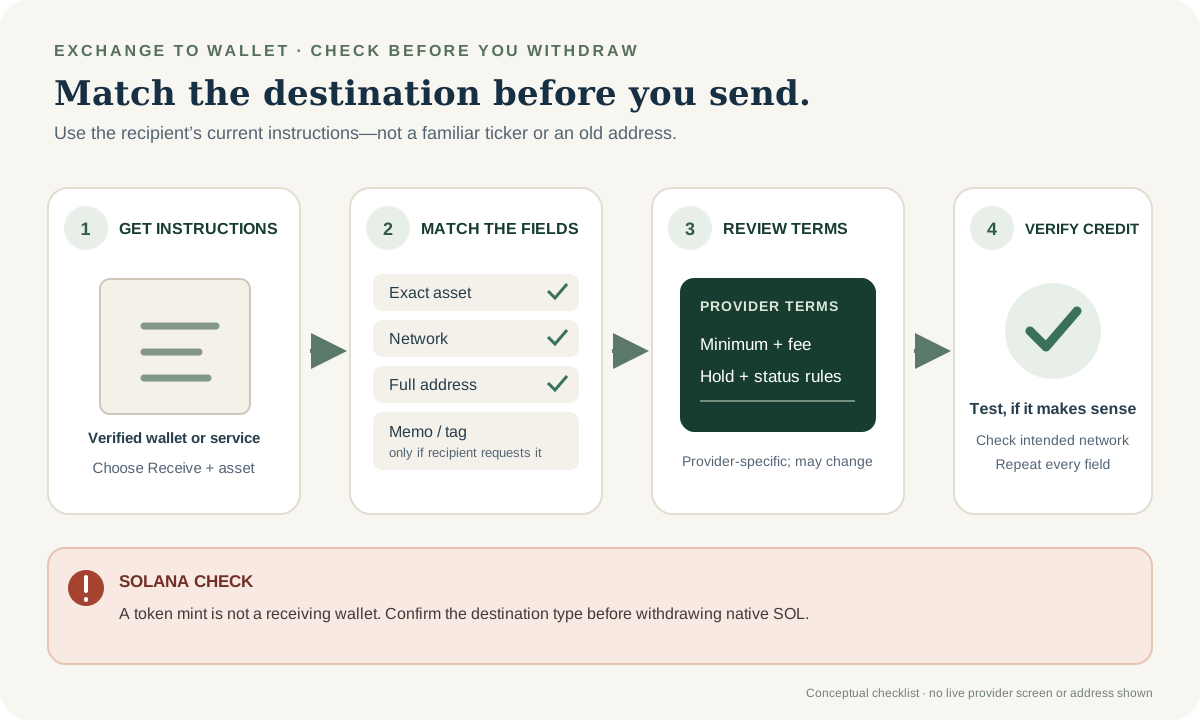
Match the asset, network and receiving details before withdrawing crypto from an exchange to your wallet.
Help a new visitor understand your work without inflated authority or financial claims.
Choose one task, state prerequisites and show how to recognize a correct result.
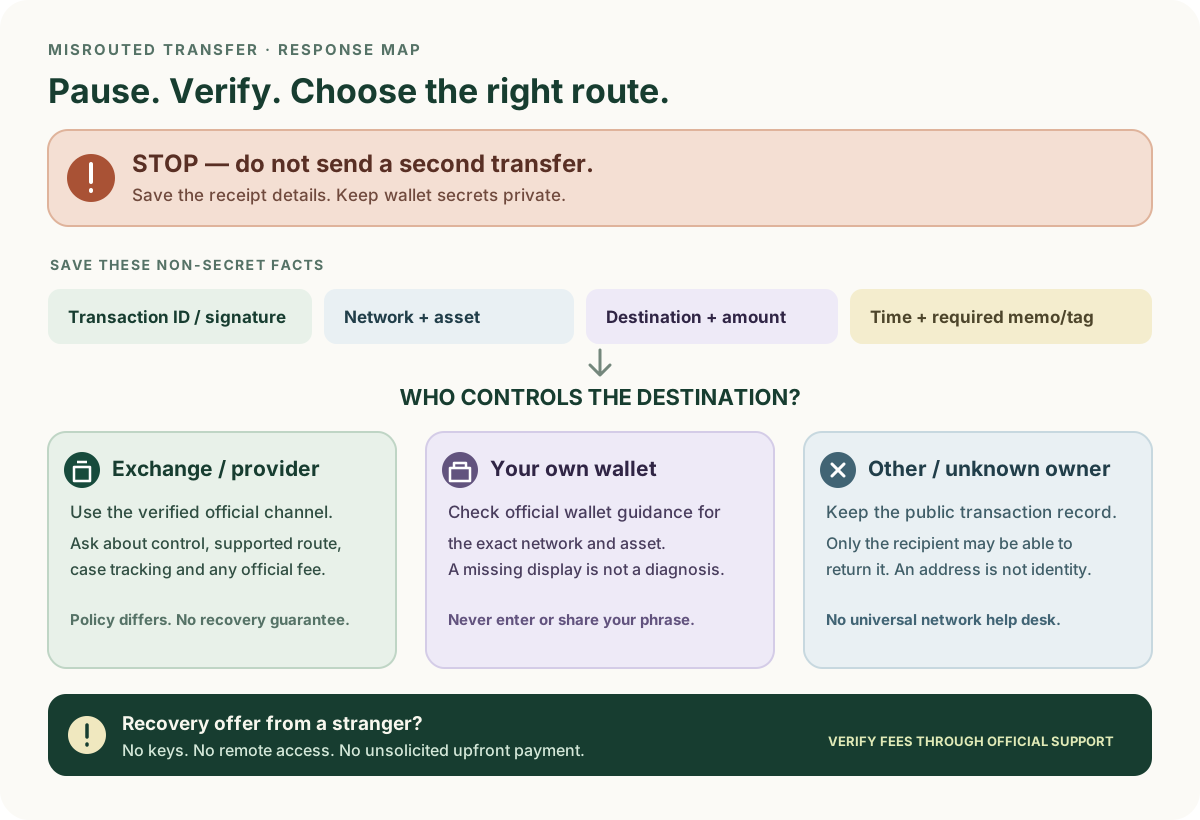
Sent crypto on the wrong network or to the wrong address? Learn what to check, how to contact a provider safely, and which recovery claims to question.
Try a shorter search, or clear the topic and difficulty filters.
Approximate visitors and country are counted locally; VPNs and shared networks can affect the estimate. No analytics vendor receives these events. Privacy details.