Scams & security·2 min read
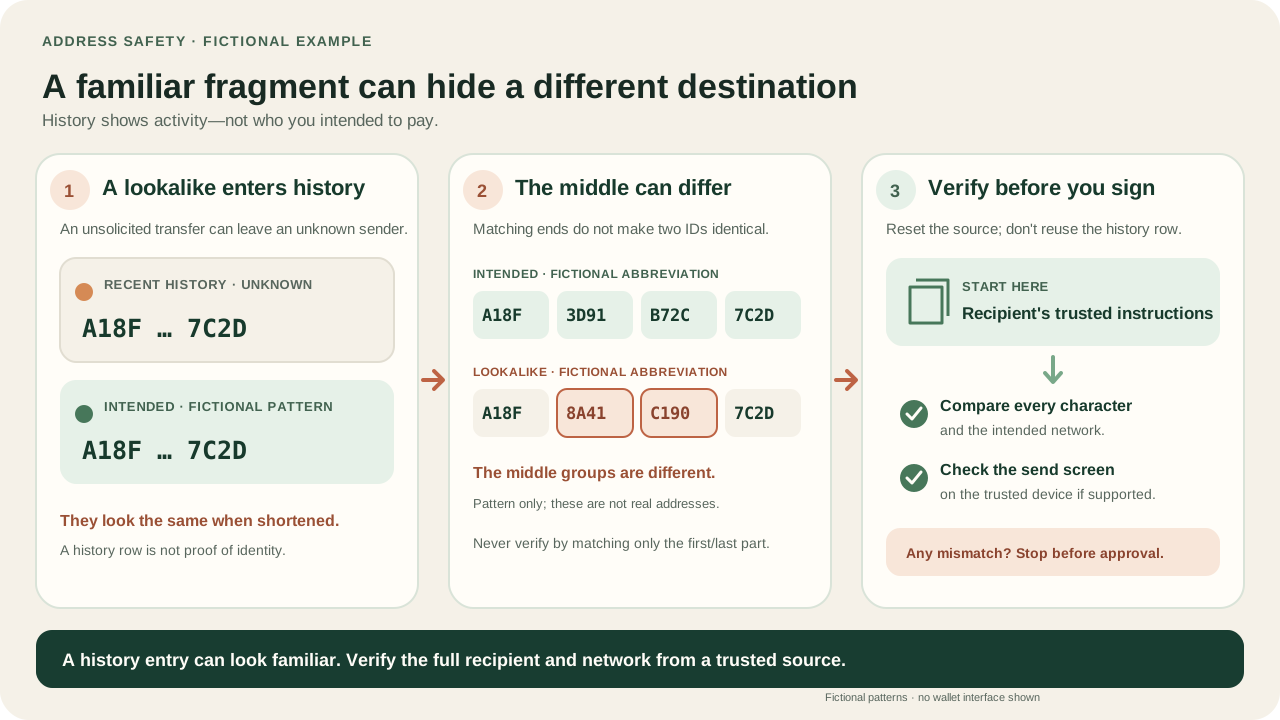
Address poisoning: why transaction history is not an address book
Learn how lookalike crypto transfers poison history—and how to verify the full address and network before sending.
Beginner
Learn to recognize crypto phishing, fake support, address poisoning and suspicious wallet requests. Practise spotting warning signs without connecting a wallet.
Use these guides to recognize suspicious requests and decide which safety question to ask next.
Follow the connected lessons ↗ Try the related practice exercise ↗Learn how lookalike crypto transfers poison history—and how to verify the full address and network before sending.
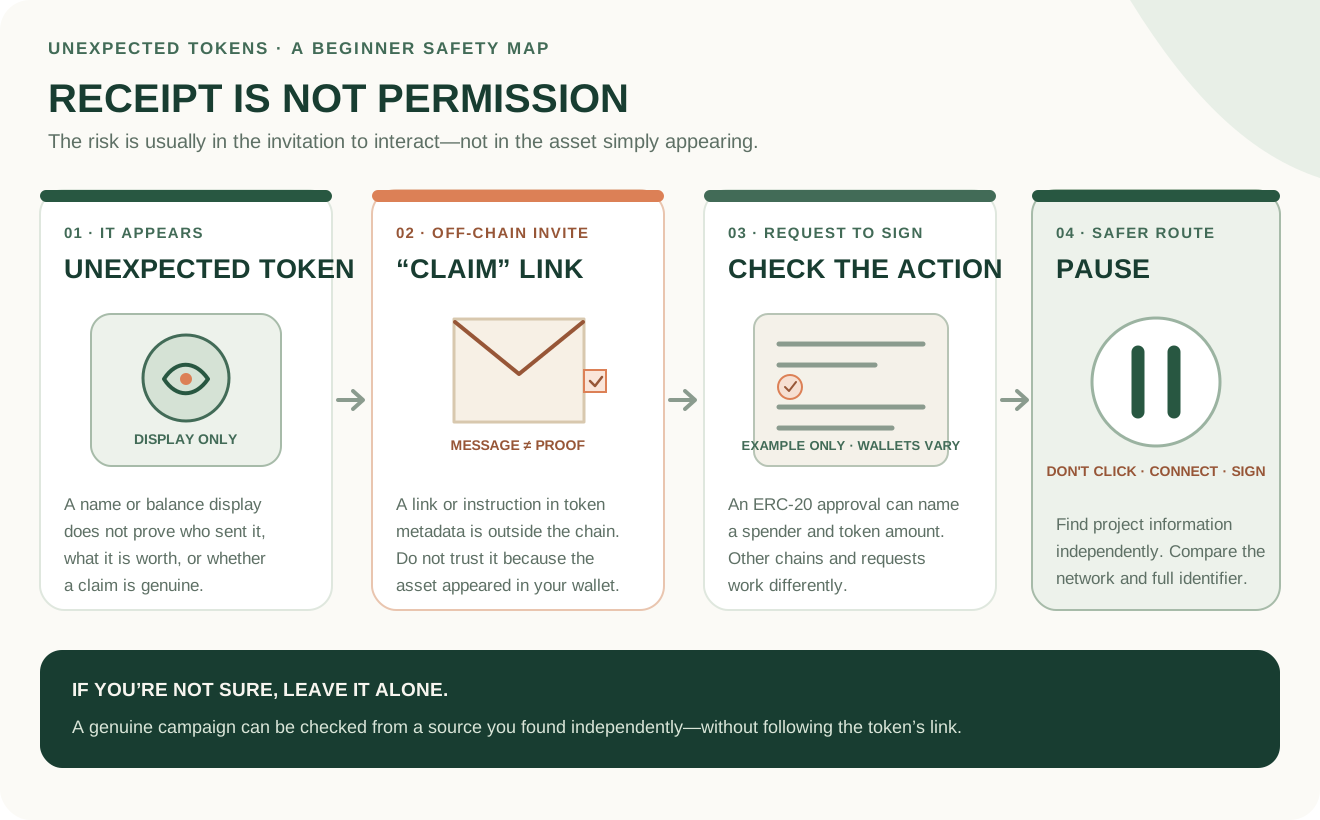
Learn why a token appearing in your wallet is not an invitation to claim, trade or visit a link.
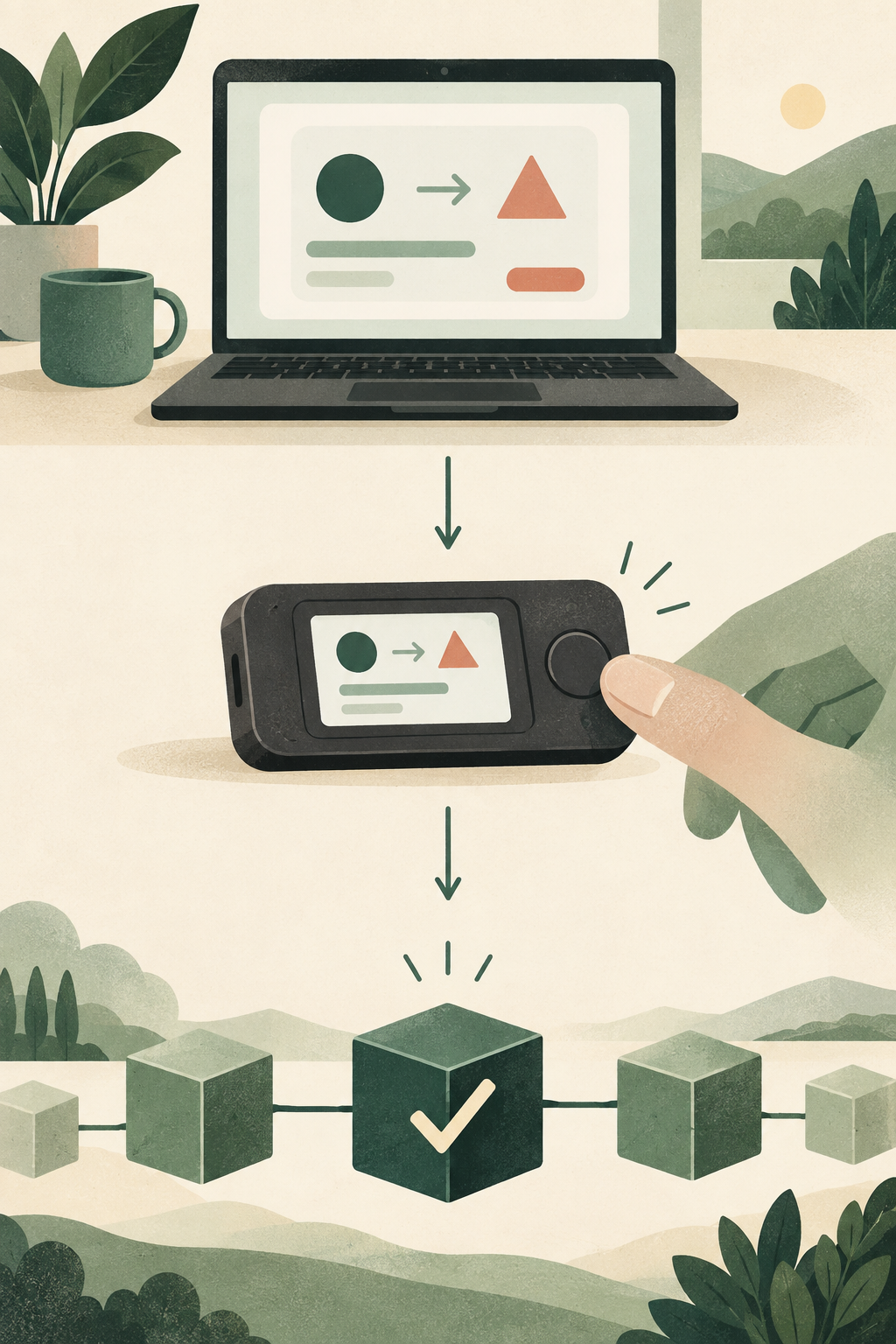
Learn why a signature without a visible transfer can still deserve a careful pause.
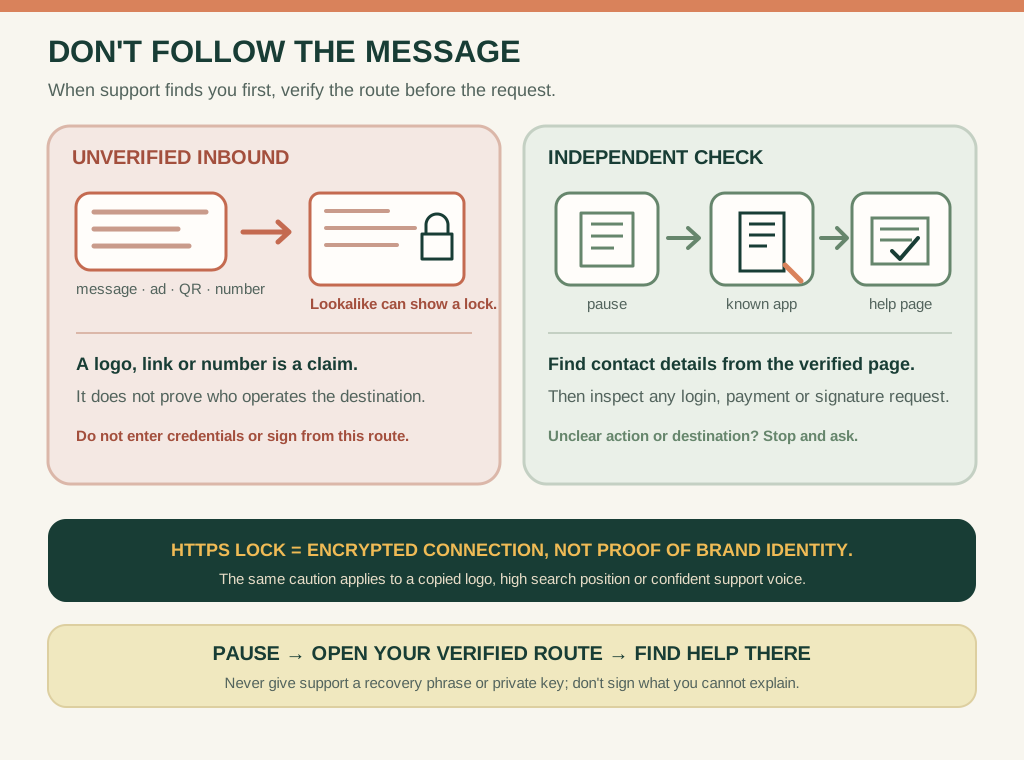
Build a repeatable way to reach important sites without trusting messages or search ads.
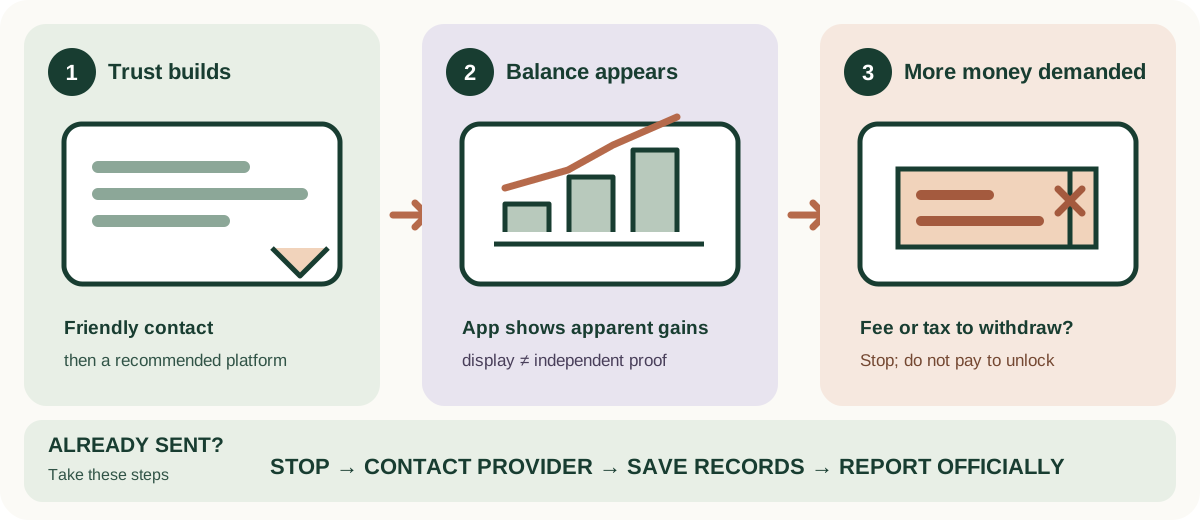
Learn how romance-linked crypto investment scams use fake balances, what to check before sending money, and what to do if you already paid.
Reduce exposure from extensions, remote access, updates and shared devices.
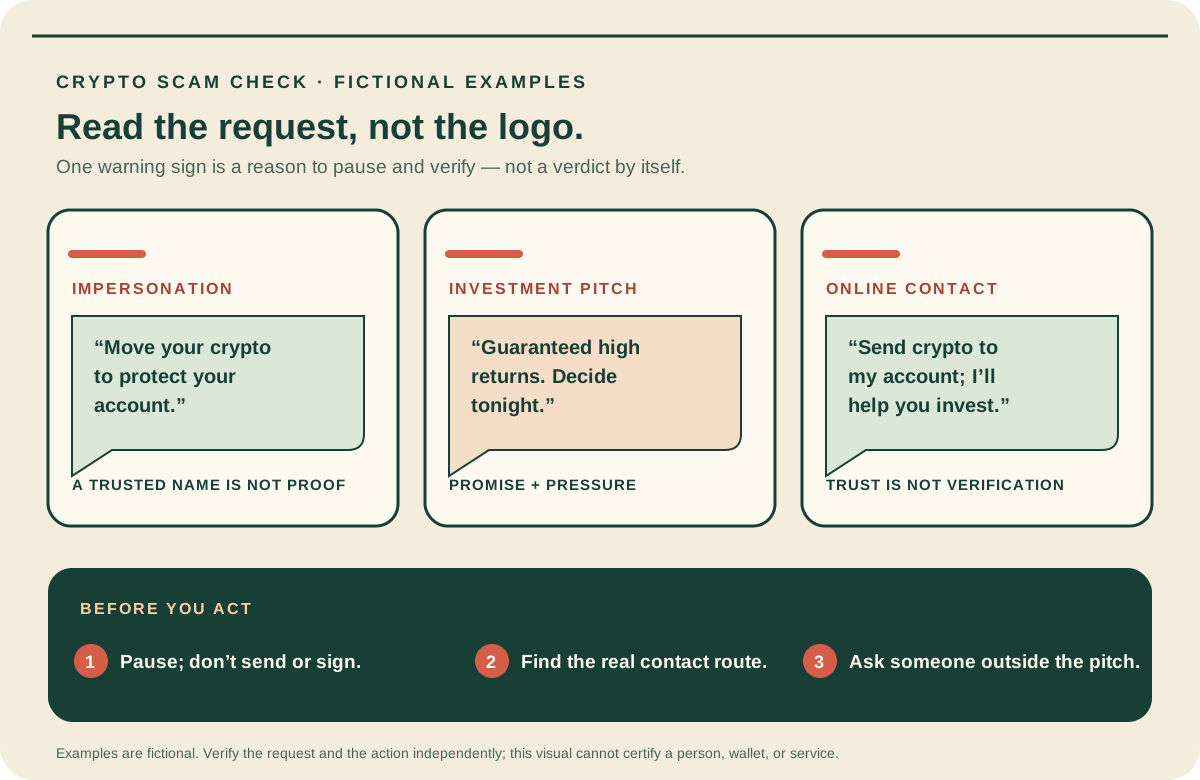
Recognize pressure, secret requests and manufactured trust without relying on a single red flag.
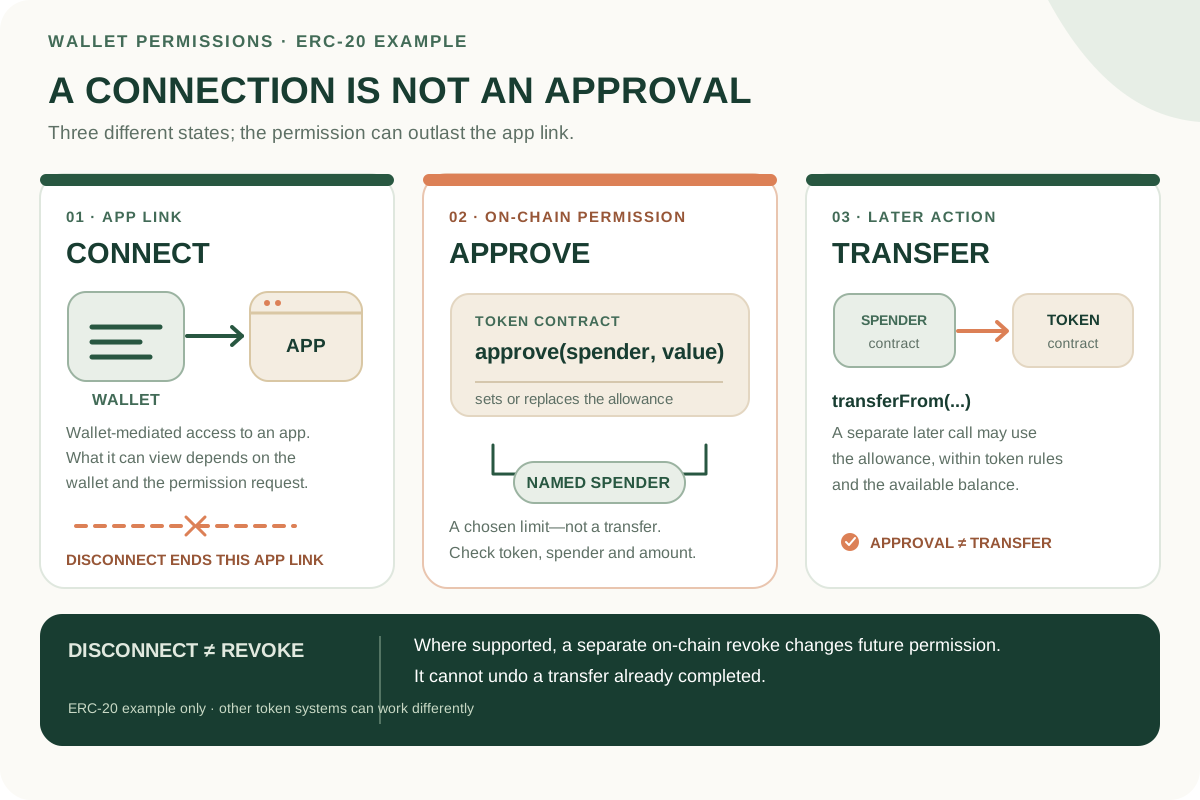
Understand spending permissions and why disconnecting a website may not remove them.
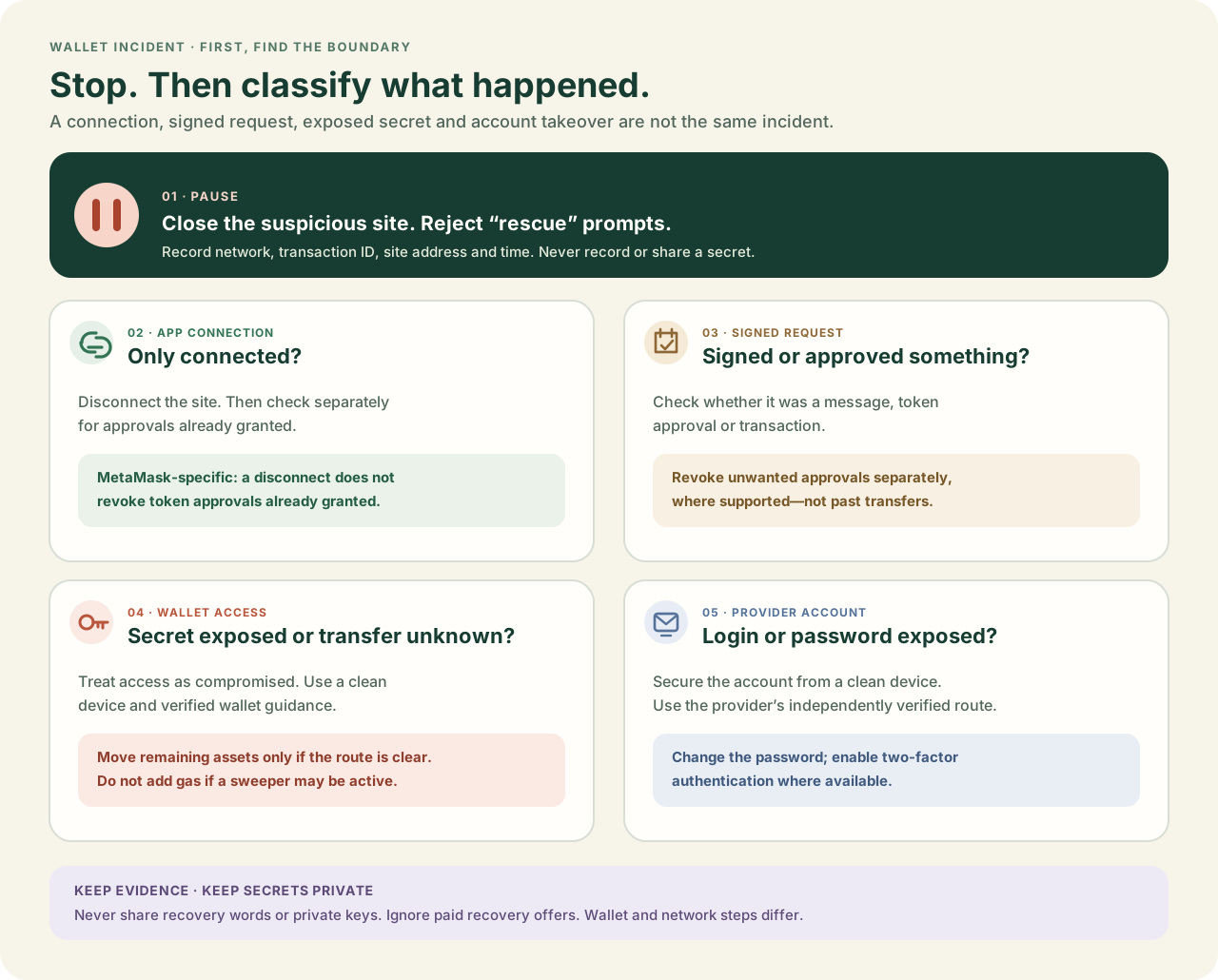
Separate a suspicious connection, harmful approval and exposed signing key before deciding on a response.
Try a shorter search, or clear the topic and difficulty filters.
Approximate visitors and country are counted locally; VPNs and shared networks can affect the estimate. No analytics vendor receives these events. Privacy details.