Crypto basics·2 min read
Bitcoin, Ethereum and Solana: different jobs, different rules
Compare networks by purpose, transaction model and operating assumptions rather than price predictions.
Beginner
Learn blockchain, coins, tokens and wallets from the beginning. Use visual guides and a connected learning path before exploring crypto applications.
Start with how the technology works, then separate assets, accounts and wallet control.
Follow the connected lessons ↗ Try the related practice exercise ↗Compare networks by purpose, transaction model and operating assumptions rather than price predictions.
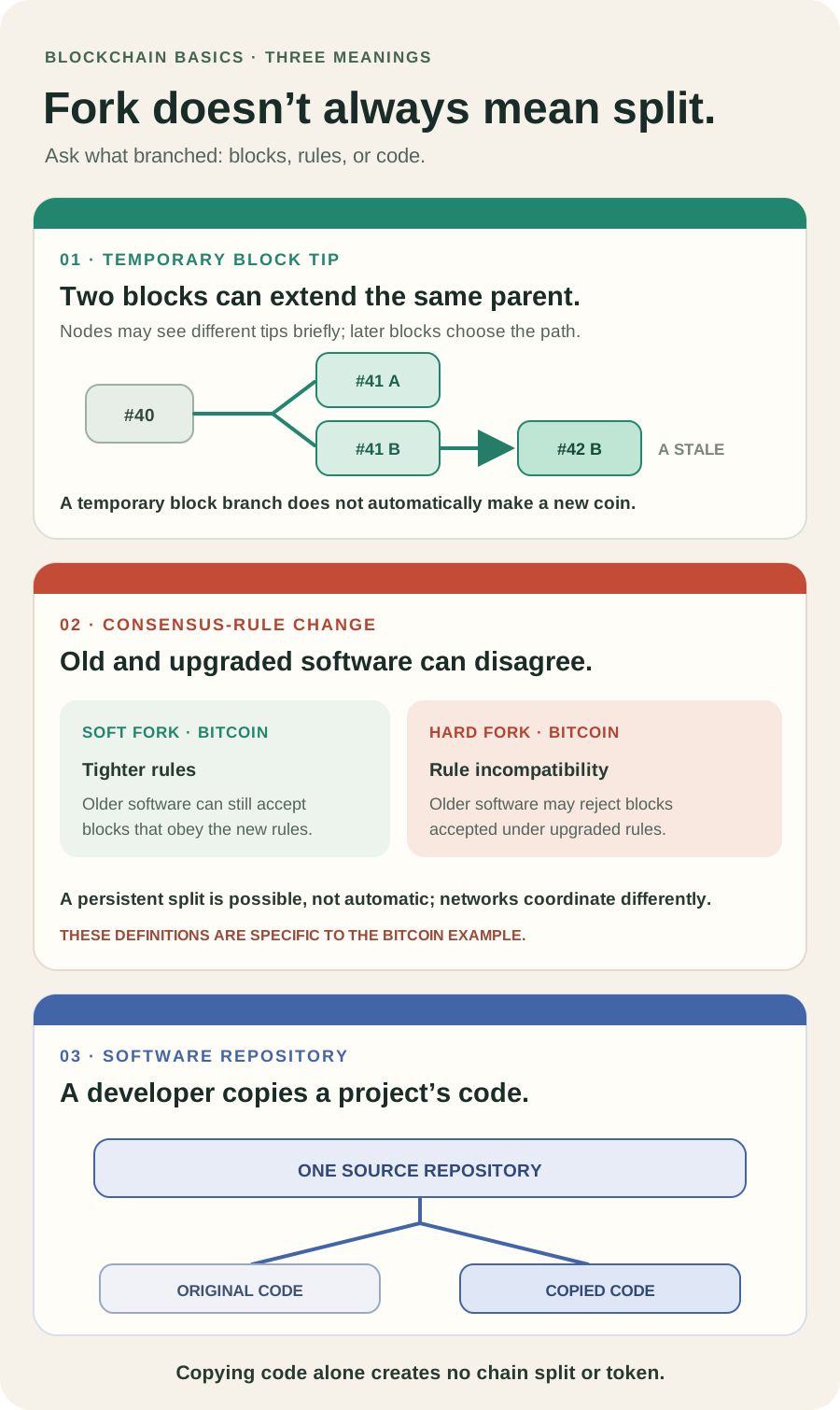
A blockchain fork can mean competing blocks, a protocol-rule change, or copied code. Learn the difference between temporary forks, soft forks, and hard forks.
Compare a blockchain with an ordinary database by asking who can write, verify, coordinate and reverse changes.
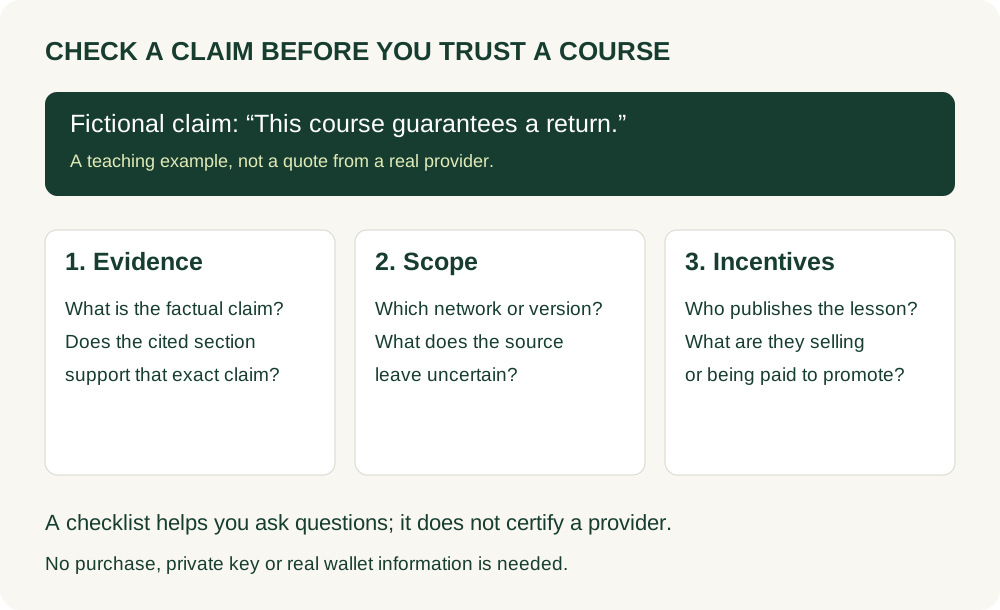
Compare crypto courses and guides by their lesson goals, evidence, exercises and commercial interests, using a practical source-checking worksheet.
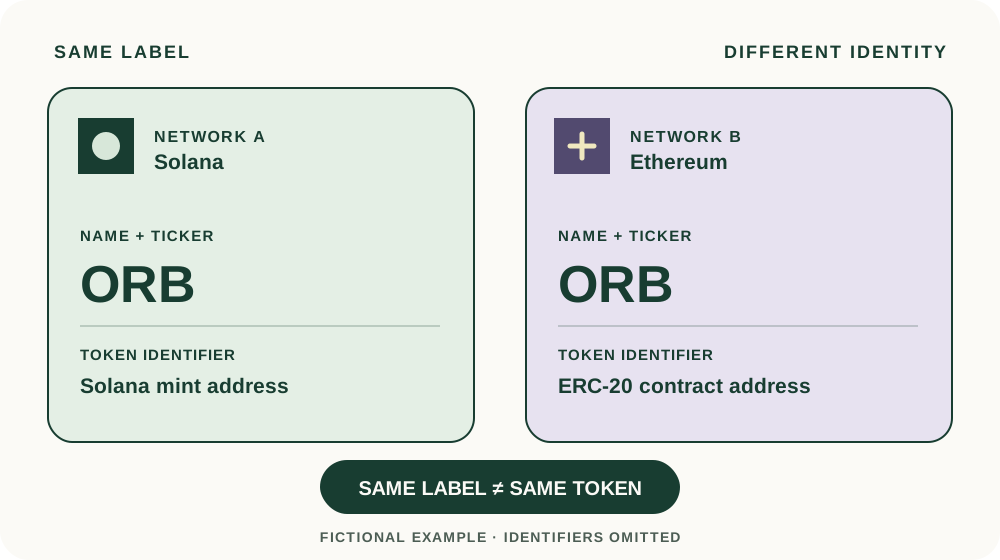
Learn what people mean by crypto coins versus tokens, how network assets differ, and why a ticker cannot identify a token.
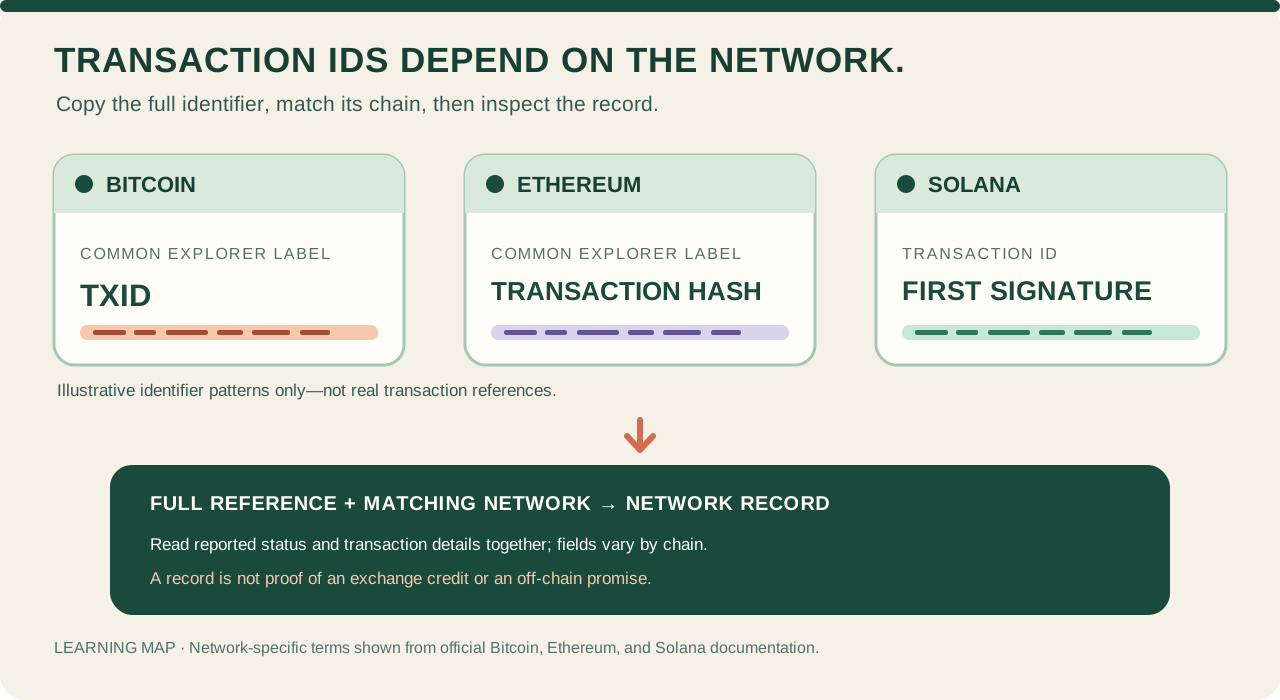
Learn what a crypto transaction ID identifies, how Bitcoin, Ethereum and Solana label it, and how to check a record without mistaking it for payment proof.
Learn the difference between an exchange balance and holding your own signing keys.
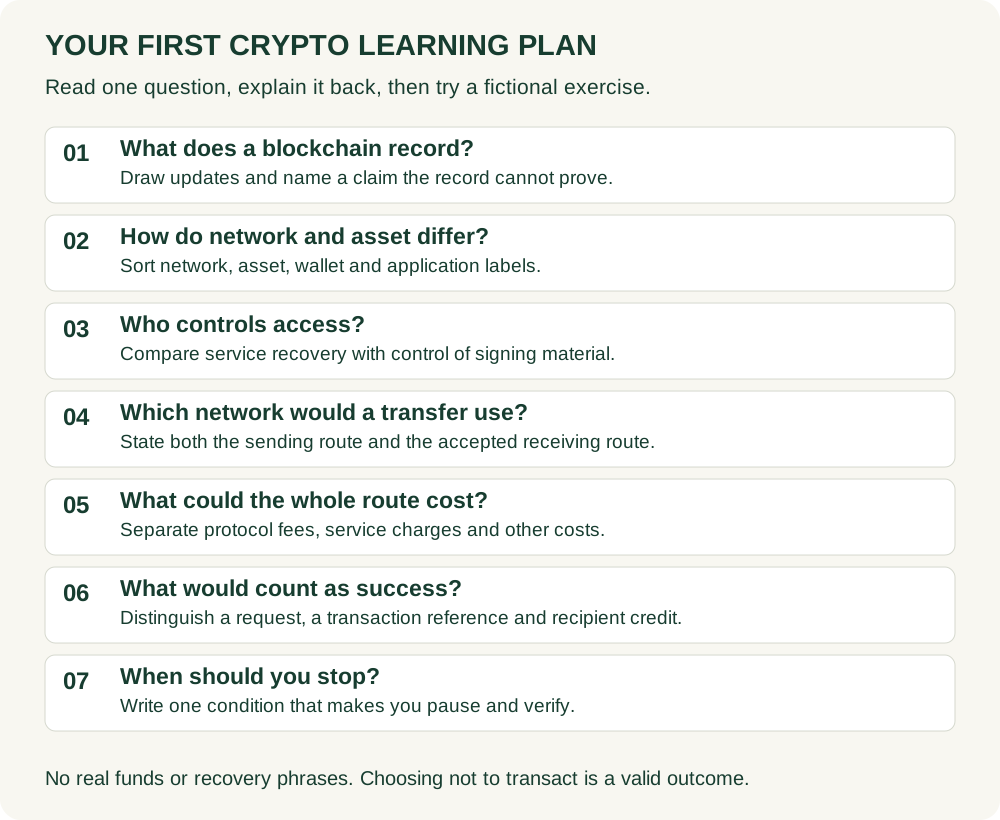
Use seven practical questions to build crypto basics before opening accounts, connecting a wallet or buying anything.
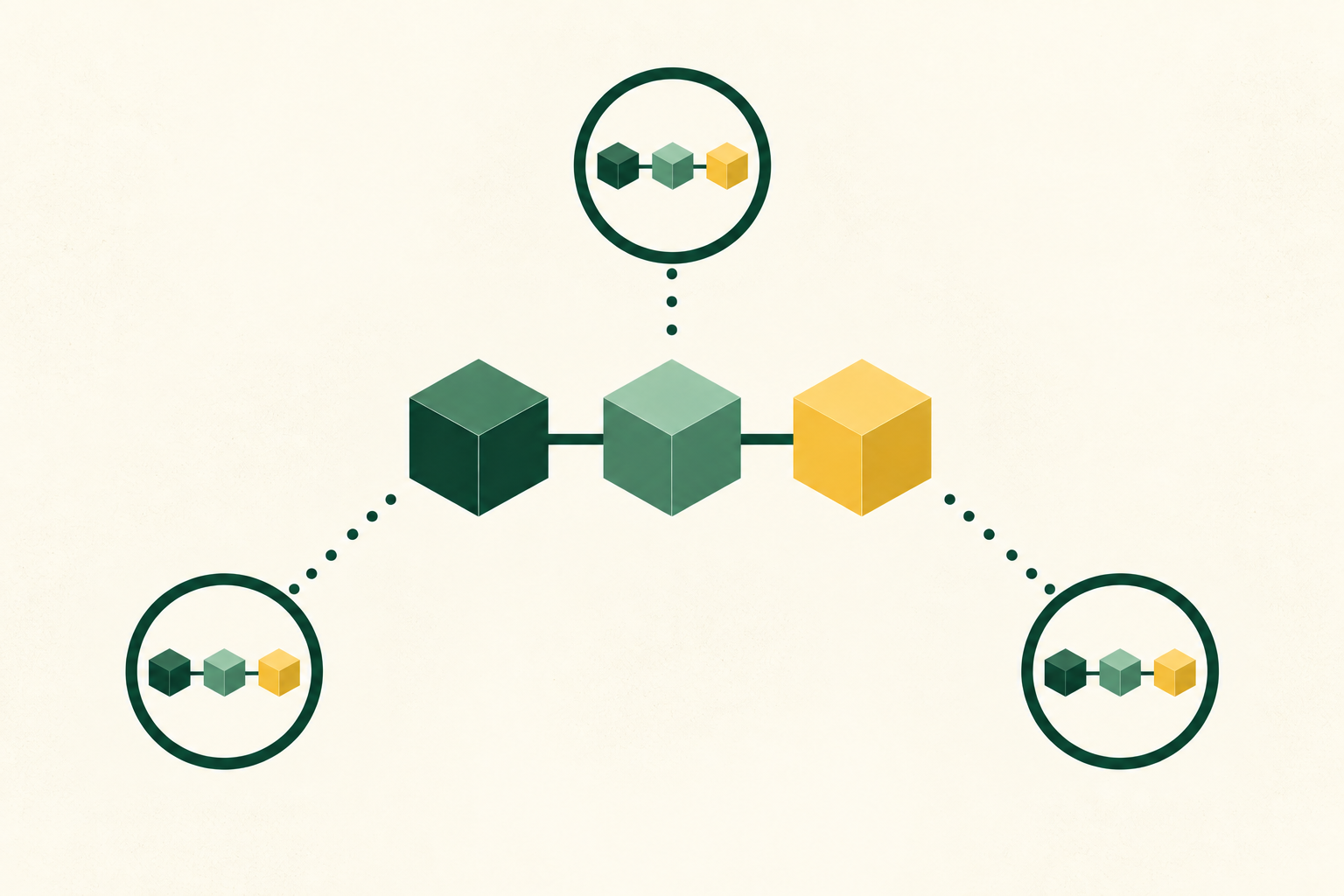
Learn what a shared ledger records, how updates are accepted and what a blockchain cannot verify.
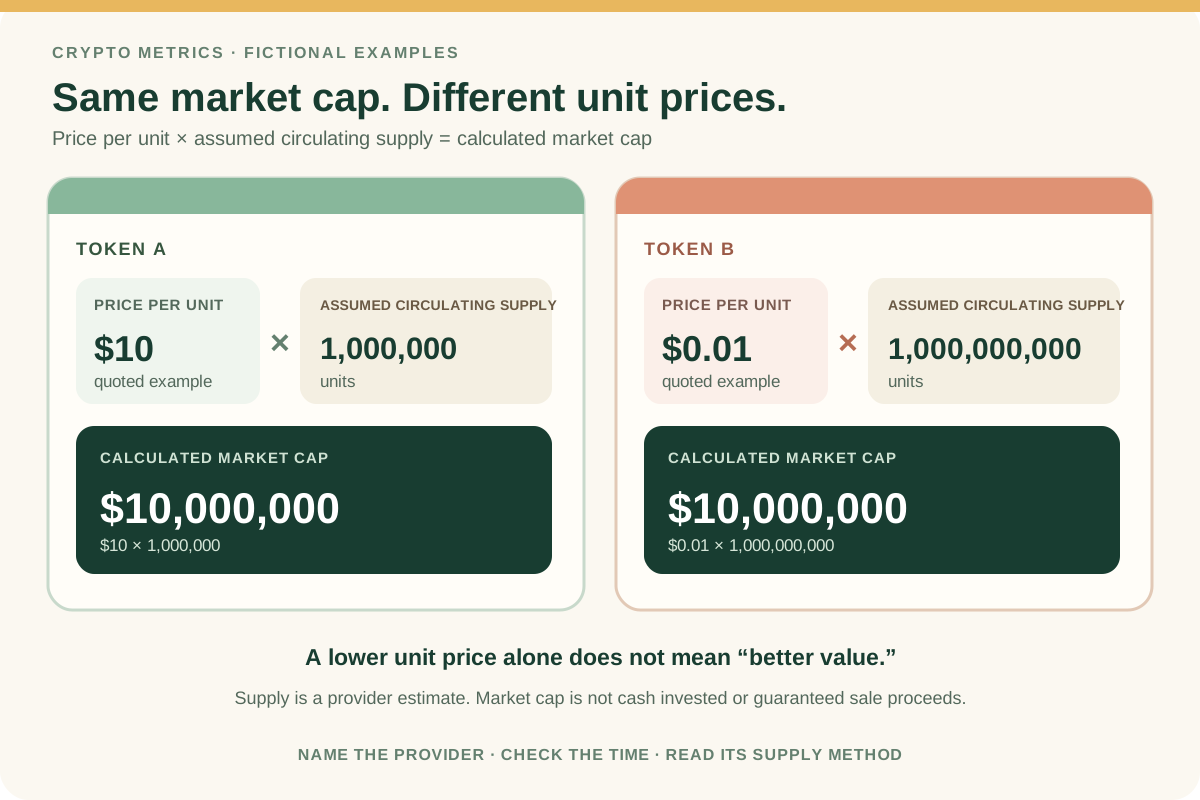
Learn how crypto market cap uses quoted price and circulating supply—and why it is not cash invested or guaranteed sale value.
Understand the high-level difference between proof-of-work and proof-of-stake without turning either mechanism into a return promise.
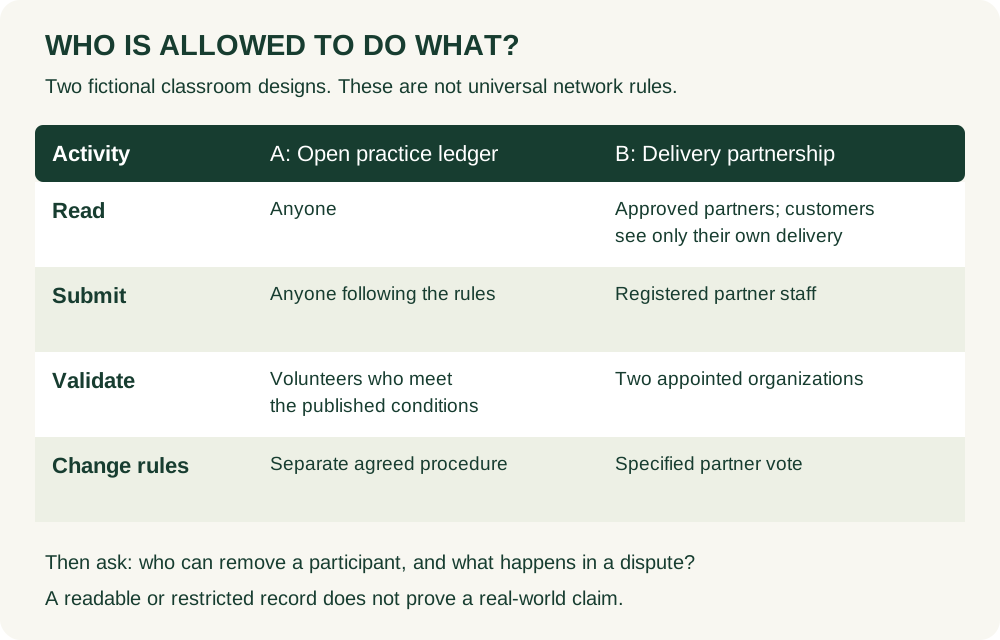
Compare who can read records, submit requests, validate updates and change rules in two fictional blockchain designs, without treating labels as a security rating.
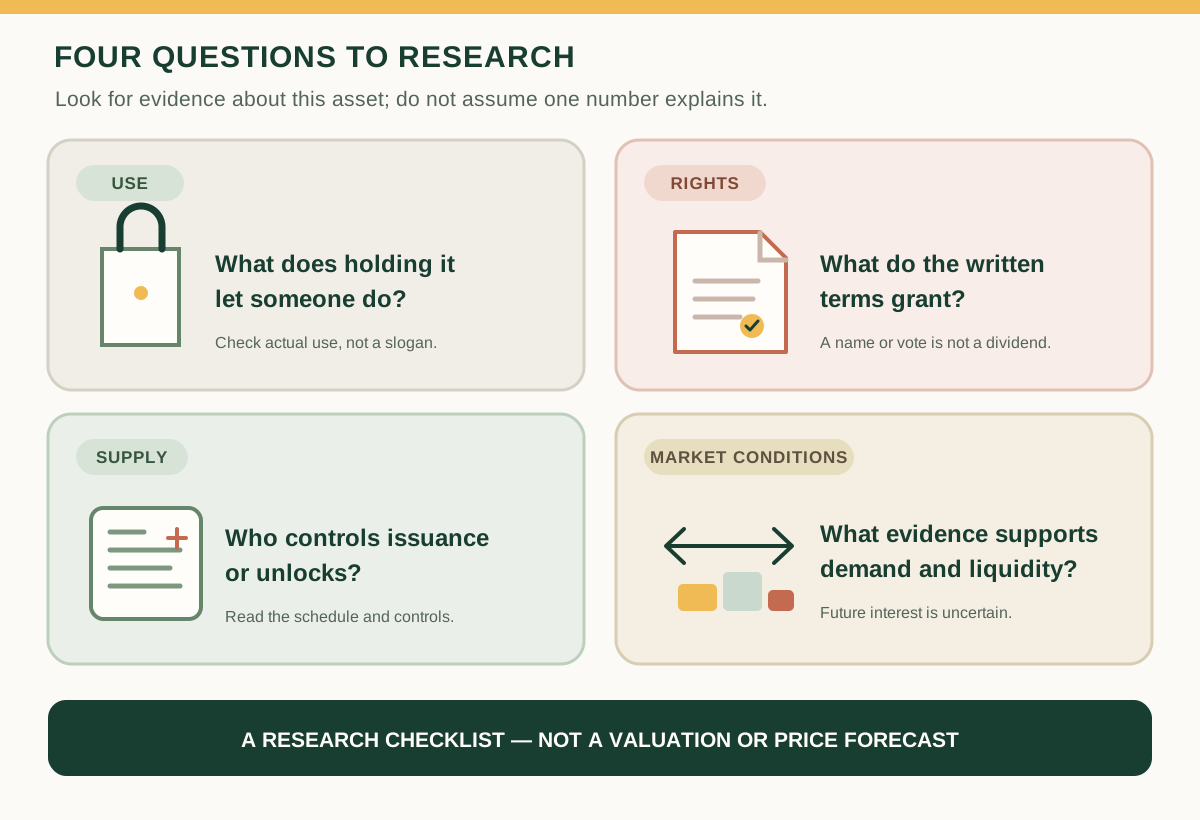
See how token use, holder rights, supply, demand and liquidity matter—and why none gives a reliable fair-value formula.
Learn what a blockchain node does, why independent verification matters and what a node cannot prove about the real world.
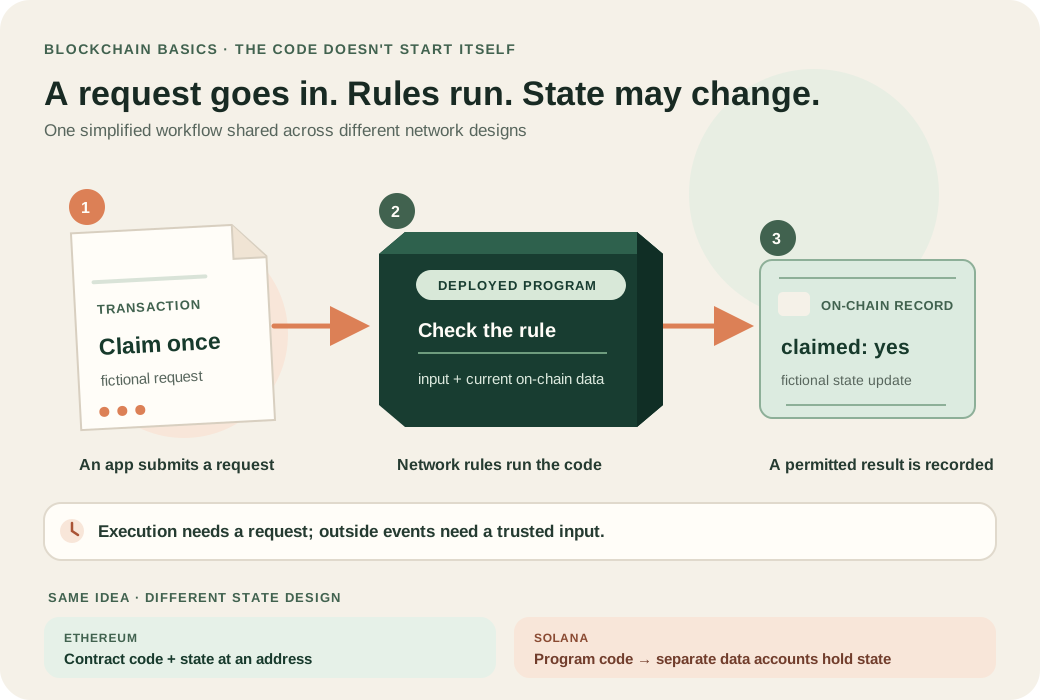
Learn how blockchain programs run, how Ethereum contracts differ from Solana programs, and what smart contracts cannot prove.
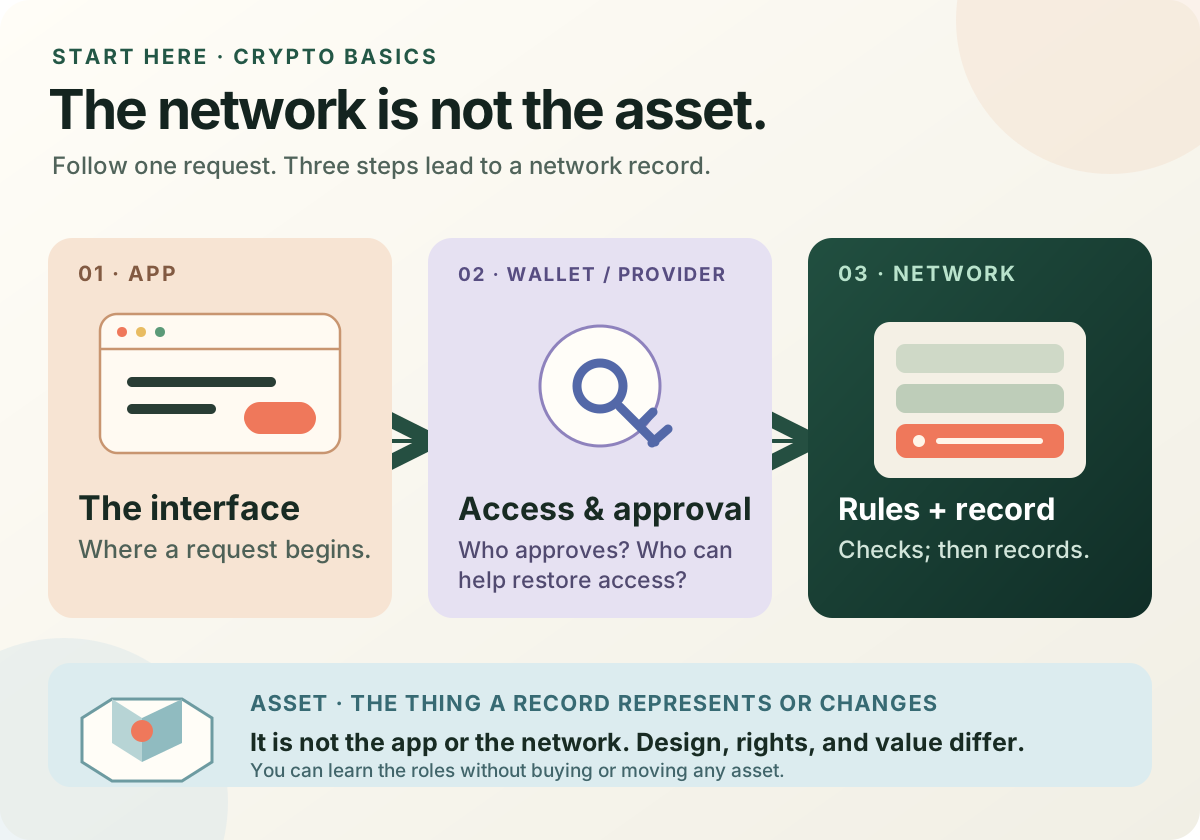
Learn how blockchain networks and cryptocurrencies differ. Use Bitcoin and Ethereum to map the network, asset, wallet and app—without buying anything.
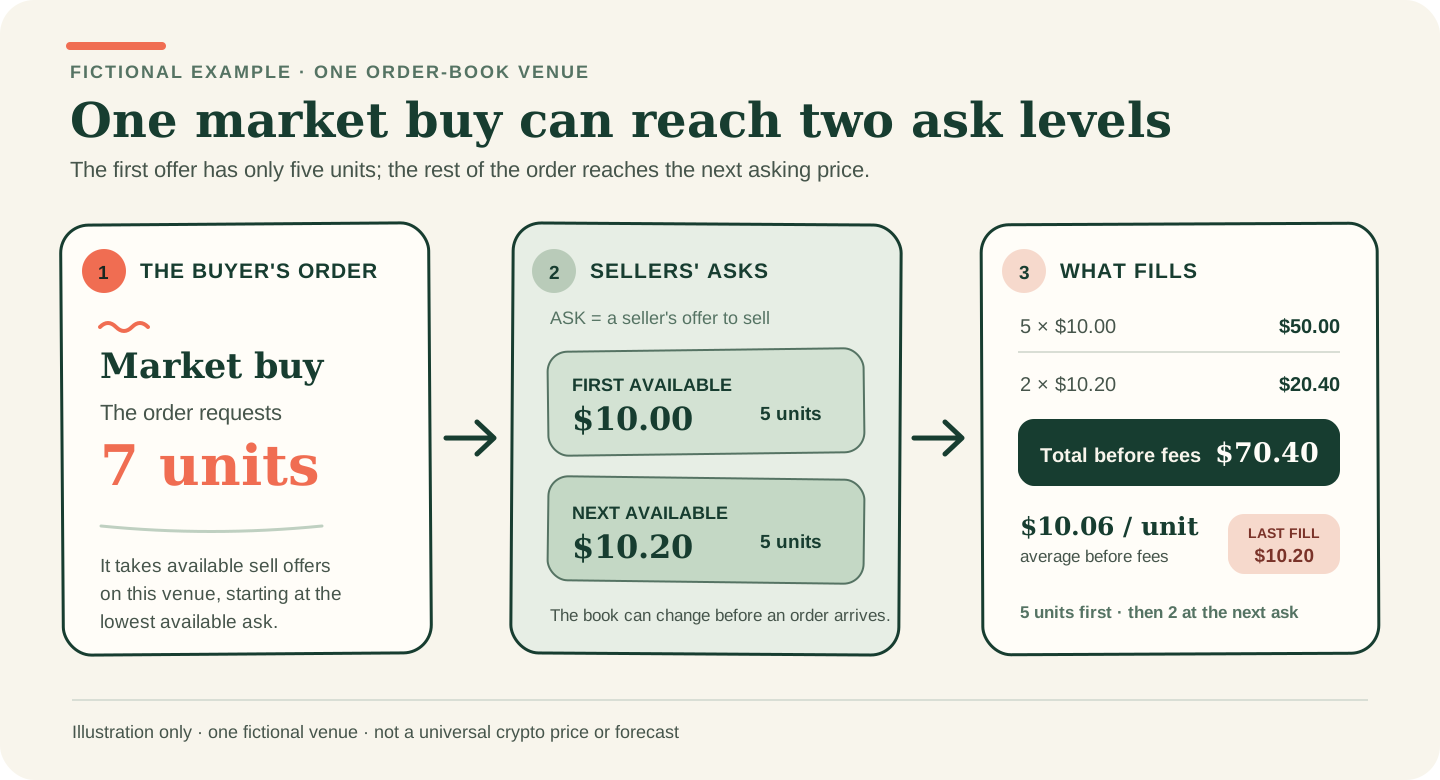
See how orders, available liquidity, and new information can move crypto prices—and why a chart cannot prove the cause or predict the next move.
Try a shorter search, or clear the topic and difficulty filters.
Approximate visitors and country are counted locally; VPNs and shared networks can affect the estimate. No analytics vendor receives these events. Privacy details.