Bitcoin explained·4 min read
Bitcoin address formats: Legacy, SegWit, and Taproot
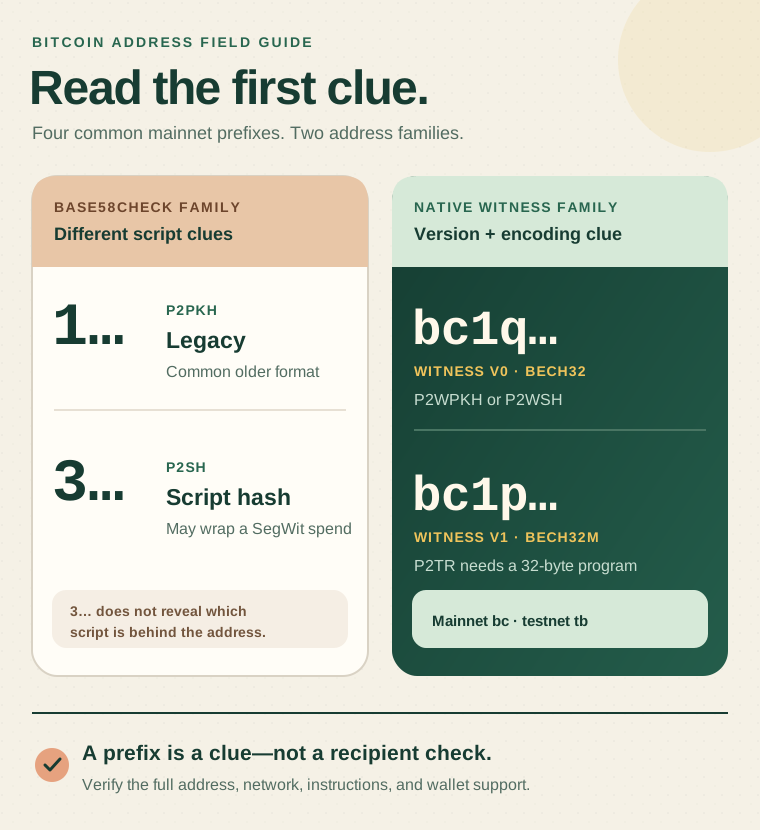
Compare Bitcoin address formats: Legacy, SegWit, and Taproot. Read prefix clues, compatibility limits, and why fees depend on the transaction.
Beginner
Learn what Bitcoin is, how BTC transactions work, and why wallets, confirmations and fees matter. Start with a plain-English guide and follow the next lesson.
Begin with the Bitcoin network, then follow the guides on wallets, fees and confirmation.
Follow the connected lessons ↗ Try the related practice exercise ↗Compare Bitcoin address formats: Legacy, SegWit, and Taproot. Read prefix clues, compatibility limits, and why fees depend on the transaction.
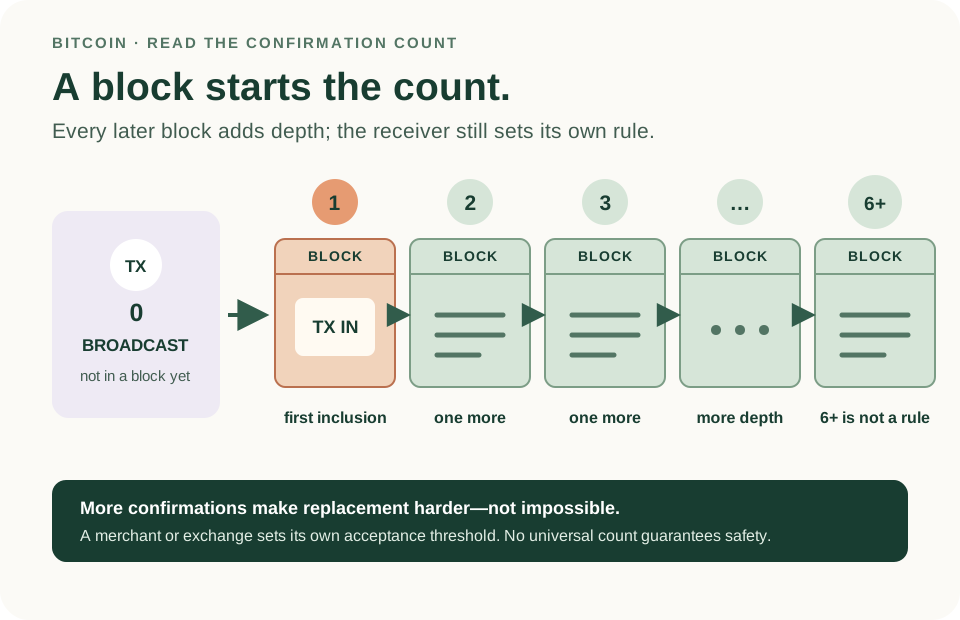
Learn what zero, one and later Bitcoin confirmations mean, why added blocks lower reversal risk, and why no count is a universal guarantee.
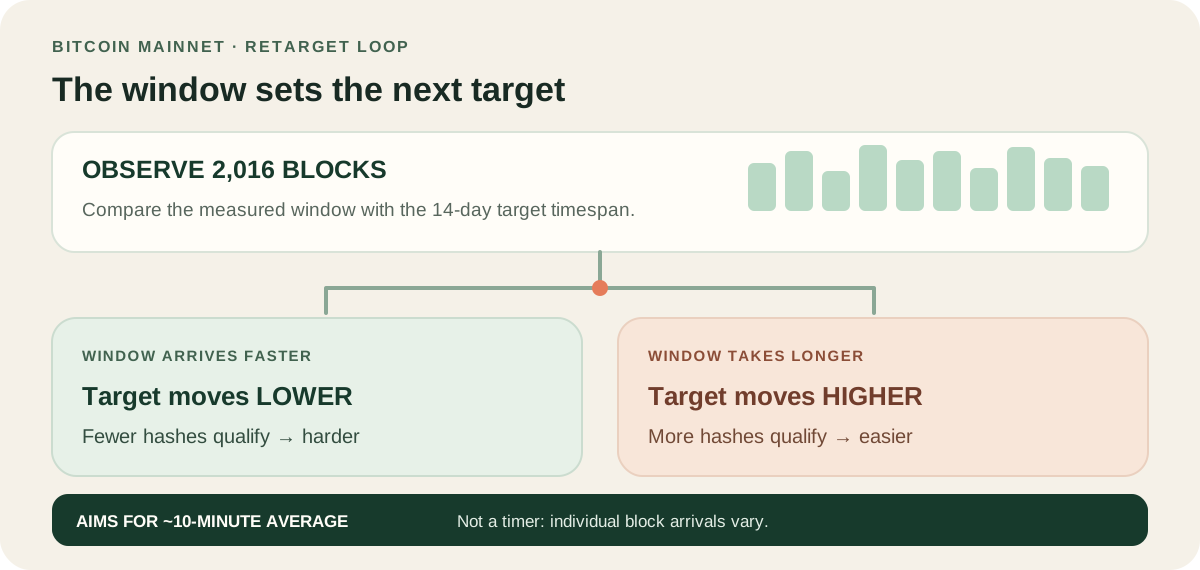
Bitcoin adjusts its mining target every 2,016 blocks. Faster windows raise mining difficulty; slower windows lower it. Ten minutes is an average, not a timer.
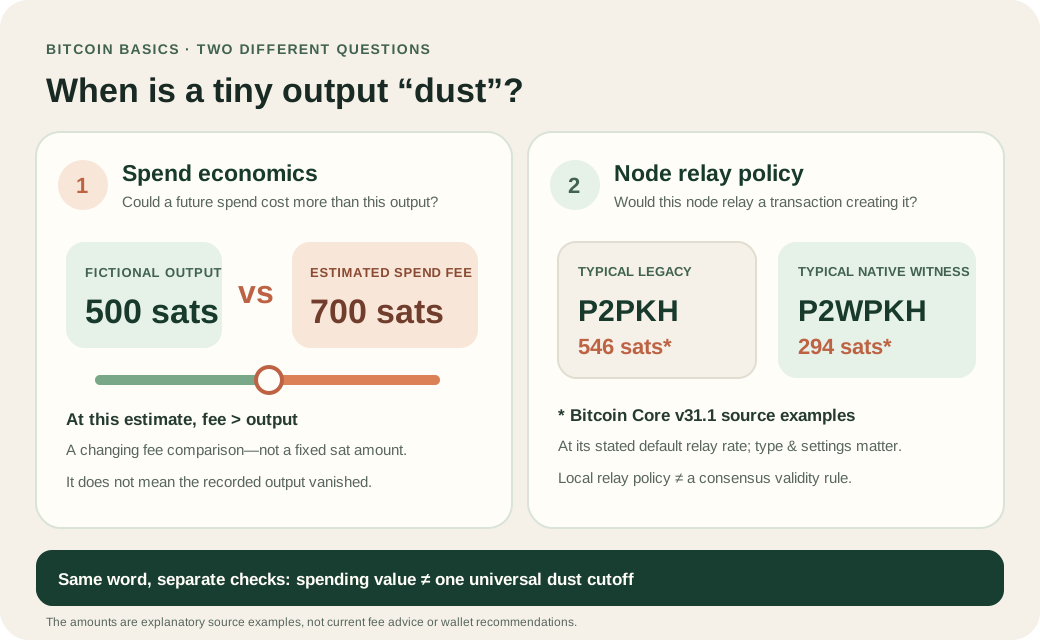
Learn what Bitcoin dust means, when tiny UTXOs cost more to spend, why Core's 546-sat example is not universal, and how dusting can affect privacy.
Learn why Bitcoin transaction fees can vary, what a wallet estimate means and which costs sit outside the network fee.
Learn the basic idea behind Lightning as a separate payment route and the extra assumptions a user must check.
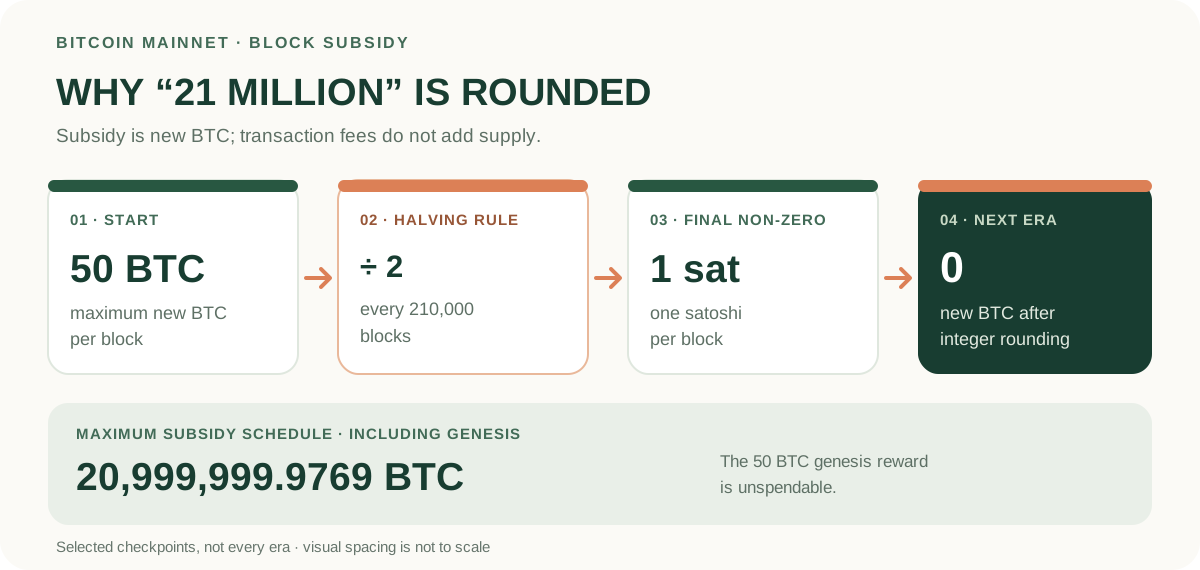
Bitcoin's 21 million limit is rounded. See how halvings shape the subsidy rule, why whole satoshis make the exact sum lower, and how that differs from spendable supply.
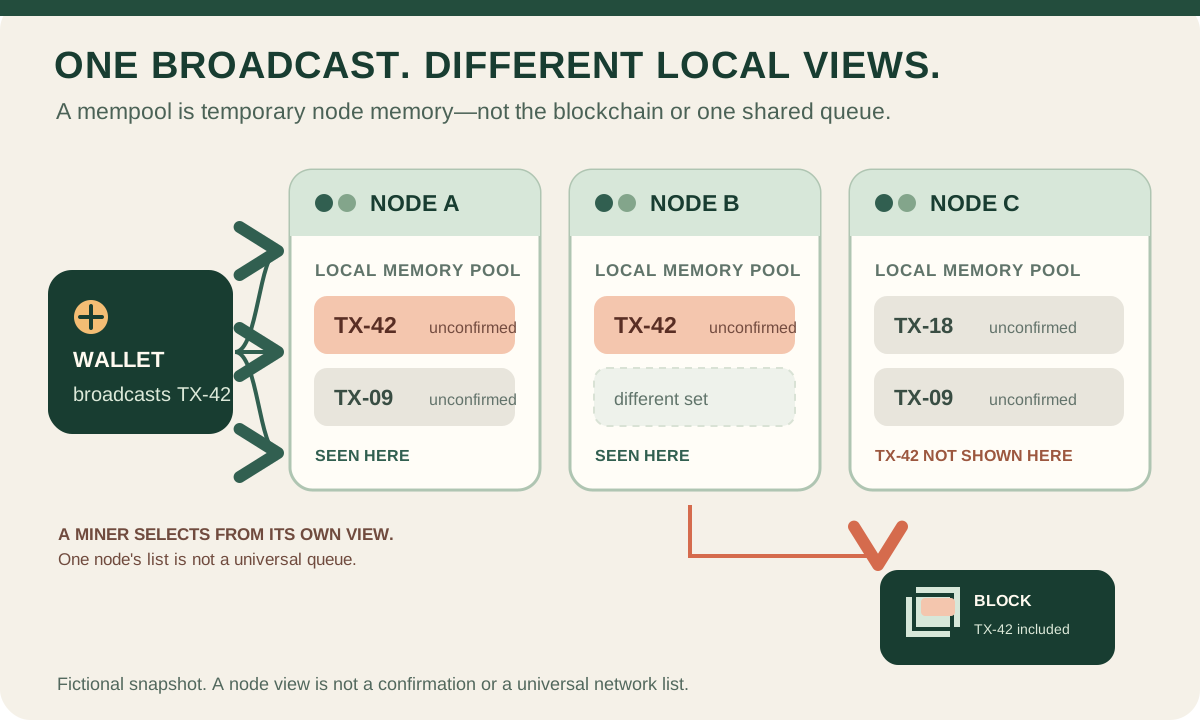
Learn what the Bitcoin mempool is, why nodes can show different pending transactions, and what an explorer's empty result really means.
Understand mining as a process for proposing blocks and competing under network rules, not as a simple passive-income promise.
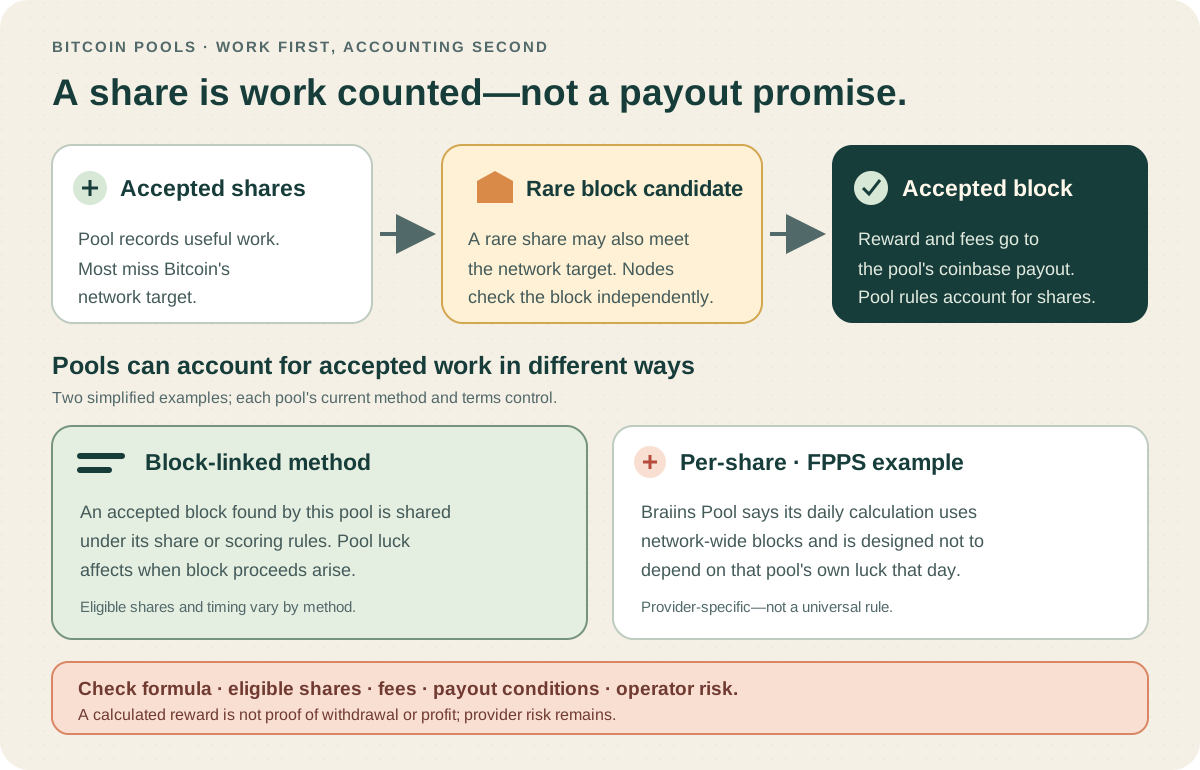
Understand Bitcoin mining pools: what a share proves, how it differs from a block, how pool payouts work, and what to check before trusting an operator.
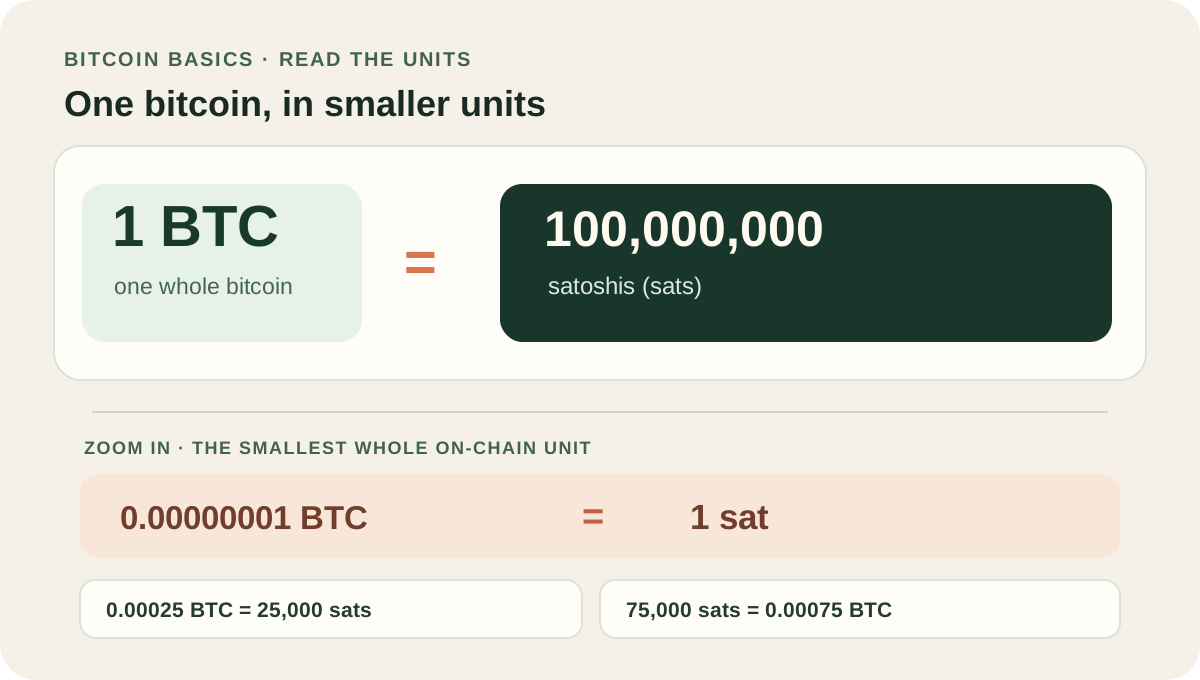
Learn how satoshis relate to BTC, convert common amounts, and separate a Bitcoin unit from its changing cash value.
Understand supply language and issuance changes without turning scarcity into a guaranteed price or investment conclusion.
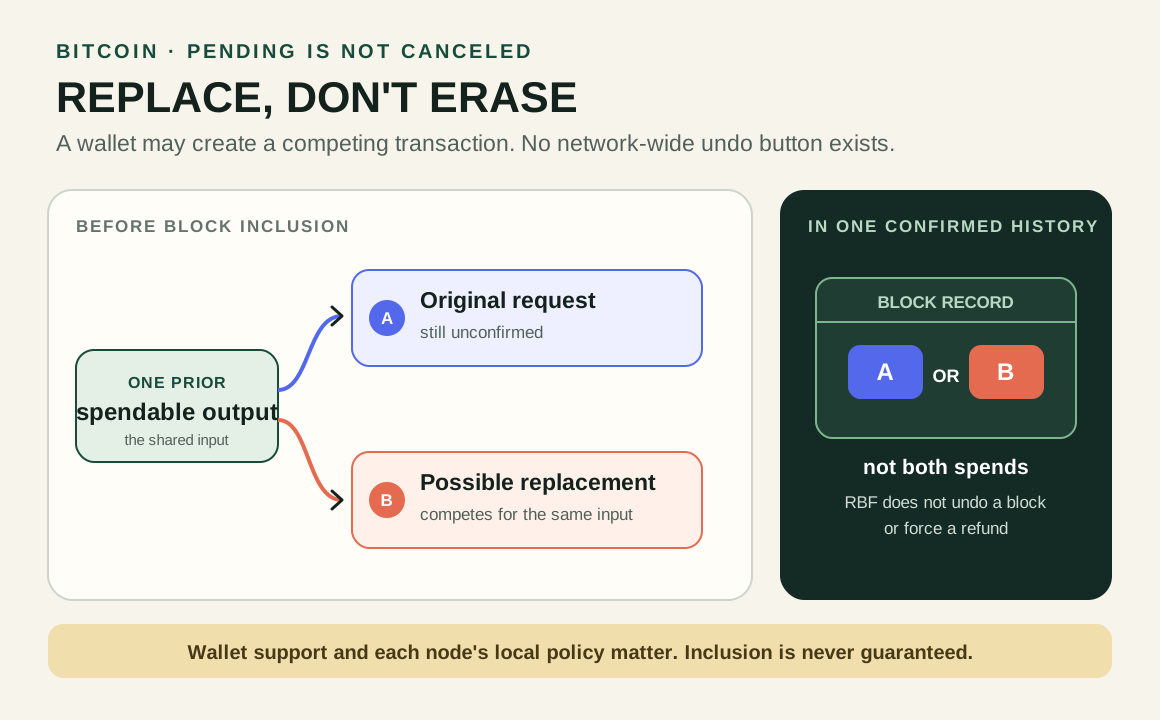
Bitcoin has no central cancel button. Learn what Replace-by-Fee can do to an unconfirmed transaction—and what confirmation changes.
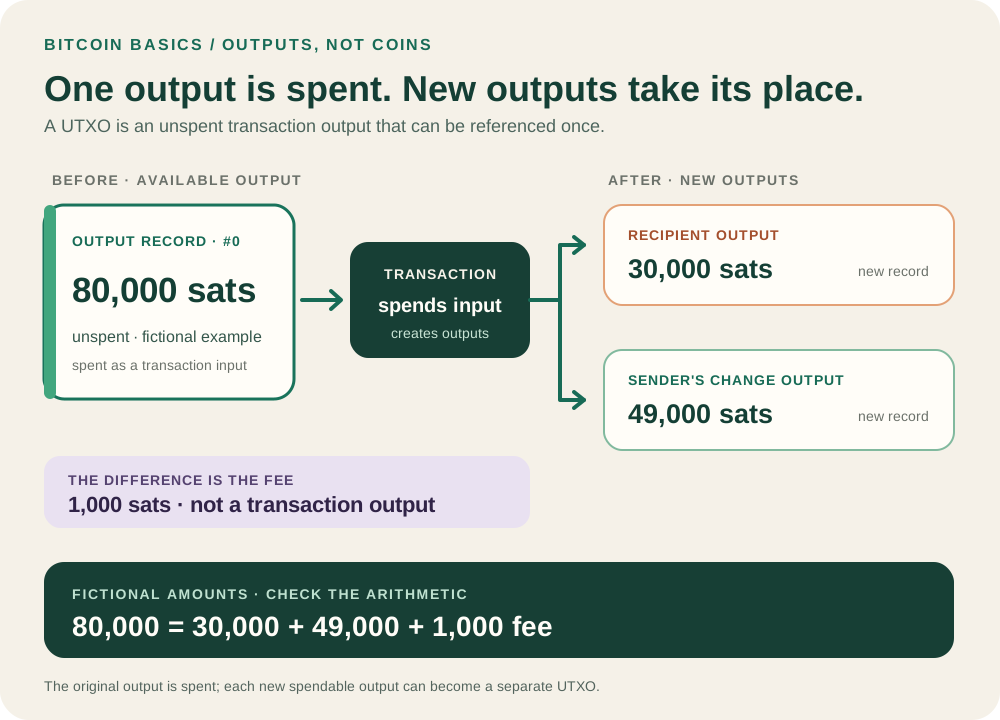
Learn how Bitcoin outputs become UTXOs, why a wallet spends whole outputs, and how payment, change, and fees fit together.
Learn a useful Bitcoin and Ethereum comparison by separating their network purposes, account models and application assumptions.
Compare hosted accounts, software wallets and offline storage by asking who controls authorization and how recovery works.
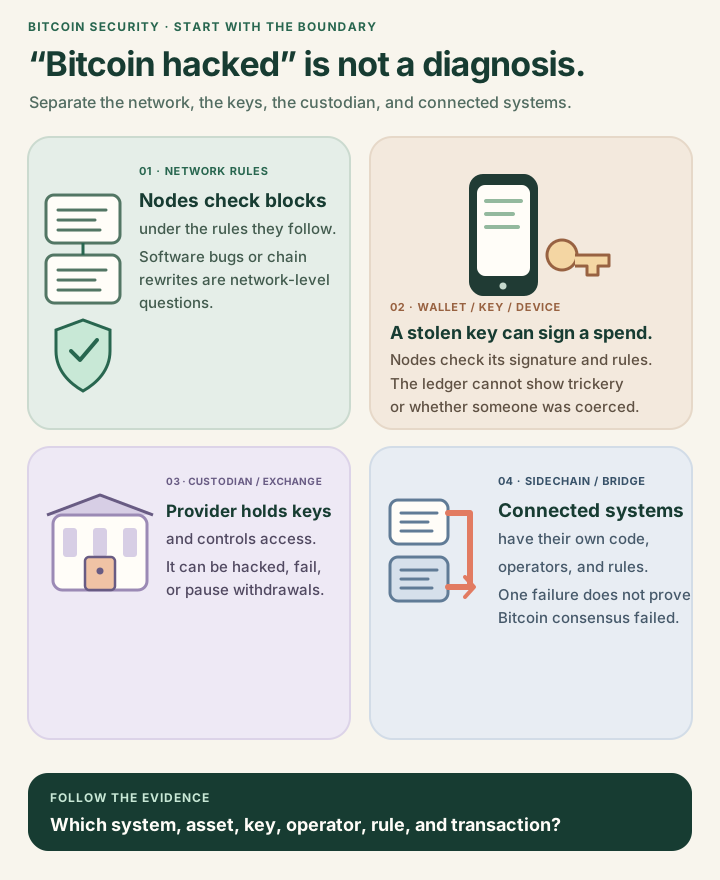
Can Bitcoin be hacked? Separate Bitcoin network attacks and software bugs from stolen wallet keys, exchange failures, and sidechain exploits.
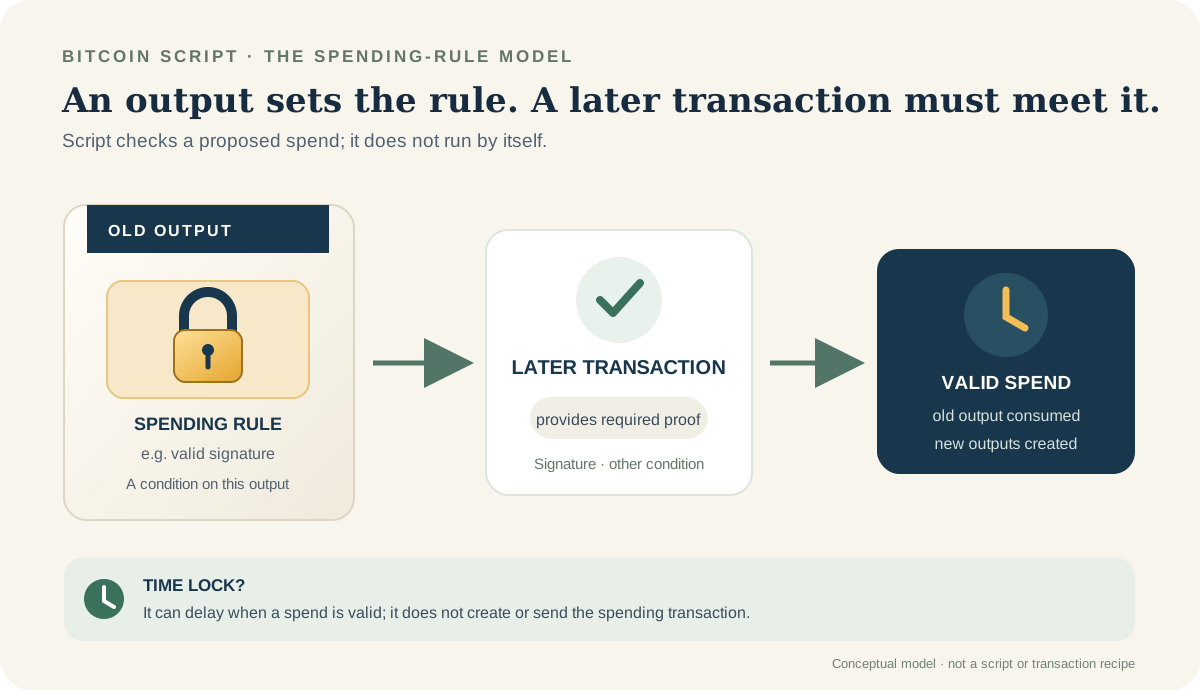
Bitcoin can enforce programmable spending conditions. See how Script checks spends, what time locks do, and how it differs from general-purpose smart contracts.
Follow a Bitcoin transaction from authorization to confirmation, and learn what the public record does not establish.
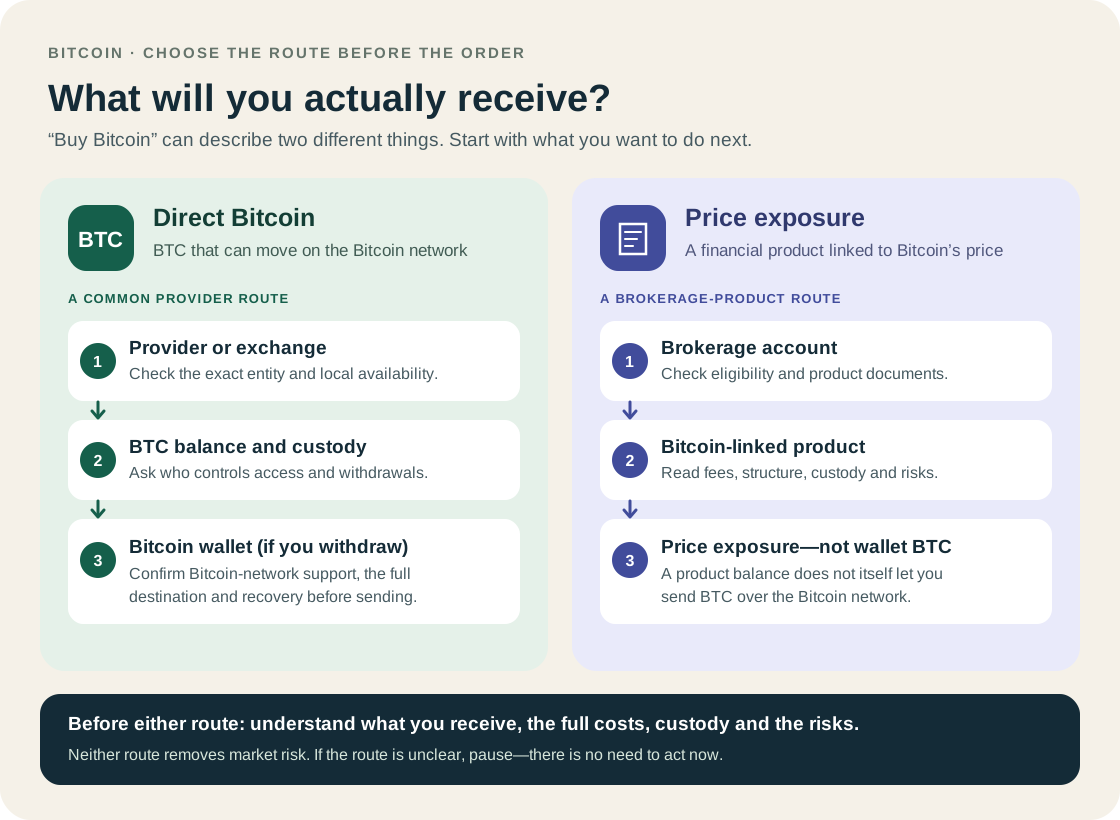
Compare direct BTC with a Bitcoin ETF or ETP where available. Check custody, fees, withdrawals, location limits and risks before deciding.
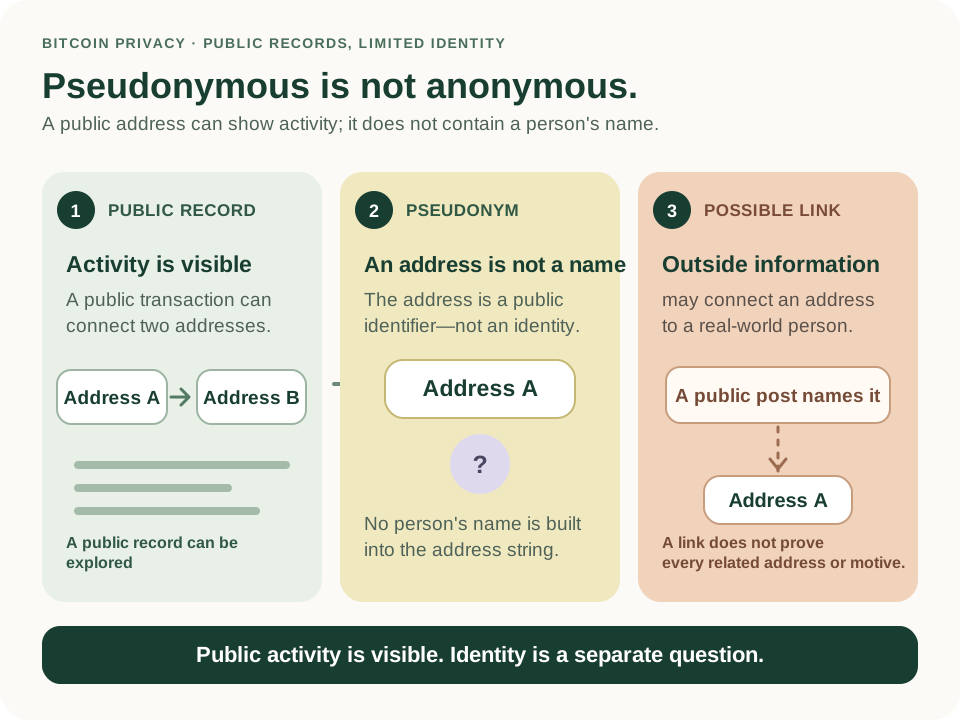
Bitcoin uses public addresses rather than names, but transactions are public and may be linked to people through outside information.
Understand Bitcoin as a network, asset and public transaction record without treating the explanation as a price prediction.
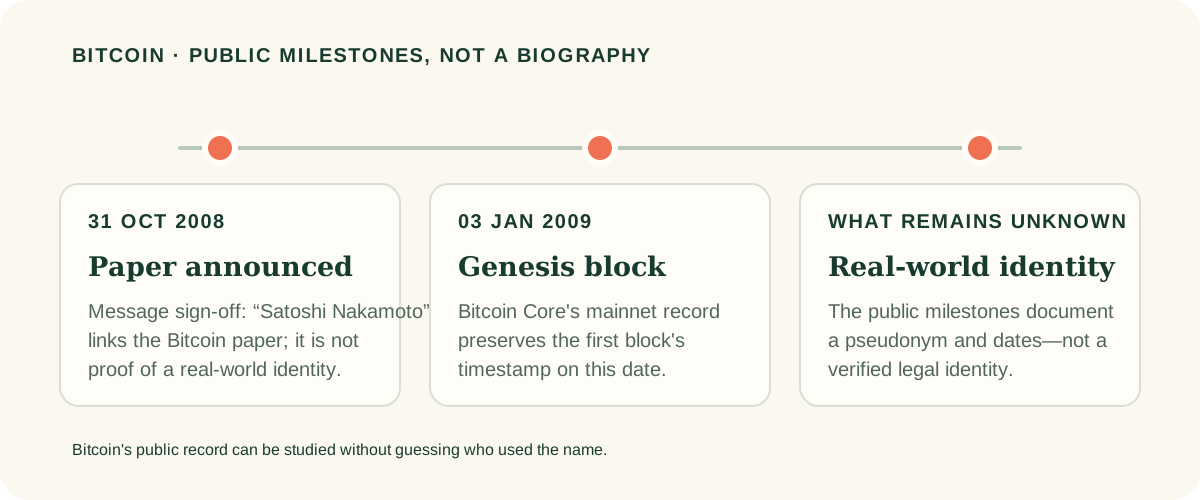
Bitcoin's first public paper appeared under the name Satoshi Nakamoto. Follow the early milestones and learn what they do—and do not—reveal about its creator.
Try a shorter search, or clear the topic and difficulty filters.
Approximate visitors and country are counted locally; VPNs and shared networks can affect the estimate. No analytics vendor receives these events. Privacy details.